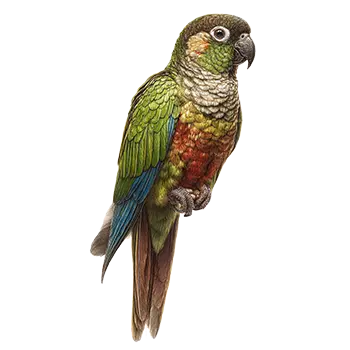

Green-cheeked Conures are among the most playful parrot species kept in captivity, and their need for mental stimulation is as important as their need for proper nutrition. These birds are intensely curious, physically agile, and highly motivated by novelty — a combination that demands a thoughtful and regularly refreshed toy selection. A bored Green-cheeked Conure will often develop destructive behaviors, excessive screaming, or feather-damaging habits that can become deeply ingrained and difficult to reverse.
Understanding your individual conure's play preferences is key to choosing effective toys. Some Green-cheeked Conures are avid chewers that will demolish a wooden toy in hours, while others prefer manipulation-based play that involves pulling, untying, and rearranging components. Many conures enjoy a combination of both, along with toys that produce noise or movement in response to the bird's actions. Observing how your bird interacts with different materials and textures helps you invest in toys that will actually be used rather than ignored.
Enrichment extends beyond physical toys to include environmental variety and social interaction. Rearranging cage furniture, introducing new foods in challenging formats, and providing supervised out-of-cage exploration time all contribute to a mentally healthy bird. Green-cheeked Conures are also highly social and derive significant enrichment from interacting with their human family members — time spent playing, training, and simply being present with your bird is itself a form of enrichment that no toy can fully replace.
A practical rule of thumb is to have three to five toys in the cage at any given time, with an equal or greater number stored for rotation. Swap toys in and out every one to two weeks to maintain novelty. A toy that your conure ignores one month may become a favorite when reintroduced after a break, so do not discard toys simply because the bird did not immediately engage with them.