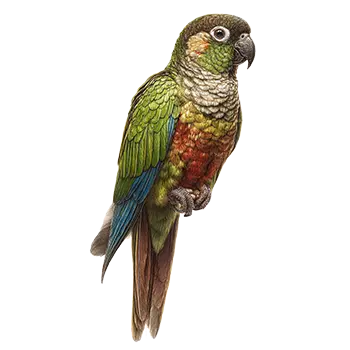

Harnesses & Flight Suits

Bird harnesses offer a way to safely take your Green-cheeked Conure outdoors without the risk of flyaway loss. Unlike leg bands or ankle tethers, a properly designed avian harness distributes pressure across the bird's body and allows natural wing movement while maintaining a secure connection to a leash. For Green-cheeked Conures, look for harness sizes designed specifically for small parrots, as an ill-fitting harness can cause injury, restrict breathing, or allow the bird to wriggle free.

Introducing a harness requires patience and positive reinforcement. Most conures will not accept a harness willingly on the first attempt, and forcing the issue can damage trust and create a lasting negative association. Start by allowing the bird to investigate the harness at its own pace, rewarding any interaction with treats. Progress to draping the harness over the bird's back, then to brief fitting sessions, gradually building up to full outdoor excursions over a period of weeks or even months.

Flight suits are an alternative to traditional harnesses that combine a harness function with a built-in diaper pouch. These garments are popular with owners who want to bring their conure into public settings without worrying about droppings. The fit must be snug enough to prevent escape but loose enough to allow comfortable breathing and wing movement. Measure your conure carefully against the manufacturer's sizing chart, as even small discrepancies can make the garment unsafe or uncomfortable.

Whether you choose a harness or flight suit, never leave your bird unattended while wearing one. Straps and fabric can catch on cage hardware, toys, or furniture, creating an entanglement risk that could result in strangulation or broken bones. These products are designed exclusively for supervised outdoor use and should be removed as soon as the bird returns to its cage.

Grooming Tools & Supplies

Regular grooming is an essential aspect of Green-cheeked Conure care, and having the right tools on hand makes the process safer and more efficient. Nail trimming is the most frequent grooming task, as captive conures' nails grow continuously and can become sharp enough to scratch owners or long enough to catch on fabric and cage components. A small pair of bird-specific nail clippers or a motorized nail grinder designed for small animals provides the control needed to trim safely without cutting into the quick.

Styptic powder should always be accessible during nail trimming sessions in case of accidental quick cuts. A bleeding nail can be alarming for both owner and bird, but applying styptic powder or a cornstarch-based alternative stops bleeding quickly in most cases. Familiarize yourself with the location of the quick — visible as a darker core within the nail on light-nailed birds — before trimming, and remove only the sharp tip rather than attempting a dramatic shortening.

Bathing is another important grooming activity that most Green-cheeked Conures enjoy. Some birds prefer a shallow dish of water for bathing, while others prefer being misted with a spray bottle. A fine-mist spray bottle filled with plain, lukewarm water is an inexpensive and effective bathing tool. Avoid using any soaps, shampoos, or conditioners on your bird unless specifically directed by an avian veterinarian, as these products can strip the natural oils that keep feathers waterproof and insulating.

Beak maintenance is generally handled naturally through chewing behavior, but occasionally a conure may develop an overgrown or misaligned beak that requires professional attention. Providing mineral blocks, cuttlebone, and appropriate chew toys helps maintain beak length and shape. Never attempt to trim a bird's beak at home unless you have been trained by an avian veterinarian, as the beak contains blood vessels and nerve endings and improper trimming can cause serious pain, bleeding, and lasting damage.

Food & Water Accessories

The dishes and dispensers you use to serve food and water play a surprisingly important role in your conure's health and daily routine. Stainless steel dishes are the gold standard for bird feeding — they are non-porous, easy to sanitize, resistant to bacterial biofilm, and virtually indestructible. Ceramic dishes are an acceptable alternative but should be free of lead-based glazes and replaced if they develop chips or cracks where bacteria can harbor.

Avoid plastic food dishes for regular use, as they scratch easily and those scratches create microscopic grooves where bacteria thrive even after washing. If plastic dishes came with your cage, replace them with stainless steel as soon as possible. Locking dish holders that attach securely to the cage bars prevent your conure from dumping its food and water — a favorite pastime of many conures that finds great amusement in flipping bowls and watching the contents scatter.

Water bottles designed for birds offer an alternative to open water dishes and can help maintain water cleanliness, especially for conures that habitually dunk food in their water bowl. Not all birds take to water bottles immediately, so offering both a bottle and a dish during the transition period ensures the bird stays hydrated. Check the water bottle's ball-bearing mechanism daily to confirm it is dispensing properly, as a stuck valve can silently deprive your bird of water.

Foraging dishes, treat clips, and skewer-style food holders add variety to mealtimes and double as enrichment devices. A stainless steel kabob skewer threaded with vegetable chunks and fruit slices encourages the bird to work for its fresh food rather than simply picking at a dish. These accessories are inexpensive, easy to clean, and transform routine feeding into an engaging activity.

Travel & Transport Gear

Every Green-cheeked Conure owner needs reliable travel gear for veterinary visits, relocations, and emergency evacuations. A dedicated bird travel carrier is a non-negotiable essential that should be purchased before or at the same time as the bird itself. The carrier should be well-ventilated, secure, and appropriately sized — large enough for the bird to stand and turn around comfortably but compact enough to prevent the bird from being thrown around during vehicle movement.

For car travel, secure the carrier with a seatbelt or place it on the floor behind the front seat where it is shielded from sudden stops and turns. Cover the carrier partially with a light cloth to reduce visual stimulation from passing traffic, which can stress some birds. Maintain a comfortable temperature inside the vehicle and never leave a bird in a parked car, as temperatures inside a closed vehicle can reach lethal levels within minutes even on mild days.

For longer journeys or air travel, research airline policies for live bird transport well in advance. Requirements vary significantly between carriers and change frequently, so direct confirmation with the airline is essential. Most airlines require a specific type of carrier, a health certificate from a veterinarian issued within a defined timeframe, and documentation of any required permits. Some airlines do not accept birds at all during extreme temperature months.

An emergency evacuation kit should be assembled and stored where it can be grabbed quickly. Include a travel carrier, a three-day supply of pellets and bottled water, basic medications and first-aid supplies, copies of veterinary records and identification band information, and a recent photograph of the bird. Natural disasters, fires, and other emergencies leave little time for preparation, and having a pre-packed kit can save your bird's life when minutes matter.

Identification & Safety

Proper identification for your Green-cheeked Conure provides a critical safety net in case of escape or theft. Closed leg bands, applied by breeders when the chick is young, carry identifying information that can be used to trace the bird back to its origin and verify ownership. If your conure came with a band, record the band number and keep it with your important documents. Check the band periodically to ensure it has not become tight as the bird's leg grows — an overly tight band can restrict circulation and require veterinary removal.

Microchipping is an increasingly popular identification method for pet birds. A tiny microchip is injected under the skin, typically in the breast muscle area, and carries a unique identification number linked to the owner's contact information in a national registry. The procedure is quick and performed by an avian veterinarian, usually with minimal discomfort to the bird. Unlike leg bands, microchips cannot fall off, be removed, or become a physical hazard.

Window safety is a major concern for any household with a flighted bird. Green-cheeked Conures that are allowed out-of-cage flight time can collide with windows and glass doors at full speed, resulting in concussions, broken necks, or other fatal injuries. Apply window decals, films, or static-cling dots to large glass surfaces to make them visible to the bird. Keep curtains or blinds partially drawn during flight time, and always ensure windows and exterior doors are closed and screened before releasing your bird from its cage.

Bird-proofing the home extends beyond windows. Ceiling fans must be turned off during out-of-cage time, open water sources like toilets and filled sinks should be covered, and toxic houseplants must be removed from any room the bird can access. Electrical cords should be concealed or covered, as conures will chew through wiring with alarming speed. A thorough bird-proofing assessment before bringing your conure home for the first time prevents many of the most common household accidents.

Seasonal & Weather Gear

Seasonal changes affect your Green-cheeked Conure's comfort and care routine in ways that require corresponding adjustments to accessories and environment management. During winter months in temperate climates, indoor heating systems reduce ambient humidity to levels that can dry out a conure's skin and nasal passages. A quality hygrometer placed near the cage helps you monitor humidity levels, and a room humidifier rated for the space can maintain the forty to sixty percent humidity range that tropical parrots prefer.

Full-spectrum lighting becomes especially important during the shorter days of autumn and winter, when natural daylight exposure may be insufficient for proper vitamin D synthesis and hormonal regulation. Avian-specific full-spectrum bulbs that emit both UVA and UVB wavelengths should be positioned above or beside the cage at the distance recommended by the manufacturer. Replace these bulbs on the schedule specified by the manufacturer, as UV output diminishes over time even when the bulb still appears to function normally.

Summer brings its own set of challenges, particularly heat management. While Green-cheeked Conures tolerate warmth better than cold, temperatures above eighty-five degrees Fahrenheit can cause heat stress. Signs include panting, holding wings away from the body, and lethargy. Ensure the cage is positioned away from direct sunlight during hot months, and provide extra bathing opportunities to help the bird cool down. A small fan directed near but not directly at the cage can improve air circulation without creating a dangerous draft.

Cage covers are a year-round accessory that takes on different roles across seasons. In winter, a thick, breathable cover helps insulate the cage during cold nights and blocks drafts from nearby windows. In summer, a lighter cover serves primarily as a light-blocking tool to ensure the bird gets adequate sleep despite longer daylight hours. Regardless of season, the cover should be made of tightly woven, bird-safe fabric that the conure cannot shred and ingest through the cage bars.

Always consult a qualified professional before making any health-related decisions. This content is provided for informational reference only and should not replace professional guidance specific to your animal.