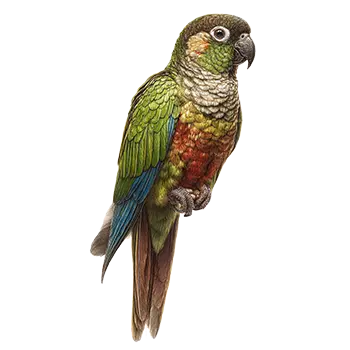

Green-cheeked Conures are small parrots with fast metabolisms that demand a carefully balanced diet. In the wild, these birds forage on a wide variety of seeds, fruits, flowers, and insects, and replicating that nutritional diversity in captivity is essential to their long-term health. A diet that leans too heavily on any single food group — especially seeds — can lead to obesity, fatty liver disease, and nutritional deficiencies that shorten an otherwise impressive lifespan.
The foundation of a healthy Green-cheeked Conure diet should be a high-quality formulated pellet, which typically accounts for sixty to seventy percent of daily intake. Pellets are designed to deliver a complete amino acid profile along with essential vitamins and minerals that seeds alone cannot provide. The remaining thirty to forty percent should come from fresh fruits, vegetables, and occasional treats that add variety and enrichment to mealtimes.
Calcium and vitamin A are two nutrients that deserve special attention with this species. Green-cheeked Conures are prone to vitamin A deficiency when fed seed-heavy diets, and insufficient calcium can lead to egg-binding in females and weakened bones in both sexes. Dark leafy greens, orange and red vegetables, and properly formulated pellets help address both of these concerns without the need for excessive supplementation.
Hydration is another critical factor. Fresh, clean water must be available at all times, and water dishes or bottles should be cleaned daily to prevent bacterial growth. Some owners prefer water bottles to reduce contamination from food debris, though not all conures take to bottles readily. Whichever method you choose, monitoring water intake helps catch early signs of illness.