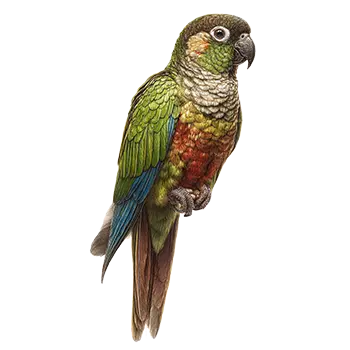

Green-cheeked Conures are active, acrobatic birds that need considerably more space than their small size might suggest. The absolute minimum cage dimensions for a single Green-cheeked Conure are twenty-four inches long by twenty-four inches wide by thirty inches tall, but larger is always better. A cage that allows the bird to fully extend and flap its wings without touching the bars promotes physical health and reduces stress-related behaviors like feather plucking and excessive screaming.
Width and length matter more than height for conures, as these birds tend to move horizontally rather than climbing straight up and down like some other parrot species. A cage that is wider than it is tall gives your conure room to hop between perches, play with toys, and engage in the short flights that keep their pectoral muscles in good condition. Flight cages, which prioritize horizontal space, are an excellent choice if your living situation allows for one.
Bar spacing is a critical safety consideration. For Green-cheeked Conures, bar spacing should be no wider than five-eighths to three-quarters of an inch. Bars that are too widely spaced pose a serious entrapment risk — a curious conure can wedge its head between overly spaced bars and injure or strangle itself. Conversely, bars that are too narrow may make it difficult for the bird to climb comfortably.
Placement of the cage within your home affects your conure's sense of security and social engagement. Position the cage in a room where the family spends time, as Green-cheeked Conures are highly social and become stressed when isolated. At least one side of the cage should be against a wall to give the bird a sense of security, while the remaining sides allow visual access to household activity. Avoid placing cages near windows with direct sun exposure, in kitchens where cooking fumes are a hazard, or in drafty areas.