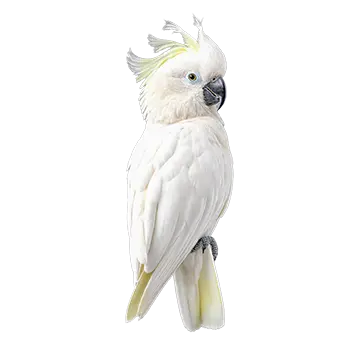

Play Style & Drive

Umbrella Cockatoos are among the most destructive chewers in the parrot world, and this trait is not a behavioral problem but rather a fundamental expression of their biology. In the wild, these birds spend hours stripping bark, excavating nesting cavities, and manipulating tough plant materials with their powerful beaks. In captivity, that same drive needs an appropriate outlet, and toys serve as the primary means of providing it. A cockatoo without adequate chewing opportunities will often redirect that energy toward cage bars, furniture, walls, and even its own feathers.

Beyond chewing, Umbrella Cockatoos are deeply curious and social birds that crave novelty and interaction. They tend to investigate new objects enthusiastically, and a toy that was riveting yesterday may be ignored tomorrow if nothing about the environment has changed. This means that toy rotation is not a luxury but a necessity. Having a supply of toys on hand and cycling them in and out of the cage every few days keeps the bird engaged and prevents the boredom that can lead to screaming, feather destructive behavior, and other stress-related issues.

The emotional dimension of play should not be underestimated with this species. Umbrella Cockatoos often develop strong attachments to particular toys, carrying them around, preening them, and even cuddling against them during rest. While this can be endearing, it also underscores how important enrichment is to their psychological health. A well-stocked toy collection is not indulgence but rather a baseline requirement for responsible cockatoo ownership.

Observing your bird's play preferences will guide your purchasing decisions more effectively than any product description. Some cockatoos gravitate toward soft, shreddable materials, while others prefer rigid objects they can crack and dismantle. Paying attention to which toys get the most attention and which are ignored helps you refine your selections over time.

Foraging & Puzzle Toys

Foraging toys are arguably the most important category of enrichment for Umbrella Cockatoos. In the wild, these birds spend a significant portion of their waking hours searching for food, and replicating that experience in captivity provides both mental stimulation and physical exercise. Foraging toys that require the bird to manipulate, open, shred, or solve a mechanism to access a hidden treat engage the cockatoo's intelligence in ways that few other toy types can match.

Simple foraging opportunities include wrapping treats in paper, tucking food inside cardboard tubes, or weaving leafy greens through the cage bars. As the bird becomes proficient, more complex foraging devices can be introduced, including acrylic puzzle boxes, multi-stage foraging wheels, and hanging foraging stations that require the bird to pull, twist, or unscrew components to reach the reward inside.

The difficulty level should be calibrated to the individual bird's experience and frustration tolerance. A cockatoo that has never encountered a foraging toy may give up quickly if the first one presented is too challenging. Start with transparent or semi-transparent devices where the bird can see the treat and understand the basic concept, then gradually increase complexity as the bird develops problem-solving confidence.

Rotating foraging toys frequently prevents the bird from memorizing solutions and losing interest. Even a familiar toy can become novel again if it is loaded with a different type of treat or positioned in a new location within the cage. The goal is to create an environment where the bird is always motivated to explore and work, mirroring the dynamic foraging landscape it would encounter in the wild.

Chew Toys & Durability

Providing a steady supply of destructible chew toys is one of the most effective ways to satisfy an Umbrella Cockatoo's natural urge to gnaw and demolish. Soft wood blocks made from balsa, pine, or yucca are consumed rapidly by most cockatoos and should be viewed as consumable items rather than long-lasting investments. Leather strips, vegetable-tanned and dye-free, offer a tougher chewing experience and tend to last somewhat longer than softwood.

For more durable options, hardwood toys made from maple, birch, or java wood provide a greater challenge and can occupy a determined chewer for days or even weeks. Some manufacturers produce toys specifically rated for large cockatoos and macaws, using thicker wood components and heavier-gauge hardware. These products are worth seeking out, as toys designed for smaller parrots will be dismantled in minutes and may pose safety hazards if small components are swallowed.

Hardware is a critical safety consideration for cockatoo toys. Quick-link connectors, chains, and hanging mechanisms should be made from stainless steel or nickel-plated steel, as cockatoos will chew on every component of a toy, not just the intended parts. Avoid toys with zinc-plated hardware, small bells that can be crushed and swallowed, or key-ring style connectors that a strong beak can pry open. Inspect toys regularly and remove any that have been reduced to potentially dangerous fragments.

Accepting that chew toys are expendable items is an important mindset shift for cockatoo owners. Budgeting for a regular supply of destructible toys is part of the ongoing cost of keeping this species. Attempting to save money by providing only indestructible toys deprives the bird of the satisfaction of actually destroying something, which is the entire point of chewing enrichment.

Swings, Climbing & Physical Toys

Umbrella Cockatoos are athletic climbers that use their beaks and feet together with remarkable coordination. Toys and structures that encourage climbing, swinging, and physical movement help maintain muscle tone and cardiovascular fitness while providing enjoyable stimulation. Large swings made from heavy-duty rope, chain, or natural wood are a favorite with many cockatoos, and some birds will spend extended periods rocking and swinging contentedly.

Cage-mounted ladders and climbing nets made from natural sisal or cotton rope give the bird additional pathways to navigate its enclosure. Boing-style spiral rope perches that hang from the cage ceiling provide both a climbing surface and a flexible perch that sways with the bird's movement, adding an element of balance and coordination to the experience. These should be made from thick, tightly woven rope to withstand heavy beak pressure.

Play gyms and tabletop stands offer physical enrichment outside the cage. A well-designed play gym includes multiple perches at different heights, ladders, swings, and mounting points for hanging toys. Look for stands with wide, stable bases that can support the weight and movement of a large cockatoo without tipping. Stainless steel or wrought iron construction is preferable to wood, which will be systematically dismantled.

Physical toys also include foot toys, which are small objects the bird can hold in one foot and manipulate with its beak. Wooden beads, leather knots, wiffle balls, and untreated wooden blocks make excellent foot toys. These are particularly valuable for times when the bird is on a play stand or flat surface, as they encourage dexterous manipulation and independent play.

Comfort & Companion Toys

Umbrella Cockatoos are exceptionally social and emotionally sensitive birds, and comfort toys can play a meaningful role in their psychological wellbeing. Soft, shreddable toys made from cotton rope, palm fronds, or strips of bird-safe fabric provide both a tactile comfort object and a chewing outlet. Some cockatoos develop a habit of preening and cuddling these items, which can serve as a self-soothing behavior during periods when their owner is away.

However, comfort objects should be monitored carefully. Some cockatoos become hormonally stimulated by soft, nest-like objects, which can lead to increased aggression, egg-laying in females, or chronic reproductive behavior in both sexes. If a bird begins displaying hormonal behaviors such as regurgitation on a toy, tucking material under its wings, or becoming territorial around a specific object, that item should be removed and replaced with something less likely to trigger a nesting response.

Acrylic mirrors and reflective toys are controversial in the cockatoo community. While some birds enjoy interacting with their reflection, others become obsessed or aggressive toward the perceived rival. Mirror toys are generally best avoided for cockatoos that are housed alone, as the reflection can create an unhealthy fixation. For birds housed in pairs or groups, mirrors tend to be less problematic because the bird has real social companions.

Music, television, and audio recordings can serve as environmental enrichment when the owner is away. Many cockatoos respond positively to calm music, nature sounds, or even recorded conversations. Some owners leave a radio playing softly during the day to provide auditory stimulation and reduce the silence that can contribute to anxiety in a species that is accustomed to the constant ambient sounds of a tropical forest.

DIY & Budget Options

Given the rate at which Umbrella Cockatoos destroy toys, building a DIY enrichment routine is both practical and cost-effective. Many of the best cockatoo toys can be assembled from inexpensive, readily available materials. Untreated pine boards cut into blocks, sections of natural wood branches from safe tree species, and rolls of adding machine paper or unbleached craft paper provide hours of shredding satisfaction at a fraction of the cost of commercial toys.

Cardboard is one of the most versatile and economical enrichment materials available. Toilet paper tubes, small cardboard boxes, and egg cartons can be stuffed with treats and offered as disposable foraging toys. Phonebook-sized stacks of paper can be threaded onto a stainless steel skewer and hung in the cage for extended shredding sessions. Always ensure that any cardboard or paper used is free of inks, adhesives, and coatings that could be harmful if ingested.

Natural materials harvested from your own yard can supplement commercial and homemade toys. Branches from apple, pear, elm, or willow trees make excellent perches and chew items, provided the trees have not been treated with pesticides or herbicides. Strip the bark or leave it on depending on the bird's preference. Pine cones collected from untreated trees can be washed, baked at low temperature to kill any insects or mold, and offered as engaging chew objects.

When assembling DIY toys, safety is paramount. Use only stainless steel hardware, vegetable-tanned leather, untreated natural fibers, and food-grade dyes if any coloring is desired. Avoid cotton string in lengths that could entangle the bird, and never use pressure-treated lumber, cedar, or redwood, which contain compounds toxic to birds. The same inspection routine that applies to commercial toys should be applied to homemade creations, with worn or fragmented items removed promptly.

Always consult a qualified professional before making any health-related decisions. This content is provided for informational reference only and should not replace professional guidance specific to your animal.