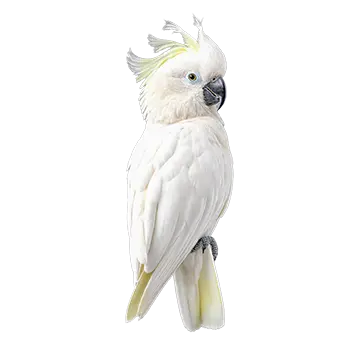

Activity & Health Monitors

Monitoring an Umbrella Cockatoo's daily activity patterns can provide valuable early warning signs of illness, stress, or behavioral changes that might otherwise go unnoticed. Avian-specific health monitoring tools are still an emerging category, but several technologies originally developed for other applications can be adapted for use with large parrots. Digital gram scales are perhaps the most essential monitoring tool for any cockatoo owner, allowing daily or weekly weigh-ins that can detect weight loss or gain long before visual assessment would reveal a problem.

Weight fluctuations of more than ten percent from a bird's established baseline warrant veterinary attention, and a reliable gram scale with a perch attachment makes routine weighing a simple part of the daily care routine. Some owners track weight data in a spreadsheet or dedicated app, creating a longitudinal record that can be shared with an avian veterinarian during checkups. Consistent weighing at the same time of day, ideally in the morning before feeding, provides the most accurate trend data.

Environmental monitoring devices that track temperature, humidity, and air quality in the room where the bird is housed can alert owners to conditions that may affect the bird's health. Small digital hygrometers placed near the cage display current humidity levels and help owners determine when a humidifier or dehumidifier is needed. Some advanced air quality monitors can detect volatile organic compounds and particulate matter levels, providing objective data about the air the bird is breathing.

Wearable health monitors designed for birds are limited in availability and practicality, as most cockatoos will not tolerate devices attached to their bodies. However, observational monitoring through daily behavioral assessment remains the most effective health screening method. Tracking patterns in vocalization, eating habits, droppings, and activity level through a simple daily log or app provides a behavioral baseline that makes deviations easier to spot.

GPS & Location Tracking

The risk of an Umbrella Cockatoo escaping through an open door or window is a persistent concern for every owner, and GPS tracking technology offers a layer of security that can mean the difference between recovering a lost bird and losing it permanently. Lightweight GPS trackers designed for small animals can sometimes be adapted for use with large parrots, typically attached to a leg band or harness rather than worn as a standalone device.

The primary challenge with GPS tracking for birds is weight. Even the lightest consumer GPS devices add several grams to the bird, and any tracking device must be light enough that it does not impair flight, balance, or comfort. As a general guideline, a tracking device should weigh no more than three to five percent of the bird's body weight. For an Umbrella Cockatoo weighing between 400 and 700 grams, this means the device should ideally be under 20 grams.

Bluetooth trackers offer an alternative for indoor location awareness. These small, lightweight tags emit a signal that can be detected by nearby smartphones, making them useful for locating a bird within a home or immediate neighborhood. However, their range is limited compared to true GPS devices, and they depend on the density of compatible devices in the area to provide location updates for a bird that has traveled farther afield.

Regardless of the tracking technology used, prevention remains more effective than recovery. Establishing strict door and window protocols, using screens on all openings, and training household members to verify the bird's location before opening exterior doors are foundational safety practices. Tracking devices should be viewed as a supplementary safety measure rather than a substitute for diligent escape prevention.

Smart Feeders & Water Systems

Smart feeding technology can add precision and convenience to an Umbrella Cockatoo's dietary management, though the unique behaviors and powerful beaks of these birds impose significant limitations on which products are practical. Automated feeders designed for small pets or poultry may not withstand the destructive attention of a curious cockatoo, and any device placed within the bird's reach must be constructed from materials that can endure sustained chewing and manipulation.

Timed feeders that dispense measured portions of dry food at preset intervals can be useful for owners who work long hours or maintain irregular schedules. These devices ensure the bird has access to fresh food throughout the day without requiring manual intervention. However, they are most appropriate for pellets and dry foods only. Fresh fruits, vegetables, and other perishable items must still be offered and removed manually to prevent spoilage and bacterial growth.

Smart water fountains designed for pets provide a continuous flow of filtered water that can encourage increased water intake and reduce bacterial buildup compared to stagnant water in a bowl. If using a fountain-style water system, choose a model with a filtration system that removes particulate matter and a design that can be thoroughly disassembled for cleaning. The fountain should be placed outside the cage where the bird can access it during supervised out-of-cage time, as most fountain designs are not cage-mountable or cockatoo-proof.

Automated systems should always be backed up by manual feeding and watering. Technology can fail, power can go out, and a bird that depends entirely on an automated system is vulnerable in ways that a bird with a conventional feeding setup is not. Use smart feeders and water systems as supplements to a hands-on feeding routine rather than replacements for direct care.

Cameras & Home Monitoring

Pet cameras and home monitoring systems allow cockatoo owners to observe their bird remotely during work hours or while traveling, providing peace of mind and the ability to detect problems early. A camera positioned to view the bird's cage area can reveal behaviors that only occur when the owner is absent, such as feather plucking, excessive screaming, cage-bar chewing, or lethargy that might indicate illness.

When selecting a camera, prioritize models with high-definition video, wide-angle lenses, and reliable night vision or low-light capability. Two-way audio is a feature that some owners find valuable, as it allows them to speak to their bird remotely. However, this feature should be used thoughtfully with cockatoos, as hearing their owner's voice without being able to see or reach them may increase anxiety and vocalization in some individuals rather than providing comfort.

Motion-activated recording and alert features can notify the owner of unusual activity, such as a bird that has stopped moving for an extended period or unexpected movement in the room that could indicate an intruder or escaped bird. Cloud storage options allow video footage to be reviewed later, which can be helpful for analyzing behavior patterns over time or providing documentation for a veterinarian.

Camera placement should ensure a clear view of the cage and primary play areas without being within reach of the bird. Cockatoos will investigate and destroy any electronic device they can access, and the wiring associated with cameras presents both a destruction and an electrocution hazard. Wireless cameras mounted high on a wall or ceiling are the most practical option. Ensure that any camera system used is secured against unauthorized access to protect household privacy.

Training Technology

Technology can enhance the training process for Umbrella Cockatoos, though it should complement rather than replace the hands-on relationship-based approach that works best with this intensely social species. Clicker training remains one of the most effective behavioral modification techniques for parrots, and the basic clicker itself is a simple, inexpensive tool that requires no batteries or connectivity. The click provides a precise acoustic marker that tells the bird exactly which behavior is being rewarded.

Digital clicker apps on smartphones replicate the function of a physical clicker and may offer additional features such as session timing, click counting, and progress logging. These can be useful for tracking training consistency and measuring improvement over time. Some apps include training protocols and step-by-step guides for teaching specific behaviors, which can be helpful for first-time bird owners establishing a training program.

Tablet-based enrichment applications designed for parrots present visual and audio stimuli that the bird can interact with by tapping the screen. While these apps can provide short-term entertainment, they should be used sparingly and under supervision to prevent screen damage from the bird's powerful beak. A protective case rated for heavy impact is essential if allowing a cockatoo to interact with any touchscreen device.

Audio recording and playback technology can support speech and vocalization training. Recording the bird's existing vocalizations and playing them back can encourage vocal development, while repeatedly playing specific words or phrases during training sessions can help a cockatoo learn to mimic them. Keep playback sessions short and varied to maintain the bird's interest, and be aware that cockatoos may pick up unintended sounds from recordings, including background noise, laughter, or other household sounds that happen to be captured.

Veterinary Telehealth

Veterinary telehealth services have expanded significantly in recent years and can be a valuable resource for Umbrella Cockatoo owners, particularly those who do not have convenient access to an avian veterinarian in their area. Telehealth consultations allow owners to discuss behavioral concerns, dietary questions, and minor health issues with a qualified avian veterinarian via video call, often at a lower cost and with greater scheduling flexibility than an in-person visit.

Video consultations are most useful for non-emergency situations where visual assessment can provide meaningful information. A veterinarian can observe the bird's posture, feather condition, breathing pattern, and general demeanor through a video feed, and the owner can show specific areas of concern such as feather loss, skin lesions, or abnormal droppings. Having good lighting and a stable camera position improves the quality of the consultation considerably.

Telehealth has clear limitations that owners should understand. A veterinarian cannot perform a physical examination, run blood work, take radiographs, or administer treatments remotely. Any condition that involves acute distress, significant bleeding, difficulty breathing, seizures, or suspected fractures requires an immediate in-person veterinary visit. Telehealth is best suited for ongoing management, follow-up consultations, behavioral guidance, and dietary advice rather than emergency care.

Some telehealth platforms offer subscription models that include a set number of consultations per year, while others operate on a per-visit basis. When choosing a telehealth provider, verify that the veterinarians on the platform have specific training and experience in avian medicine, as general practice veterinarians may not be equipped to address the specialized needs of large parrots. Maintaining a relationship with both a local avian veterinarian for hands-on care and a telehealth service for convenient consultations provides the most comprehensive veterinary support for a long-lived species like the Umbrella Cockatoo.

Always consult a qualified professional before making any health-related decisions. This content is provided for informational reference only and should not replace professional guidance specific to your animal.