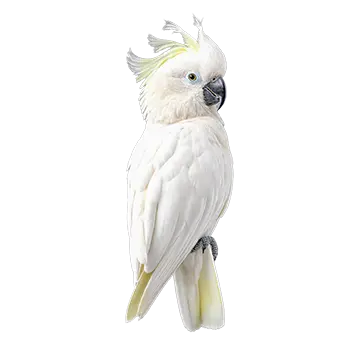

A well-fitted avian harness allows an Umbrella Cockatoo to safely accompany its owner outdoors without the risk of the bird flying away or encountering predators. Harness training is best started early in the bird's life, though adult birds can also learn to accept a harness with patience and positive reinforcement. The key is to introduce the harness gradually, allowing the bird to investigate and become comfortable with the material before attempting to put it on.
Harness designs for large parrots typically consist of a body strap that fits around the torso and a leash attachment point between the wings. Look for harnesses made from durable, lightweight materials with secure buckle or snap closures that the bird cannot open independently. The fit should be snug enough to prevent the bird from slipping out but loose enough to allow comfortable movement and breathing. An improperly sized harness can cause feather damage, skin irritation, or dangerous entanglement.
Flight lines are an alternative for birds that will not tolerate a body harness. These lightweight tethers attach to an ankle band and allow the bird a limited range of flight while remaining secured to the owner or a fixed point. Flight lines require careful supervision, as the bird can build up speed and injure itself at the end of the line if startled. Neither harnesses nor flight lines should ever be used unsupervised or left on a bird inside its cage.
Training sessions should be short, positive, and treat-heavy. Most birds require weeks or months of gradual desensitization before they will calmly wear a harness for an extended outing. Forcing a harness onto a reluctant bird can cause lasting fear and resistance. If your cockatoo consistently resists harness training despite patient effort, respect its limits and explore other safe outdoor options such as a carrier or enclosed aviary.