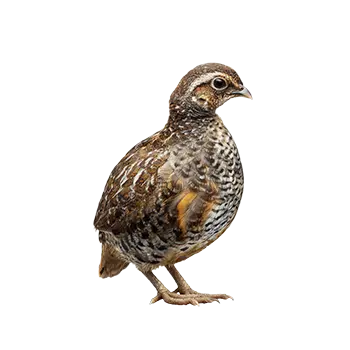

Technology in Button Quail husbandry serves a fundamentally different purpose than it does in the care of larger companion birds. Parrots and cockatoos benefit from interactive devices, foraging cameras, and enrichment gadgets that engage their cognitive abilities. Button Quail, by contrast, benefit most from technology that monitors and controls their environment without disturbing them. These are shy, easily startled birds that thrive in stable, predictable conditions, and the most valuable tech investments are those that maintain environmental consistency, detect problems early, and reduce the frequency with which the keeper must physically interact with the enclosure.
The case for environmental monitoring technology is particularly strong for Button Quail because the consequences of environmental instability are severe and rapid. A temperature drop of fifteen degrees overnight can kill a Button Quail that would merely be uncomfortable in a larger bird. A humidity spike that goes unnoticed for two days can trigger respiratory illness. An undetected water system failure leaves the birds dehydrated within hours given their rapid metabolism. Technology that tracks these variables continuously and alerts the keeper to deviations provides a safety net that periodic manual checks cannot match.
Budget allocation for technology should reflect the relative impact of each device on bird welfare. A reliable thermostat paired with an appropriate heat source prevents the single most common cause of captive Button Quail mortality: temperature-related stress. A basic environmental monitor with temperature and humidity sensors costs less than a single veterinary visit and prevents conditions that would require one. Beyond these essentials, additional technology investments offer diminishing but still meaningful returns in convenience, data quality, and peace of mind.
Adopting technology does not replace husbandry knowledge or attentive observation. The most sophisticated monitoring system cannot identify a subtle change in a bird's posture, a slight alteration in its call, or a shift in its social behavior that signals the onset of illness. Technology is a force multiplier for an attentive keeper, not a substitute for one. The ideal approach combines automated environmental control with daily hands-on observation, using each to complement the other's blind spots.