
Enclosure Size Requirements

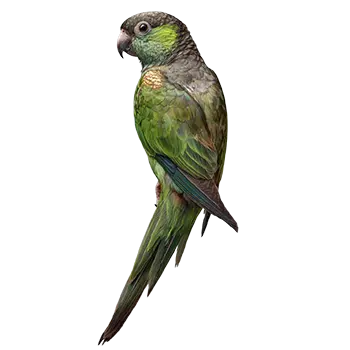
The Bronze Winged Parakeet is a small parrot with an outsized need for space. At seven to eight inches in length, this Brotogeris species might seem like a candidate for a compact cage, but its flight style and activity level tell a different story. Bronze Wings are fast, agile fliers that move in rapid bursts rather than the leisurely glides of larger parrots, and they require horizontal flight distance to exercise properly. A cage that merely allows the bird to climb and hop between perches is inadequate for long-term physical and psychological health.

The minimum recommended cage size for a single Bronze Winged Parakeet is twenty-four inches long by eighteen inches wide by twenty-four inches tall, though larger is always better. Flight cages measuring thirty-six inches or more in length provide meaningful room for short flight paths and allow the bird to choose between multiple activity zones within the enclosure. For owners who keep their bird caged for significant portions of the day due to work schedules or household dynamics, a larger enclosure becomes not a luxury but a necessity for preventing muscle atrophy and behavioral deterioration.

For pairs or small groups of Bronze Wings, cage dimensions must scale accordingly. Two birds housed together need at minimum thirty inches of length and proportional increases in width and height, with enough perch and feeding stations to prevent territorial disputes over resources. Brotogeris species are generally social and tolerate cohabitation well compared to some parrot genera, but crowded conditions will generate stress even among compatible birds.

Aviary housing represents the gold standard for this species when circumstances permit. An outdoor or indoor aviary measuring at least four feet in length allows sustained flight that no cage can replicate. Outdoor aviaries in suitable climates give Bronze Wings access to natural sunlight, fresh air, and environmental stimulation, though they require predator-proof construction, shade areas, and weather protection. Indoor flight enclosures offer many of the same space benefits with more controlled environmental conditions.

Cage Construction and Bar Spacing

The materials and construction of a cage determine its safety, durability, and ease of maintenance across the years a Bronze Winged Parakeet will inhabit it. Powder-coated steel is the standard material for quality bird cages, offering resistance to rust and chewing while providing a non-toxic surface. The powder coating must be lead-free and zinc-free, as both metals cause heavy metal poisoning in birds, a condition that is often fatal and always serious. Reputable cage manufacturers use bird-safe coatings and will specify this in their product information.

Stainless steel cages represent the premium tier of cage construction. They are virtually indestructible, completely non-toxic, resistant to all forms of corrosion, and easy to disinfect thoroughly. Their chief drawback is cost, which runs several times higher than comparable powder-coated models. For an owner committed to a Bronze Wing's full potential lifespan of twenty-five years, however, a stainless steel cage may actually prove more economical than replacing cheaper cages as their coatings chip and their welds fail.

Bar spacing is a critical safety parameter for this small species. The recommended bar spacing for a Bronze Winged Parakeet is three-eighths to one-half inch. Bars spaced wider than half an inch create a risk of head entrapment, where the bird pushes its head through the bars but cannot withdraw it, a situation that can cause injury, panic, and death if the owner is not present to intervene. Horizontal bar orientation on at least two sides of the cage facilitates climbing, which is a primary mode of movement for all parrots and provides important foot and leg exercise.

Cage doors should be large enough for the owner's hand to pass through comfortably while holding the bird, and should feature secure latches that the bird cannot learn to open. Bronze Wings are intelligent and dexterous, and simple hook-style latches are easily defeated by a motivated bird. Spring-loaded latches, padlock-compatible hasps, or carabiner-secured closures provide the reliability needed to prevent unsupervised escapes into a home that may contain ceiling fans, open windows, hot stoves, and other hazards.

Perches and Interior Layout

Perch selection and placement within the cage have a direct impact on the foot health, activity level, and overall comfort of a Bronze Winged Parakeet. The bird spends its entire life standing on its feet, and perches that are uniform in diameter, material, and texture contribute to pressure sores, arthritis, and bumblefoot infections over time. A well-configured cage contains a minimum of three perches of different types, positioned at varying heights and angles to encourage movement and provide the foot with a range of gripping surfaces.

Natural wood perches are the foundation of a healthy perch setup. Branches of varying diameter, ideally between three-eighths and three-quarters of an inch for this species, provide the irregular surface contours that exercise foot muscles and prevent pressure concentration. Safe wood species include manzanita, dragonwood, java wood, and untreated fruit tree branches such as apple, pear, and willow. Avoid cherry, cedar, redwood, and any treated lumber, all of which contain compounds toxic to birds.

Rope perches made from untreated cotton or sisal add a soft, flexible surface that many Bronze Wings enjoy for resting and sleeping. These should be inspected regularly for fraying, as loose threads can entangle toes and cut off circulation if wrapped tightly. When a rope perch shows significant wear, it should be replaced immediately rather than trimmed, since the underlying weave may be compromised in ways that are not visible.

Concrete and mineral perches serve a specific functional purpose: they help maintain nail and beak length through natural abrasion as the bird grips and chews them. These are best positioned as a secondary perch near a food or water station, where the bird will use them regularly but not spend extended resting time on their hard, unforgiving surfaces. Placing a concrete perch as the highest perch in the cage, where the bird is likely to sleep, invites foot problems. Corner platforms and flat perches offer a resting alternative where the bird can redistribute its weight entirely, which can be beneficial for older birds or those with existing foot conditions.

Cage Placement and Environment

Where a cage sits within the home shapes the Bronze Winged Parakeet's daily experience as profoundly as the cage itself. This is a social species that bonds closely with its human household, and isolation in a back room or basement creates stress, behavioral problems, and eventually a withdrawn, fearful bird. The ideal cage location places the bird in or near the primary living area where family activity occurs, allowing it to observe, vocalize, and participate in the household rhythm without being at the center of high-traffic chaos.

Positioning at least one side of the cage against a wall provides a sense of security that reduces stress. A bird in a cage placed in the middle of a room, exposed on all sides, has no retreat direction and must remain vigilant in every direction simultaneously. Wall placement gives the bird a protected back and allows it to focus its attention outward into the room. Corner placement offers even more security, though it can limit the owner's access for cleaning and interaction.

Light exposure requires careful management. Bronze Winged Parakeets benefit from natural daylight cycles that regulate their hormonal rhythms and support vitamin D metabolism. Placing the cage near a window provides beneficial light, but direct, unfiltered sunlight can cause dangerous overheating in a caged bird that cannot move to shade. The cage should receive indirect natural light or have a shaded retreat area where the bird can escape direct sun. Supplemental full-spectrum lighting designed for birds is valuable in rooms with limited natural light or during winter months when daylight hours are short.

Temperature stability matters more than a specific target number. Bronze Wings are tropical birds comfortable in the range of sixty-five to eighty-five degrees Fahrenheit, but they are far more sensitive to rapid temperature swings than to steady conditions at either end of that range. Avoid placing cages near heating vents, air conditioning outlets, exterior doors, and drafty windows. Kitchen placement is specifically contraindicated because of fumes from nonstick cookware, which release polytetrafluoroethylene gas at high temperatures. This gas is lethal to birds, often within minutes, even at concentrations too low for humans to detect.

Substrate and Cleaning Systems

The bottom of the cage requires a substrate system that simplifies daily cleaning while maintaining a hygienic environment for the bird. The most practical and widely recommended substrate for small parrots is plain, unprinted newspaper or butcher paper. These materials are inexpensive, absorbent, non-toxic, and easy to remove and replace entirely on a daily basis. Their flat surface also allows owners to monitor droppings for changes in color, consistency, and volume, which are among the earliest indicators of illness in birds.

Cage grates, the wire grids that sit above the substrate tray, serve an important hygiene function by keeping the bird separated from its droppings and discarded food. For a Bronze Winged Parakeet, the grate mesh should be fine enough that the bird cannot reach through to contact the soiled substrate below. Some owners remove the grate to give the bird access to the cage floor for ground foraging, which is a valid enrichment strategy but requires that the substrate be changed more frequently and that the bird is closely monitored for consumption of spoiled food or droppings.

Daily cleaning should include replacing the substrate, washing food and water dishes with hot water and a bird-safe detergent, and wiping down perches and cage bars in areas of heavy soiling. Weekly cleaning extends to a more thorough scrubbing of the cage tray, grate, and all perches. Monthly deep cleaning involves removing the bird to a safe holding area and disinfecting the entire cage with a bird-safe disinfectant, rinsing thoroughly, and allowing complete drying before reassembly.

Avoiding certain substrate materials is as important as choosing the right ones. Cedar and pine shavings release aromatic oils that irritate avian respiratory systems. Corn cob bedding harbors mold and bacteria when wet and can cause intestinal blockages if ingested. Cat litter, whether clay or clumping, is dangerous if consumed and creates respiratory-irritating dust. Sand sheets marketed for bird cages offer minimal absorbency and can cause crop impaction if the bird ingests sand particles. The simplicity and safety of flat paper substrates make them the clear choice for this species.

Travel Carriers and Temporary Housing

A dedicated travel carrier is an essential piece of equipment for any Bronze Winged Parakeet owner. Veterinary visits, emergency evacuations, moves, and even routine trips to the groomer require a secure, appropriately sized carrier that the bird can be loaded into without excessive stress. Attempting to transport a small parrot in its full-sized cage is impractical, unsafe in a vehicle, and often more stressful for the bird than a properly designed travel enclosure.

The ideal carrier for a Bronze Wing is a small, hard-sided unit with secure ventilation panels, a single door with a reliable latch, and a removable perch inside. The carrier should be large enough for the bird to turn around and shift positions but small enough to limit dangerous movement during vehicle acceleration and braking. Clear-sided acrylic carriers allow the bird to see its surroundings, which some individuals find reassuring, while others do better in opaque or partially covered carriers that reduce visual stimulation during stressful transit.

Carrier conditioning is a training process that should begin long before the carrier is actually needed. Leaving the carrier open in the bird's play area, placing treats inside it, and allowing the bird to explore it voluntarily builds a positive association that transforms the carrier from a source of panic into a familiar refuge. Birds that have been carrier-conditioned load with minimal handling stress and travel more calmly, which in turn reduces the physiological stress response that can compromise a small bird's health during what may already be a difficult day.

Temporary housing situations, such as during cage cleaning or home renovations, require a safe, escape-proof space. A small secondary cage kept for this purpose does not need to match the primary enclosure in size or appointments but should meet basic safety standards for bar spacing and material toxicity. Some owners use large plastic storage bins with ventilation holes drilled into the lid as short-term holding enclosures, which can work adequately for brief periods but lack the climbing surfaces and perch options that even temporary housing should ideally provide.

Outdoor and Seasonal Considerations

Providing supervised outdoor time offers significant health and enrichment benefits for Bronze Winged Parakeets, but it introduces risks that must be carefully managed. Exposure to unfiltered natural sunlight allows the bird's skin to synthesize vitamin D3, which is essential for calcium absorption and cannot be fully replicated by dietary supplements or artificial lighting. Even brief sessions of direct sunlight, as short as twenty to thirty minutes several times per week, can meaningfully improve a captive bird's vitamin D status and overall wellbeing.

Outdoor enclosures designed for this purpose range from simple hanging cages placed on a secure patio to elaborate walk-in aviaries with planted vegetation and natural perching. Whatever the design, the enclosure must be fully predator-proof, protecting against hawks, cats, raccoons, snakes, and any other local predators. Hardware cloth with openings no larger than half an inch provides the necessary barrier, as standard chicken wire can be breached by determined predators and allows snakes to pass through freely.

Temperature monitoring is essential during outdoor time. As tropical birds, Bronze Wings tolerate warm conditions well but can overheat rapidly in direct sun without shade access, and they are dangerously vulnerable to temperatures below fifty-five degrees Fahrenheit. Any outdoor enclosure must include a shaded retreat, and the bird should never be left outside unattended during temperature extremes. Wind chill can drop the effective temperature a bird experiences well below the ambient reading, making calm, warm days the safest choice for outdoor sessions.

Seasonal changes in daylight length affect Bronze Winged Parakeets hormonally, even indoors. Increasing day length in spring triggers breeding behavior in many individuals, including territorial aggression, egg laying in hens, and regurgitation-based courtship feeding. Owners who do not intend to breed should manage light exposure to maintain a roughly twelve-hour day and twelve-hour night cycle year-round, using cage covers or room darkening to prevent artificial lighting from extending the bird's perceived day length beyond what is hormonally neutral.

Always consult a qualified professional before making any health-related decisions. This content is provided for informational reference only and should not replace professional guidance specific to your animal.