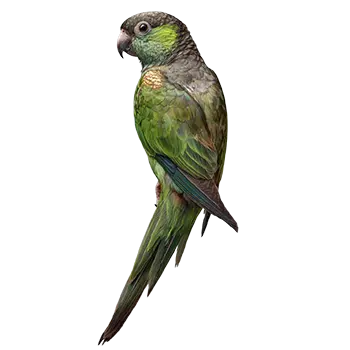

Bronze Winged Parakeet Species Guide - Furry Critter Network

Bronze Winged Parakeet

Quick Facts

🔬 Scientific Name
Brotogeris chrysoptera
📊 Care Level
Intermediate
😊 Temperament
Affectionate, Playful, Social, Gentle
📏 Adult Size
7-8 inches
⏱️ Lifespan
15-25 years
🔊 Noise Level
Moderate
🗣️ Talking Ability
Limited
🍽️ Diet Type
Pellet-based with fresh foods
🌍 Origin
Northern South America
🏠 Min Cage Size
24x24x30 inches
📐 Size
Small

Bronze Winged Parakeet - Names & Recognition

The Bronze Winged Parakeet (Brotogeris chrysoptera) is a small South American parrot belonging to the genus Brotogeris within the family Psittacidae. The species is also commonly referred to as the Bronze Winged Parrot, Golden Winged Parakeet, or Tui Parakeet in some regional references, though the latter name more properly applies to a different Brotogeris species. The common name derives from the distinctive bronze-brown patches visible on the wing coverts, which contrast with the bird's predominantly green plumage and serve as the most readily identifiable field mark for the species.

The scientific name Brotogeris chrysoptera combines Greek roots that translate roughly to "golden-winged food-eater," with Brotogeris deriving from the Greek brotos (food) and gerys (voice or cry), while chrysoptera combines chrysos (gold) and pteron (wing). This nomenclature reflects both the species' conspicuous wing coloration and the chattering vocalizations typical of the genus. The species was first formally described by the Swedish naturalist Carl Linnaeus in 1766, originally placed in the genus Psittacus before being reclassified into Brotogeris as ornithological taxonomy matured.

Several subspecies of the Bronze Winged Parakeet have been recognized by various authorities, though the exact number and validity of these divisions remain subjects of ongoing taxonomic discussion. The nominate subspecies Brotogeris chrysoptera chrysoptera occupies much of the species' range, while other described forms including B. c. tuipara, B. c. tenuifrons, and B. c. solimoensis exhibit subtle variations in plumage coloration, particularly in the extent and shade of the forehead patch and wing markings. In aviculture, subspecific distinctions are rarely made, and most captive birds are simply identified as Bronze Winged Parakeets regardless of their precise geographic origin.

Within the broader context of the Brotogeris genus, the Bronze Winged Parakeet is one of approximately eight recognized species, a group that includes more commonly kept avicultural subjects such as the Grey-cheeked Parakeet and the White-winged Parakeet. The Bronze Winged Parakeet has never achieved the widespread popularity of some of its congeners in the pet trade, partly due to more limited availability and partly because import restrictions in many countries have reduced the flow of wild-caught individuals that once supplied the market. Captive-bred Bronze Winged Parakeets are available from specialty breeders but remain less common than budgerigars, cockatiels, or even other Brotogeris species in most regions.

Bronze Winged Parakeet Physical Description

The Bronze Winged Parakeet is a compact, sturdy small parrot measuring approximately seven to eight inches in total length from the crown of the head to the tip of the tail. Body weight in healthy adults typically ranges from fifty-five to seventy-five grams, with minimal size difference between males and females. The species exhibits no reliable visual sexual dimorphism, meaning that surgical sexing or DNA testing is required to determine the sex of individual birds. The overall body shape is stocky relative to length, with a proportionally large head, a short graduated tail, and strong zygodactyl feet well adapted for climbing and grasping.

The predominant plumage color is a rich, bright green that covers the majority of the body, wings, and tail. The forehead and crown display a variable olive-yellow to dull orange wash, with the exact shade and extent differing among subspecies and individuals. The chin and upper throat bear a distinctive orange patch that serves as a useful identification feature, particularly in distinguishing the species from other green Brotogeris parakeets. The namesake bronze-brown wing patches appear on the secondary coverts and inner wing feathers, creating a warm metallic sheen visible both in flight and at rest when the wing is folded. The primary flight feathers are deep blue, adding a flash of color visible when the wings are extended.

The beak is horn-colored to pale yellowish, relatively short and broad for the bird's size, with a strong upper mandible curved to a sharp point. This beak structure is characteristic of the Brotogeris genus and is well suited to the bird's natural diet of fruits, seeds, and blossoms. The eyes are dark brown and surrounded by a narrow ring of bare whitish-grey periorbital skin. The legs and feet are flesh-colored to pinkish-grey, with strong toes and sharp nails that provide excellent grip on branches, perches, and cage bars.

Juvenile Bronze Winged Parakeets resemble adults but generally display duller overall coloration, with less defined chin and forehead patches and a slightly shorter tail. The bronze wing patches may be less pronounced in young birds, developing their full metallic quality as the bird matures through its first major molt. Plumage reaches full adult coloration by approximately twelve to eighteen months of age. In captivity, feather condition serves as an important indicator of overall health, with dull, frayed, or discolored feathers suggesting nutritional deficiency, stress, or underlying illness.

Affection Level
Bronze Winged Parakeets are exceptionally affectionate birds that thrive on physical closeness with their owners. They eagerly seek out head scratches, enjoy nestling against the neck or inside a shirt collar, and will often fall asleep contentedly while being held. Their desire for physical contact is among the strongest of any small parrot species, making them deeply rewarding companions for owners who enjoy hands-on interaction.
Sociability
These parakeets are naturally gregarious birds that adapt well to social households. While they form strong primary bonds, they generally accept interaction from multiple family members more readily than many parrot species. They do best in environments with regular human contact and can become distressed if isolated for extended periods. Early socialization with various people helps maintain their easygoing disposition.
Vocalization
Bronze Winged Parakeets produce a range of chattering, chirping, and whistling sounds that fall into the moderate noise category. Their calls are higher pitched than larger parrots but lack the ear-piercing intensity of conures or cockatoos. They are most vocal during morning and evening hours and may call more persistently when seeking attention. Apartment dwellers generally find their noise level manageable compared to other parrot species.
Intelligence
While not at the cognitive level of African Greys or macaws, Bronze Winged Parakeets display solid intelligence that allows them to learn simple tricks, navigate foraging challenges, and develop problem-solving strategies for accessing food and toys. They are observant birds that learn household routines quickly and anticipate regular events such as feeding times and cage opening. Their intelligence is sufficient to keep them engaged with enrichment activities.
Exercise Needs
These active small parrots require two to three hours of supervised out-of-cage time daily for adequate physical and mental exercise. They enjoy climbing, swinging, and short flights within a safe room. Providing varied perches, ladders, and play gyms encourages physical activity inside and outside the cage. Their exercise requirements are moderate compared to larger parrot species but should not be neglected.
Maintenance Level
Bronze Winged Parakeets are moderately maintainable as companion birds. Their smaller size means less food waste and cage mess than larger parrots, and they produce minimal feather dust compared to cockatoos or African Greys. Daily cage cleaning, fresh food preparation, and regular social interaction are essential. They require routine but not excessively demanding care, making them suitable for dedicated intermediate-level bird owners.
Trainability
With patience and positive reinforcement, Bronze Winged Parakeets can learn step-up commands, simple tricks, and target training. They respond well to treat-based motivation and short, consistent training sessions. Their willingness to learn is aided by their strong desire for social interaction, though they may lack the concentration span and repertoire capacity of larger, more cognitively advanced parrot species.
Independence
Bronze Winged Parakeets are not well suited to extended periods of solitude. They are flock-oriented birds that need daily companionship, whether from humans or other compatible birds. Owners who work long hours should consider keeping a pair or providing extensive enrichment to prevent loneliness-driven behavioral problems such as excessive screaming, feather chewing, or withdrawal.

Natural Habitat & Range

The Bronze Winged Parakeet is native to the tropical lowlands and foothills of northern South America, with a distribution that spans portions of Venezuela, the Guianas (Guyana, Suriname, and French Guiana), and the northern Amazon Basin of Brazil. The species occupies a broad geographic range across this region but is patchily distributed, occurring in areas where suitable habitat and food resources are available. Its range overlaps with several other Brotogeris species, though ecological and altitudinal preferences help reduce direct competition among these closely related parakeets.

Within its native range, the Bronze Winged Parakeet inhabits a variety of tropical forest environments, showing a preference for humid lowland rainforest, seasonally flooded varzea forest, and forest edge habitats. It is commonly encountered along river corridors, in clearings with fruiting trees, and in transitional zones between dense forest and more open landscapes including agricultural areas and secondary growth. The species generally occurs at elevations below one thousand meters, though it may range higher in some parts of its distribution where suitable habitat extends into foothills.

Bronze Winged Parakeets are highly social in the wild, typically observed in pairs, small family groups, or larger flocks that may number from a dozen to several hundred individuals depending on food availability. Flocks are particularly conspicuous at communal roosting sites, where large numbers gather in the evening in favored trees, and at fruiting trees where birds congregate to feed. Their flight is swift and direct, characterized by rapid shallow wingbeats and accompanied by constant chattering contact calls that help maintain flock cohesion as the group moves through the forest canopy.

The conservation status of the Bronze Winged Parakeet is currently classified as Least Concern by the International Union for Conservation of Nature, reflecting its relatively large range and apparently stable population across most of its distribution. However, localized declines have been documented in areas experiencing rapid deforestation, particularly in the Brazilian Amazon where agricultural expansion continues to fragment forest habitat. Historical trapping for the pet trade contributed to population reductions in some accessible areas, though international trade restrictions implemented under CITES and national wildlife protection laws have substantially reduced capture pressure since the late twentieth century.

Temperament

The Bronze Winged Parakeet possesses one of the most endearing temperaments among small parrot species, combining genuine affection for human companions with a playful, curious disposition that makes daily interaction consistently engaging. These birds form strong bonds with their owners and actively seek out physical contact, often snuggling against the neck, tucking under the chin, or burrowing into a shirt pocket or sleeve. This desire for closeness distinguishes them from many similarly sized parakeets that tolerate handling but do not actively initiate it, and it is one of the primary reasons the species has earned devoted admirers among those who have kept them.

Socially, Bronze Winged Parakeets tend to bond broadly with family groups rather than fixating exclusively on a single person, though they will typically show a preference for their primary caretaker. They are generally less prone to the aggressive territorial behavior and hormonal biting episodes that characterize some parrot species during breeding season. Their interactions with familiar people are usually gentle, and while any parrot can bite when frightened or overstimulated, the Bronze Winged Parakeet's bites rarely carry the force of those from larger species. Their comparatively calm and even-tempered nature makes them particularly suitable for owners who value a cooperative, companionable bird.

Playfulness is a defining characteristic of the species. Bronze Winged Parakeets enjoy manipulating toys, swinging from cage furnishings, wrestling with small objects, and engaging in interactive games with their owners. They are curious investigators of their environment, examining new objects with their beaks and feet and showing sustained interest in novel stimuli. This inquisitive nature, combined with their social drive, means they are happiest when included in household activities where they can observe and participate in family life from a safe perch or shoulder.

Despite their generally amiable disposition, Bronze Winged Parakeets are not passive birds. They have clear preferences, will vocalize their displeasure when routines are disrupted, and can develop behavioral issues if their social and enrichment needs are consistently unmet. A Bronze Winged Parakeet that does not receive adequate daily attention may become withdrawn, excessively vocal, or develop stress-related behaviors such as feather chewing. Understanding that their affectionate nature reflects a genuine need for companionship, rather than a convenient trait that can be taken for granted, is essential for maintaining the temperament qualities that make this species so appealing.

Care Requirements

Housing a Bronze Winged Parakeet appropriately begins with selecting a cage that provides adequate space for movement, wing stretching, and play. The minimum recommended cage size is twenty-four inches wide by twenty-four inches deep by thirty inches tall, though larger enclosures are always preferable and recommended when space permits. Bar spacing should be approximately half an inch to prevent the bird from squeezing through or becoming trapped between bars. The cage should be constructed of powder-coated steel or stainless steel to prevent zinc or lead toxicity from exposed metal, and it should feature horizontal bars on at least two sides to facilitate climbing, an activity these parakeets enjoy.

Cage furnishings should include multiple perches of varying diameters and textures, including natural wood branches, rope perches, and at least one platform perch for comfortable resting. Foraging toys, shreddable materials such as palm leaves or untreated paper, and small foot toys provide mental stimulation and satisfy the bird's natural urge to manipulate objects with its beak. Toys should be rotated regularly to maintain novelty. A shallow dish or misting with lukewarm water should be offered several times weekly for bathing, as Bronze Winged Parakeets enjoy water and regular bathing promotes healthy plumage and skin condition.

Environmental conditions require attention to temperature, lighting, and air quality. Bronze Winged Parakeets are tropical birds that are comfortable at household temperatures between sixty-five and eighty degrees Fahrenheit but should be protected from drafts, sudden temperature fluctuations, and direct exposure to heating or cooling vents. Full-spectrum lighting that provides UVA and UVB wavelengths supports natural vitamin D3 synthesis and overall well-being, particularly in homes where the bird receives limited exposure to natural sunlight. Air quality is critical; the bird's room must be free from fumes produced by nonstick cookware, aerosol sprays, scented candles, cigarette smoke, and other airborne irritants that can cause acute respiratory distress or chronic lung damage.

Out-of-cage time is not optional for this social species. Bronze Winged Parakeets should receive a minimum of two to three hours daily of supervised time outside their cage in a bird-proofed room where they can fly, climb, and interact with their owners. This time fulfills both physical exercise needs and the social interaction requirements that are central to the species' psychological health. The bird's primary living space should be situated in a social area of the home where family activity occurs, allowing the bird to observe and engage with household members even while inside the cage. Isolation in a remote room leads to loneliness and behavioral deterioration in this gregarious species.

Feeding & Nutrition

A nutritionally complete diet for a Bronze Winged Parakeet centers on high-quality formulated pellets designed for small parrots, which should constitute approximately fifty to sixty percent of the bird's daily food intake. Pellets provide a balanced blend of proteins, carbohydrates, fats, vitamins, and minerals in consistent proportions that prevent the selective feeding behavior birds exhibit when offered seed mixes. Reputable pellet brands formulated specifically for small psittacines are recommended over generic or economy brands, as the ingredient quality and nutritional calibration vary significantly among manufacturers.

Fresh vegetables and leafy greens should be offered daily and represent approximately twenty-five to thirty percent of the diet. Dark leafy greens including kale, Swiss chard, dandelion greens, and romaine lettuce provide essential vitamins and minerals, while vegetables such as carrots, sweet potatoes, bell peppers, broccoli, and snap peas add variety and additional nutrients. Vegetables high in vitamin A are particularly important for maintaining healthy mucous membranes and respiratory function. Fresh fruits including berries, melon, papaya, mango, and apple can be offered in small quantities as treats and enrichment but should be limited to no more than ten percent of the diet due to their high sugar content.

Seeds and nuts, while often eagerly consumed, should be provided sparingly rather than as dietary staples. Sunflower seeds, safflower seeds, and small nuts like slivered almonds can serve as training rewards and foraging enrichment but are too high in fat to constitute a significant portion of the daily diet. A Bronze Winged Parakeet allowed free access to a seed mix will preferentially select high-fat seeds and reject pellets and vegetables, leading to obesity, fatty liver disease, and vitamin deficiencies over time. Using seeds exclusively as treats and training incentives maintains their motivational value while protecting the bird's health.

Clean, fresh water must be available at all times, provided in a dish or bottle that is washed and refilled daily to prevent bacterial contamination. Cuttlebone or a mineral block can be offered as a supplementary calcium source, though birds on a properly balanced pellet diet typically receive adequate calcium from their primary food. Vitamin supplements added to water or food are generally unnecessary for birds eating a well-rounded diet and should only be administered under veterinary direction, as over-supplementation of certain vitamins, particularly fat-soluble vitamins A, D, E, and K, can cause toxicity. Avocado, chocolate, caffeine, alcohol, onion, garlic, and fruit pits and seeds must be strictly avoided as all are toxic to parrots.

Bronze Winged Parakeet Health & Lifespan

With proper care and nutrition, Bronze Winged Parakeets typically live fifteen to twenty-five years in captivity, with some individuals exceeding this range under optimal conditions. Their longevity is comparable to other Brotogeris species and places them in the intermediate range among companion parrots, longer-lived than budgerigars and finches but considerably shorter-lived than large parrots such as macaws, cockatoos, and Amazons. This lifespan represents a substantial commitment and should be carefully considered by prospective owners before acquisition.

The most significant health threats to captive Bronze Winged Parakeets stem from nutritional inadequacy, environmental hazards, and infectious disease. Birds maintained on seed-based diets without fresh produce and pellets are predisposed to vitamin A deficiency, which compromises the integrity of respiratory and gastrointestinal mucous membranes and increases susceptibility to secondary bacterial and fungal infections. Calcium deficiency can lead to metabolic bone disease, reproductive complications in females, and in severe cases seizure activity. These nutritional conditions are entirely preventable through proper dietary management and represent the most common category of health problems seen by avian veterinarians in this species.

Respiratory disease constitutes a primary concern for Bronze Winged Parakeets, whose efficient avian respiratory systems render them highly sensitive to airborne contaminants. Aspergillosis, caused by the fungus Aspergillus fumigatus, represents a particularly dangerous infection that may develop in birds exposed to moldy food, damp environments, or poor air quality. Bacterial respiratory infections caused by organisms including Chlamydia psittaci, Pseudomonas, and Klebsiella species can progress rapidly if not recognized and treated promptly. Signs of respiratory distress including tail bobbing, labored breathing, nasal discharge, and voice changes demand immediate veterinary evaluation.

Regular veterinary monitoring is essential for maintaining the health of a Bronze Winged Parakeet throughout its life. Annual examinations by a veterinarian experienced in avian medicine should include physical assessment, body weight documentation, and baseline blood work to screen for organ dysfunction, infection, and nutritional imbalances. Fecal testing for parasites and bacterial or yeast overgrowth is a standard component of the wellness examination. Owners should weigh their bird weekly on a gram scale and maintain a log of weights, as subtle weight changes frequently provide the earliest detectable indication of developing illness in a species that instinctively masks signs of sickness.

Common Health Issues

  • Psittacosis - Also known as chlamydiosis, this bacterial infection caused by Chlamydia psittaci can affect Bronze Winged Parakeets, particularly those exposed to other birds or stressful conditions. Symptoms include lethargy, nasal discharge, difficulty breathing, and fluffed feathers. Early treatment with appropriate antibiotics is essential for recovery.
  • Respiratory Infections - Bronze Winged Parakeets are susceptible to both bacterial and fungal respiratory infections, including aspergillosis. Poor ventilation, dusty environments, and exposure to airborne toxins such as fumes from nonstick cookware significantly increase risk. Signs include tail bobbing, open-mouth breathing, and nasal discharge.
  • Nutritional Deficiencies - Birds maintained on seed-only diets frequently develop deficiencies in vitamin A, calcium, and essential amino acids. These deficiencies manifest as poor feather quality, susceptibility to infection, reproductive problems, and metabolic bone disease. Transitioning to a balanced pellet-based diet with fresh produce is the primary preventive measure.
  • Gastrointestinal Parasites - Internal parasites including roundworms and giardia can affect Bronze Winged Parakeets, particularly those with exposure to other birds or outdoor environments. Symptoms include weight loss, diarrhea, lethargy, and poor feather condition. Regular fecal testing by an avian veterinarian enables early detection and treatment.
  • Psittacine Beak and Feather Disease - PBFD is a viral disease caused by a circovirus that can affect all psittacine species including Bronze Winged Parakeets. It causes abnormal feather growth, beak deformities, and progressive immune suppression. There is no cure, making quarantine of new birds and testing essential preventive strategies.

Preventive Care & Health Monitoring

  • Annual Avian Veterinary Examinations - Regular checkups with a veterinarian experienced in avian medicine allow for early detection of health issues through physical examination, blood work, and fecal analysis. Establishing baseline health values when the bird is healthy enables more accurate diagnosis if illness occurs later.
  • Balanced Nutrition - Providing a diet based on high-quality formulated pellets supplemented with daily fresh vegetables, leafy greens, limited fruit, and occasional protein sources such as cooked egg prevents the nutritional deficiencies that underlie many common health problems in captive parakeets.
  • Hygiene and Cage Maintenance - Daily removal of droppings, uneaten food, and soiled substrate combined with weekly thorough cage disinfection reduces bacterial and fungal contamination. Food and water dishes should be washed and refilled with fresh contents daily to prevent harmful microbial growth.
  • Environmental Quality - Maintaining clean air free from aerosol chemicals, cooking fumes, cigarette smoke, and excessive dust protects the sensitive avian respiratory system. Full-spectrum UV lighting or supervised access to natural sunlight supports vitamin D3 synthesis and overall metabolic health.
  • Quarantine Protocols for New Birds - Any new bird entering the household should be quarantined in a separate room for a minimum of thirty to forty-five days, with veterinary testing for contagious diseases including PBFD and psittacosis, before being introduced to existing birds.
  • Mental Health and Enrichment - Providing daily social interaction, foraging opportunities, rotating toys, and out-of-cage exercise time prevents stress-related behavioral and health problems including feather destructive behavior, screaming, and immune suppression associated with chronic stress.

Training & Vocalization

Bronze Winged Parakeets are trainable birds that respond well to positive reinforcement methods, particularly when food rewards and verbal praise are used consistently. The foundational skill of stepping up onto a hand or finger should be the first behavior taught, as it establishes trust, provides a reliable method of moving the bird safely, and creates the framework for more advanced training. Short training sessions of five to ten minutes conducted daily produce better results than longer, less frequent sessions, as these small parrots have limited attention spans and benefit from ending each session on a positive note.

Beyond step-up, Bronze Winged Parakeets can learn a modest repertoire of tricks including wave, turn around, target touching, and retrieval of small objects. Target training, where the bird learns to touch its beak to the end of a stick in exchange for a reward, is an effective foundation technique that can be extended to guide the bird through more complex behaviors. While their trick-learning capacity does not rival that of larger, more cognitively advanced species such as African Greys or macaws, their enthusiasm for interaction and desire to please their owners makes training sessions enjoyable for both bird and trainer.

The vocal abilities of the Bronze Winged Parakeet are modest compared to the renowned talkers of the parrot world. Most individuals do not develop extensive spoken vocabularies, though some learn to mimic a handful of words or short phrases with varying degrees of clarity. Their natural vocalizations include a range of chirps, chatters, whistles, and squeaks that they use to communicate with flock members and express emotional states. Contact calls, produced when the bird cannot see its owner or wants attention, tend to be the loudest and most persistent vocalizations. These calls serve a natural function of maintaining flock contact and are a normal part of the species' behavioral repertoire rather than a problem to be eliminated.

Managing vocalization involves understanding the biological basis of the bird's calling behavior and addressing the underlying needs it expresses. A Bronze Winged Parakeet that screams persistently is typically communicating unmet needs for social contact, environmental stimulation, or physical comfort. Responding to screaming with attention, even negative attention such as yelling at the bird to be quiet, reinforces the behavior and increases its frequency. The most effective approach combines rewarding quiet behavior and pleasant vocalizations with attention and treats, while ensuring that the bird's needs for daily interaction, enrichment, out-of-cage time, and adequate sleep are consistently fulfilled.

Children & Other Pets

Bronze Winged Parakeets can coexist successfully with children in a household where clear rules about bird interaction are established and consistently enforced. Their gentle disposition and relatively small beak make them less likely to inflict serious bites than larger parrot species, though any parrot will bite when frightened or mishandled, and even a small parakeet can deliver a painful pinch to a child's tender fingers. Children should be taught that the bird is a living animal with fragile bones and specific handling requirements, not a toy that can be grabbed, squeezed, or carried around roughly.

The minimum age at which children can be expected to handle a Bronze Winged Parakeet responsibly varies by individual maturity, but most avian care professionals suggest that children under six are better suited to observing the bird and participating in supervised feeding tasks rather than direct handling. Older children who demonstrate the ability to remain calm, move slowly, and follow instructions can learn proper step-up technique and supervised holding under adult guidance. All interaction between children and the bird should occur with an adult present until the child has demonstrated consistent responsible behavior over an extended period.

Integrating a Bronze Winged Parakeet into a household with cats or dogs requires careful management and permanent physical barriers between predator and prey species during unsupervised periods. Cats are instinctive bird predators regardless of their apparent temperament around the caged bird, and feline saliva contains bacteria that cause rapidly fatal septicemia in birds from even superficial wounds. Dogs with high prey drive pose obvious risks, but even gentle dogs can injure a small bird accidentally through playful behavior. The bird's cage must be positioned where other pets cannot access it, and out-of-cage time must occur in rooms from which cats and dogs are completely excluded.

Bronze Winged Parakeets generally coexist well with other birds of similar size and temperament, particularly other Brotogeris species. Housing multiple birds together can provide companionship that supplements human interaction, which is especially valuable in households where family members are away during the day. However, introductions should be conducted gradually, with birds housed in separate cages in the same room until they demonstrate mutual tolerance through relaxed body language and calm vocalizations in each other's presence. Larger parrot species should never be housed with or given unsupervised access to Bronze Winged Parakeets, as even a single bite from a macaw, cockatoo, or Amazon parrot can cause fatal injury to a bird of this size.