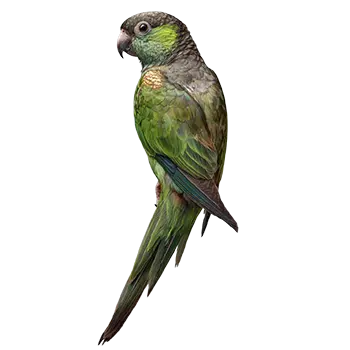

Bathing and Hygiene Products

Regular bathing is essential for the feather health and overall comfort of the Bronze Winged Parakeet. In the wild, Brotogeris species bathe frequently in rain showers, wet foliage, and shallow water sources, and captive birds retain a strong instinct for wetting their plumage. Bathing loosens feather dust and dander, softens the keratin sheaths on developing pin feathers, and supports the natural preening process that keeps feathers aligned, waterproofed, and insulating properly. A bird that does not bathe regularly develops dry, brittle feathers and may resort to excessive preening or feather picking as a substitute for the sensory stimulation that bathing provides.

Shallow bathing dishes designed for small parrots are the most straightforward bathing solution. These typically clip to the cage door or sit on the cage floor and are sized to allow the bird to wade in without being submerged. The water should be lukewarm, never hot or cold, and the dish should be offered during the warmer part of the day so the bird has time to dry fully before the evening temperature drop. Many Bronze Wings will splash enthusiastically the moment a bath dish appears, soaking themselves and everything within a two-foot radius.

Misting provides an alternative bathing method that many Bronze Wings find equally enjoyable. A clean spray bottle filled with plain lukewarm water, set to a fine mist rather than a stream, mimics rainfall and allows the bird to control its exposure by moving toward or away from the spray. Some birds prefer misting over dish bathing, while others enjoy both, and offering both options lets the bird express its preference. Commercial avian misting sprays that contain aloe vera or conditioning agents are available, but plain water is entirely sufficient for routine bathing and avoids introducing unnecessary chemicals to the plumage.

Bathing frequency should follow the bird's lead rather than a rigid schedule. Most Bronze Wings benefit from bathing opportunities at least three to four times per week, with daily availability being ideal. During molting periods, when the bird is producing large numbers of new feathers encased in keratin sheaths, more frequent bathing helps soften those sheaths and reduces the itching that drives excessive scratching and irritability. In dry indoor environments, particularly during winter heating season, increased bathing frequency compensates for the low ambient humidity that dries skin and feathers.

Grooming Tools and Nail Care

Routine grooming for a Bronze Winged Parakeet primarily involves nail maintenance, with occasional attention to beak condition and wing feather management depending on the owner's approach to flight. While proper perch variety reduces the frequency of nail trims, most captive Bronze Wings will need their nails trimmed several times per year. Overgrown nails catch on fabrics and cage components, alter the bird's foot posture on perches, and can curve far enough to puncture the toe pad, creating an entry point for infection.

Small bird nail clippers, essentially miniaturized versions of human nail clippers or small wire cutters with a notched cutting edge, are the standard tool for this task. The goal is to remove only the sharp tip beyond the blood supply, or quick, which is visible as a darker core within the translucent nail in light-nailed birds. Bronze Wings often have partially pigmented nails that make the quick harder to see, and in these cases conservative trimming that removes only the obvious sharp hook is safer than aggressive cutting. Styptic powder or cornstarch should always be on hand to stop bleeding from an inadvertent quick nick.

A Dremel-style rotary tool fitted with a fine sanding drum offers an alternative to clipping that many experienced bird owners prefer. The sanding action rounds the nail smoothly rather than leaving the flat-cut edge that clippers produce, and it removes material gradually, reducing the risk of cutting into the quick. The tool does produce noise and vibration, however, and a Bronze Wing must be desensitized to it gradually before it can be used effectively. Brief, positive introductory sessions where the tool runs nearby while the bird receives treats build comfort over time.

Beak maintenance rarely requires direct intervention in a healthy Bronze Wing with access to appropriate chewing materials. A beak that grows evenly and wears symmetrically through normal use of cuttlebone, mineral blocks, and chew toys is self-maintaining. Beak abnormalities such as overgrowth, asymmetric wear, flaking, or discoloration are medical symptoms rather than grooming issues and should prompt veterinary evaluation. Attempting to trim or file a parrot's beak at home without veterinary training risks serious injury to the bird and pain from improper technique.

Play Stands and Out-of-Cage Stations

A dedicated play stand provides the Bronze Winged Parakeet with a structured out-of-cage environment that keeps it engaged, contained, and safe during supervised time outside the enclosure. While free-roaming in a bird-proofed room is valuable for flight exercise, a play stand gives the bird a home base where food, water, toys, and comfortable perching are concentrated in one place, reducing the tendency to wander into hazardous areas.

Table-top play stands are the most practical format for a bird this size. These compact units sit on a desk, counter, or table and typically feature several perches at different heights, a food cup or two, toy hooks, and a tray beneath to catch droppings and food debris. For a Bronze Wing, the stand should be scaled to small-parrot proportions, with perch diameters matching those in the cage and distances between perches that the bird can navigate by stepping or short hopping rather than flying.

Freestanding play gyms with broader footprints offer more climbing territory and toy attachment points. These are particularly valuable for Bronze Wings that spend several hours daily outside their cage, as the additional space and complexity provide enrichment that supplements the cage environment. The best designs incorporate ladders, swings, and platforms at varying heights, creating a three-dimensional play space that engages the bird's climbing instincts and provides exercise opportunities.

Window and wall-mounted perch stations position the bird at a vantage point where it can observe outdoor activity, which provides visual stimulation that many Bronze Wings find deeply engaging. Watching birds, squirrels, pedestrians, and weather changes through a window occupies the bird's attention for extended periods. These stations should include a droppings tray and should be positioned so the bird cannot access window hardware, curtain cords, or blinds. As with all out-of-cage stations, the bird should never be left on a play stand unsupervised in a room that has not been thoroughly bird-proofed.

Lighting and Environmental Accessories

Lighting quality profoundly affects the health and behavior of a Bronze Winged Parakeet, yet it remains one of the most commonly overlooked aspects of captive bird care. Standard household lighting, whether incandescent, LED, or fluorescent, lacks the ultraviolet spectrum that natural sunlight provides and that birds need for vitamin D3 synthesis, accurate color vision, and hormonal regulation. Without UV exposure, a bird's perception of its environment, its food, and even its own plumage is fundamentally altered from what its visual system evolved to process.

Full-spectrum avian lighting systems designed for birds emit light across the visible and UVA/UVB spectrum, approximating the spectral profile of natural sunlight. These fixtures are typically mounted above the cage, positioned so the bird can move into and out of the light zone as it chooses. The bulb should be within twelve to eighteen inches of the perch to deliver effective UV intensity, as ultraviolet radiation attenuates rapidly with distance and is blocked entirely by glass and most plastics. Timers ensure consistent photoperiods without relying on the owner's daily attention.

Bulb replacement schedules matter more than many owners realize. UV output from fluorescent and compact fluorescent avian bulbs degrades significantly over their operational life, often losing effective UV intensity within six to twelve months even though the bulb continues to produce visible light. Following the manufacturer's recommended replacement interval ensures the bird receives consistent UV exposure. LED-based avian lighting is entering the market with claims of longer UV stability, though independent verification of these claims is still limited.

Cage covers serve as a light-management and comfort accessory that helps regulate the bird's photoperiod and provides a sense of security during sleeping hours. A breathable, opaque fabric cover that blocks light while allowing air circulation gives the owner precise control over when the bird's day begins and ends. For Bronze Wings, which do best on approximately twelve hours of light and twelve hours of dark year-round, covering the cage at a consistent evening time prevents artificial room lighting from extending the perceived day and triggering hormonal disruptions. The cover should be heavy enough to block ambient light from screens and lamps but not so thick that it traps heat and moisture.

Harnesses and Outdoor Accessories

Bird harnesses designed for small parrots open the possibility of supervised outdoor excursions that provide unfiltered sunlight, fresh air, and novel environmental stimulation. For a Bronze Winged Parakeet, outdoor time on a harness offers benefits that indoor life cannot fully replicate, including genuine UV exposure, natural sounds and air currents, and the cognitive stimulation of an entirely different sensory environment. However, harness use with a small, fast-moving species like the Bronze Wing requires patience, proper equipment, and realistic expectations.

Harness sizing is critical for both safety and comfort. A harness that is too loose can be escaped, leaving the bird free outdoors where it is vulnerable to predators, traffic, and disorientation. A harness that is too tight restricts breathing, chafes the skin, and causes the bird to fight against the restraint rather than relax into it. Harnesses designed specifically for small parrots, typically in extra-small or small sizing, are the appropriate starting point. The harness should fit snugly around the body without compressing the keel bone or restricting the wings' range of motion during normal positioning.

Harness training is a gradual process that should never be rushed. Begin by allowing the bird to investigate the harness in its own time, treating it as a novel object to explore. Progress to briefly draping it over the bird's back with treats for calm behavior, then to short wearing sessions indoors where the bird feels safe. Most Bronze Wings require several weeks of consistent, positive sessions before they accept the harness calmly enough for an outdoor trip. Forcing the harness on a panicking bird is counterproductive, creating negative associations that make future acceptance more difficult.

Outdoor backpack carriers with mesh panels offer an alternative for birds that do not take to harness wearing. These small, ventilated packs allow the bird to ride securely in a contained space while experiencing outdoor sights, sounds, and air. They eliminate the escape risk that a harness entails and require no training beyond basic carrier conditioning. The trade-off is that the bird cannot perch on the owner's hand or shoulder during the outing, which limits the interactive quality of the experience but provides many of the environmental enrichment benefits.

Food and Water Dish Systems

The dishes used to deliver food and water affect the hygiene, consumption, and daily maintenance experience for both the Bronze Winged Parakeet and its owner. Dish selection is not a trivial decision, as the wrong dishes contribute to food waste, bacterial growth, and frustration during cleaning routines that repeat multiple times daily for the life of the bird.

Stainless steel dishes are the gold standard for avian feeding. They are non-porous, which prevents bacterial harboring in surface scratches. They are resistant to chewing damage, which is significant because Bronze Wings will gnaw on the edges of plastic dishes until they crack and create sharp edges. They tolerate dishwasher temperatures for thorough sanitization, and they do not leach chemicals into food or water regardless of acidity or temperature. The upfront cost of quality stainless steel dishes is offset by their essentially unlimited lifespan compared to plastic and ceramic alternatives that require periodic replacement.

Ceramic dishes are acceptable when made from lead-free, kiln-fired glazes, and they offer weight stability that prevents a small, active bird from tipping a lightweight dish and spilling its contents. However, ceramics chip over time, and chipped areas expose porous, unglazed surfaces that harbor bacteria despite cleaning. Any ceramic dish that shows chips, cracks, or glaze crazing should be retired immediately.

Covered food dishes and hopper-style feeders reduce contamination from droppings and discarded food debris, which is a genuine concern when food sits in a cage with an active bird for hours. Some designs feature a hood or shield that allows the bird to access food through an opening while protecting the dish contents from above. These are particularly useful for the pellet dish, where contamination from overhead perches is most likely.

Water delivery merits specific consideration. Open water dishes are the most natural drinking interface and are accepted by all birds, but they are contaminated rapidly by a Bronze Wing that dips food, bathes in its water dish, or perches on the dish rim and deposits droppings. Water bottles with ball-bearing or tube-style nozzles deliver clean water continuously and eliminate contamination concerns, but not all birds adapt to drinking from them. Offering both a bottle and a dish during the transition period ensures the bird stays hydrated while learning the new system.

First Aid and Emergency Supplies

A well-stocked avian first aid kit is an essential accessory for any Bronze Winged Parakeet owner. Emergencies in small birds escalate rapidly because of their high metabolic rate and minimal physiological reserves, and having basic supplies on hand can mean the difference between stabilizing a bird for veterinary transport and losing it before help arrives. The first aid kit does not replace veterinary care but provides the tools to manage bleeding, stabilize temperature, and reduce stress during the critical minutes between incident and professional treatment.

Styptic powder is the single most important item in the avian first aid kit. Broken blood feathers and nail trims that cut the quick produce bleeding that, while seemingly minor in volume, represents a significant blood loss for a bird weighing sixty grams. Applying styptic powder to the bleeding site with gentle pressure stops most minor hemorrhages within seconds. Cornstarch or flour can substitute in an emergency but are less effective than purpose-made styptic formulations.

Hemostats or small needle-nose pliers are necessary for extracting broken blood feathers, which can continue to bleed from the follicle if the broken shaft is left in place. This is a procedure that ideally should be performed by a veterinarian but may need to be done at home if bleeding cannot be controlled by styptic powder alone. The technique involves grasping the broken feather shaft at its base, supporting the wing with the other hand, and pulling the shaft straight out in the direction of feather growth with one firm, smooth motion.

Additional kit contents should include small gauze pads for wound management, adhesive tape rated for medical use, a small pair of scissors, a digital gram scale for monitoring weight changes that may indicate illness, a heating pad or microwavable heat disk for maintaining body temperature in a sick or shocked bird, a small flashlight for examining the bird's mouth and nares, and the contact information for the nearest avian veterinarian along with the number for an after-hours emergency animal hospital. Keeping all of these items together in a clearly labeled container ensures they are immediately accessible when seconds count.

Regular inventory checks prevent the frustration of discovering an expired styptic powder or a depleted gauze supply during an actual emergency. Reviewing and restocking the kit every three months, and immediately after any use, maintains readiness. Some owners also keep a dedicated bird-safe carrier packed with the first aid kit, a towel, and a small supply of the bird's preferred food, creating a grab-and-go emergency package for situations that require rapid evacuation.

Always consult a qualified professional before making any health-related decisions. This content is provided for informational reference only and should not replace professional guidance specific to your animal.