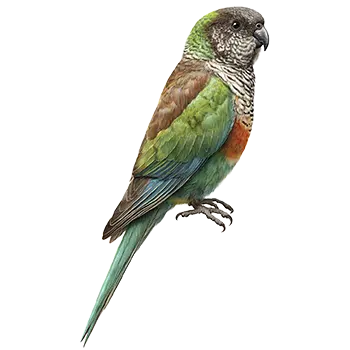

Play Style & Behavior

Bourke's Parakeets have a distinctly gentle play style that sets them apart from more boisterous parakeet species. They tend to explore toys quietly, nibbling and manipulating objects with their beaks rather than attacking them aggressively. This calm disposition means that toys designed for high-energy destroyers — heavy-duty chew blocks or large foraging puzzles meant for conures and cockatiels — are often too intimidating or physically demanding for a Bourke's.

Their crepuscular nature influences when they are most receptive to play. Bourke's Parakeets tend to be most interactive during early morning and late afternoon hours, with a quieter resting period during the middle of the day. Scheduling enrichment activities and toy rotations around these active periods maximizes engagement. A bird that ignores a new toy introduced at midday may investigate it enthusiastically when presented during a dawn or dusk activity window.

Ground-level play is more natural for Bourke's Parakeets than for many other parakeet species. In the wild, they spend considerable time on the ground foraging through grass and scrub. Providing toys and foraging opportunities at the cage floor level — in addition to the standard hanging toys — taps into this natural behavior and encourages a wider range of physical activity.

Socialization plays a significant role in how a Bourke's Parakeet interacts with toys. Hand-raised birds that are comfortable with human interaction often enjoy shared play sessions where the keeper manipulates a toy alongside the bird. Aviary-raised or less tame birds may prefer to explore toys independently, and forcing interaction can create stress rather than enrichment.

Foraging & Puzzle Toys

Foraging toys are arguably the most valuable category of enrichment for captive Bourke's Parakeets because they replicate the food-seeking behavior that occupies a large portion of a wild bird's day. Simple foraging setups — seeds wrapped in small paper bundles, food hidden under crumpled paper cups, or treats tucked into the folds of a clean paper towel — require minimal investment and can be refreshed daily with different configurations.

Commercial foraging toys designed for small parakeets typically involve clear acrylic chambers with small openings, rotating drums, or sliding covers that the bird must manipulate to access food. Start with the easiest difficulty setting and increase complexity gradually as the bird masters each level. A toy that is too difficult will be abandoned, while one that is too easy loses its enrichment value quickly.

Scatter feeding — distributing seeds across a tray of clean pebbles, shredded paper, or dried herbs at the cage floor — is a low-cost foraging strategy that works exceptionally well for Bourke's Parakeets given their ground-foraging instincts. This approach extends feeding time from seconds to minutes and provides both mental stimulation and gentle physical exercise as the bird walks and pecks through the substrate.

Rotating foraging setups prevents habituation. A bird that has memorized where food is hidden in a static arrangement gains little mental stimulation from the exercise. Changing the type of foraging toy, the location within the cage, and the food reward used keeps the activity novel and engaging. Even small variations — using a different type of paper wrapper or moving the foraging tray to the opposite side of the cage — are enough to renew interest.

Swings, Ladders & Climbing Toys

Swings are a perennial favorite among Bourke's Parakeets. A simple wooden or natural-material swing hung in the upper portion of the cage provides gentle motion that many birds find soothing, particularly during their evening wind-down period. Choose swings sized for small parakeets — oversized swings designed for larger birds are difficult for a Bourke's to grip comfortably and may swing too unpredictably for a species that prefers calm movement.

Wooden ladders offer climbing exercise and can serve as alternative pathways between perches. Position ladders at a gentle angle rather than vertically, as Bourke's Parakeets are more comfortable with gradual inclines than with straight vertical climbs. Ladders with widely spaced rungs are preferable for this species, as their longer toes can become caught in tightly spaced configurations.

Natural branch perches arranged in a play-gym configuration outside the cage provide an enrichment station for supervised out-of-cage time. These tabletop or standing play gyms can incorporate small toy hooks, food cups, and multiple perching levels. Look for setups made from bird-safe wood with stable bases that resist tipping, and ensure the play area is positioned away from windows, fans, and other household hazards.

Rope-based climbing toys made from natural cotton or sisal fibers add textural variety to the cage environment. Bourke's Parakeets may use rope spirals and boing-style perches both for climbing and as comfortable resting spots. As with rope perches, inspect these toys regularly for fraying threads and replace them promptly when wear becomes evident to prevent toe entanglement injuries.

Shredding & Texture Toys

Shredding toys made from palm leaf, coconut husk, balsa wood, or untreated paper satisfy the natural urge to manipulate and destroy soft materials. Bourke's Parakeets are moderate shredders compared to species like budgerigars or lovebirds, but they do enjoy peeling and pulling at fibrous textures. Small bundles of dried palm strips or woven grass balls hung inside the cage provide hours of quiet, focused activity.

Paper-based toys are among the simplest and cheapest enrichment options. Clean, unprinted paper strips woven through cage bars, small paper bags with treats inside, or crumpled tissue paper placed on the cage floor all invite investigation. Avoid glossy, inked, or chemically treated papers, as the bird will inevitably ingest small amounts during shredding. Plain newsprint, unbleached parchment paper, and purpose-made bird-safe paper are all appropriate choices.

Wooden toys intended for small birds come in countless configurations, from simple dowel-and-bead arrangements to more elaborate cascading designs. For Bourke's Parakeets, simpler is generally better. Toys with too many components can overwhelm a gentle bird, while a straightforward wooden block with a few beads threaded on a cotton cord provides engaging beak exercise without being visually cluttered or physically daunting.

Texture variety itself is a form of enrichment. Rotating between leather strips, cork pieces, loofah, and woven seagrass gives the bird different tactile experiences throughout the week. Presenting familiar textures in new arrangements — threading leather strips through a different toy frame, for instance — combines the comfort of known materials with the novelty of a new configuration.

Sound & Visual Enrichment

Bourke's Parakeets respond positively to gentle auditory enrichment. Soft instrumental music, recordings of wild Australian bird calls, or even the ambient sounds of rainfall can create a calming and stimulating acoustic environment. Avoid loud, bass-heavy music or sudden jarring sounds, which can startle these sensitive birds. Some keepers report that their Bourke's Parakeets vocalize more actively in response to flute or acoustic guitar recordings, suggesting genuine engagement rather than mere tolerance.

Small bells attached to toys provide both auditory feedback and tactile interest. When a Bourke's Parakeet nudges or manipulates a bell toy, the resulting sound creates a reward loop that encourages continued interaction. Ensure that bells are securely attached and appropriately sized — the clapper should not be removable, and the bell opening should be too small for a toe or beak tip to become trapped.

Visual stimulation can include positioning the cage where the bird can observe outdoor activity through a window, provided the glass is not in direct sun exposure that could overheat the cage. Watching birds, squirrels, and other wildlife provides a passive but genuine form of environmental enrichment. Some keepers mount small mirrors in the cage, though this practice is debated — mirrors can provide companionship simulation for single birds but may also encourage hormonal behavior or frustration in birds that become fixated on their reflection.

Video content designed for birds — showing slow-moving nature scenes, other birds foraging, or gentle aquatic footage — has become increasingly popular. While individual responses vary, many Bourke's Parakeets show interest in screen content when the display is positioned at a comfortable viewing distance. Screen time should supplement, not replace, physical toys and direct social interaction.

DIY & Budget-Friendly Options

Some of the most effective enrichment items for Bourke's Parakeets cost nothing at all. A clean pine cone rolled in a thin layer of seed butter and coated with small seeds creates an engaging foraging toy from materials available in most backyards. Ensure pine cones are collected from trees not treated with pesticides, washed thoroughly, and baked at a low temperature to eliminate any parasites or mold before use.

Cardboard tubes from paper towel or toilet paper rolls can be flattened, folded into small pouches with seeds inside, and hung from cage bars as disposable foraging toys. These take seconds to prepare and provide fresh enrichment daily. Threading a cotton string through multiple tubes at different angles creates a more complex structure that the bird can explore from multiple positions.

Fresh, bird-safe branches from apple, willow, or eucalyptus trees serve triple duty as perches, chew toys, and foraging surfaces. Leaving some leaves attached adds visual interest and a mild snacking opportunity. Branches should be cleaned, inspected for insects, and sourced from trees that have not been sprayed with pesticides or herbicides. Replacing natural branches every few weeks as they become worn keeps the cage environment feeling fresh.

Kitchen herbs like fresh basil, dill, or cilantro can be bundled and hung inside the cage as edible enrichment items. Bourke's Parakeets may nibble on the leaves, pull at the stems, or simply enjoy the novel scent and texture in their environment. Herb bundles wilt within a day and should be replaced before they become slimy or moldy, but their low cost and dual purpose as food and enrichment make them an excellent addition to any rotation.

Always consult a qualified professional before making any health-related decisions. This content is provided for informational reference only and should not replace professional guidance specific to your animal.