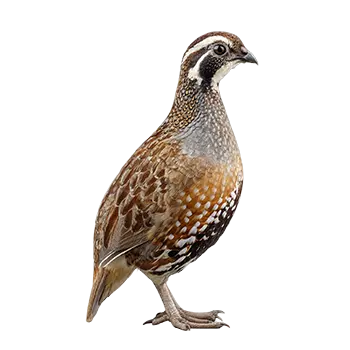

Bobwhite Quail are ground-dwelling birds with strong flight instincts, and these two traits define nearly every housing decision a keeper will make. Unlike domesticated poultry breeds that have been selectively bred for docility over centuries, Bobwhites retain much of their wild ancestor's wariness and explosive flush response. When startled, they launch vertically with tremendous force, and birds housed under low, hard ceilings frequently suffer fatal skull injuries. This single behavioral characteristic makes standard chicken coops and wire cages fundamentally unsuitable for Bobwhite Quail without significant modification.
Space allocation is another area where Bobwhite housing departs from typical poultry standards. While Bobwhites are small birds, they are active and social, and overcrowding triggers aggression, feather picking, and cannibalism that can rapidly destroy a flock. A minimum of two square feet of floor space per bird is recommended for covered ground pens, with significantly more space ideal for breeding groups and flight-conditioning programs. Birds destined for release into wild habitats require the largest enclosures, often measured in hundreds of square feet, to develop the flight muscle and stamina necessary for survival.
Ventilation and protection from weather extremes are essential design considerations. Bobwhites tolerate cold weather reasonably well provided they have dry shelter and windbreaks, but they are vulnerable to prolonged dampness, drafts, and extreme heat. Housing must balance adequate airflow to prevent respiratory disease with enough protection to shield birds from driving rain, direct sun during heat waves, and frigid wind during winter storms.
Predator security is non-negotiable. Bobwhite Quail are a prey species pursued by virtually every terrestrial and aerial predator in their range, from raccoons and snakes to hawks and owls. Even in suburban settings, predator pressure is intense, and a single breach in enclosure security can result in the loss of an entire flock overnight. Every element of the housing design, from the wire gauge to the floor construction to the door latches, must be evaluated through the lens of predator resistance.