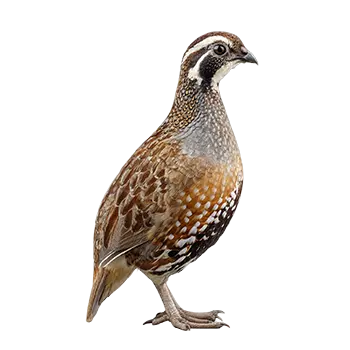

Why Enrichment Matters for Bobwhite Quail

Enrichment is not a luxury for captive Bobwhite Quail but a fundamental component of responsible husbandry that directly influences physical health, behavioral well-being, and reproductive performance. In the wild, Bobwhites spend the vast majority of their day engaged in foraging, predator vigilance, social interaction within the covey, dust bathing, and navigating complex ground-level habitat. Captive environments, even well-designed ones, strip away much of this behavioral complexity, leaving birds with excess time and energy that manifests as stress, aggression, feather destruction, and stereotypic behaviors.

The consequences of inadequate enrichment in Bobwhite Quail are well documented in both game bird production literature and avian welfare research. Feather pecking and cannibalism are the most visible symptoms, and they can escalate rapidly in a flock once the behavior is established. Birds that begin pecking at flockmates' feathers or skin often trigger a cascade where the sight of blood stimulates additional aggression from other birds, sometimes resulting in fatal injuries within hours. While anti-pick devices and dim lighting are sometimes used to manage these behaviors, they are symptomatic treatments that do not address the underlying lack of behavioral outlets.

Enrichment for quail looks fundamentally different from enrichment for parrots or other companion birds. Bobwhites are not manipulative tool users; they do not play with hanging toys, bells, or mirrors the way a cockatiel or budgerigar might. Their behavioral repertoire is centered on ground-level activities: scratching, foraging, running, dust bathing, and seeking cover. Effective enrichment for Bobwhites works within this behavioral framework, providing opportunities to perform species-typical behaviors rather than imposing alien activities borrowed from other bird groups.

The best enrichment strategies are varied and rotated regularly. Bobwhites, like most animals, habituate to static environmental features over time, and an enrichment item that initially provokes intense interest will become background furniture within days or weeks if left unchanged. Rotating enrichment items, changing their location within the enclosure, and introducing novelty on a regular schedule maintains the stimulation value and keeps birds actively engaged with their environment.

Foraging Enrichment

Foraging is the single most time-consuming and behaviorally important activity in a wild Bobwhite Quail's day, and providing captive birds with opportunities to work for their food is the highest-impact enrichment strategy available. In nature, Bobwhites spend hours scratching through leaf litter, turning over debris, and searching for scattered seeds, insects, and tender plant shoots. A captive bird that receives its entire daily ration in an easily accessible feeder has its primary behavioral drive satisfied in minutes, leaving the rest of the day with nothing meaningful to do.

Scatter feeding is the simplest and most effective foraging enrichment technique. Instead of offering scratch grains and supplements in a dish, broadcasting them across the enclosure floor forces birds to search and scratch to find each morsel. This can be made more challenging by scattering feed into substrate material such as sand, pine shavings, or dried leaves, requiring more intensive scratching to uncover the food. The technique costs nothing beyond the feed itself and can be implemented immediately in any enclosure type.

Foraging trays and puzzle feeders designed for ground-dwelling birds add another layer of complexity to the feeding experience. A shallow tray filled with sand or pebbles with feed mixed in requires birds to sift and sort to extract the food. Commercially available foraging mats with hiding pockets, originally designed for chickens, work well for quail and can be loaded with seeds, dried insects, or small pieces of fresh vegetables. These devices slow feeding speed, extend the active foraging period, and provide mental stimulation that reduces stress-related behaviors.

Hanging treat dispensers, while more commonly associated with parrot enrichment, can be adapted for quail use when positioned at ground level or just slightly above it. A wire basket or mesh bag filled with leafy greens, sprouted seeds, or a compressed forage block gives birds something to pick at and pull apart over an extended period. The key adaptation for quail is keeping these devices low enough that the birds can reach them comfortably from the ground, since Bobwhites rarely perch and will ignore enrichment items placed at heights designed for perching species.

Dust Bathing and Substrate Enrichment

Dust bathing is a core maintenance behavior for Bobwhite Quail that serves both hygienic and psychological functions. The process involves the bird lowering itself into a loose substrate, ruffling its feathers, and using vigorous body movements to work fine particles down to the skin. This action helps distribute natural oils through the plumage, removes old feather debris, and physically dislodges external parasites such as feather lice and mites. Birds deprived of dust-bathing opportunities show measurable increases in stress hormone levels and deterioration in feather condition.

A dedicated dust-bathing station is one of the most valuable enrichment installations in a Bobwhite enclosure. The ideal setup is a shallow container or depression in the ground filled with fine, dry material. Construction sand, play sand, or a mixture of sand with a small proportion of food-grade diatomaceous earth provides the right texture. The bathing area should be large enough for multiple birds to use simultaneously, since Bobwhites often dust-bathe in social groups, and it should be positioned in a sheltered part of the enclosure where rain will not saturate the material.

Substrate variety itself functions as enrichment independent of dust bathing. An enclosure floor that combines different surface types, such as a sand area, a section of pine shavings, a patch of bare soil, and a grassy zone, gives birds choices and stimulates exploration. In the wild, Bobwhite habitat is a mosaic of different ground conditions, and replicating even a simplified version of that variety in captivity encourages movement, investigation, and natural behavior patterns.

Leaf litter is an underappreciated enrichment material for Bobwhite Quail. Dried leaves from non-toxic deciduous trees, scattered across part of the enclosure floor, replicate the forest and field floor habitat where wild Bobwhites spend much of their time foraging. The irregular shapes, textures, and occasional hidden insects or invertebrates within the leaf layer provoke sustained scratching and searching behavior. Leaf litter should be replaced regularly to prevent mold growth, particularly in humid climates, and should come from trees that have not been treated with pesticides or herbicides.

Cover, Hiding Spots, and Visual Barriers

The instinct to seek cover is deeply embedded in Bobwhite Quail behavior, and enclosure features that satisfy this instinct are among the most functionally important enrichment items a keeper can provide. In the wild, Bobwhites are seldom found in open, exposed areas during daylight hours. They move through dense ground cover, pausing frequently under overhead vegetation, brush piles, and tall grass. An enclosure without adequate cover structures leaves birds feeling perpetually exposed, driving chronic stress responses that degrade health and suppress natural behaviors including breeding.

Brush shelters constructed from natural materials are highly effective and inexpensive cover enrichment. Bundles of native grass, piles of pruned branches with foliage still attached, or arrangements of straw bales create the kind of dense, low-to-the-ground cover that Bobwhites instinctively seek. These structures should be distributed throughout the enclosure rather than concentrated in one area, giving birds multiple retreat options and reducing competition for prime hiding spots. Natural brush shelters have the additional benefit of harboring small insects that provide incidental foraging opportunities.

Commercial quail shelters and lean-to structures offer more durable alternatives to natural brush. Wooden A-frame shelters, half-barrel designs, and modular plastic cover structures designed for game birds provide consistent, weatherproof hiding spots that do not deteriorate as quickly as natural materials. These are particularly useful in production settings where frequent replacement of natural brush is impractical. Positioning commercial shelters alongside natural cover features provides the best of both approaches.

Visual barriers within the enclosure serve a subtler but equally important enrichment function. Solid or semi-opaque panels placed within the pen break the space into distinct zones, reducing line-of-sight stress between dominant and subordinate birds and creating a sense of spatial complexity. In flocks where aggression is a concern, visual barriers are often the first intervention recommended by avian behaviorists because they allow pursued birds to escape the sight of aggressors, which is often sufficient to de-escalate conflicts. Barriers can be as simple as sheets of plywood, burlap curtains, or rows of potted bunch grasses arranged to divide the enclosure into interconnected but visually separated areas.

Live Insects and Prey Simulation

Introducing live insects into a Bobwhite Quail enclosure triggers some of the most intense and sustained behavioral engagement available in a captive enrichment program. Wild Bobwhites are enthusiastic insect hunters, and the pursuit, capture, and consumption of live prey activates predatory motor patterns, sharpens coordination, and provides protein-rich nutrition that supports feather growth and reproductive health. The combination of nutritional and behavioral benefits makes live insect enrichment one of the most valuable tools in the quail keeper's repertoire.

Mealworms are the most commonly used feeder insect for quail enrichment. They are widely available at pet supply stores and online retailers, easy to culture at home in a simple setup of oat bran and vegetable scraps, and readily consumed by Bobwhites of all ages. Scattering live mealworms across the enclosure floor or into a substrate-filled foraging tray provokes immediate and intense foraging activity as birds race to locate and snatch up the wriggling larvae. The movement of live mealworms is a critical component of their enrichment value; dried mealworms, while nutritious, lack the behavioral stimulation that live prey provides.

Black soldier fly larvae, sometimes marketed under brand names as calcium-rich feeder insects, offer a nutritional profile that complements mealworms, with significantly higher calcium content and a softer body that is easier for younger birds to consume. These larvae are increasingly available through pet and poultry supply channels and can be raised at home using kitchen scraps. Their squirming movement on the enclosure floor provokes vigorous foraging responses similar to mealworms.

Crickets add a dimension of enrichment that slow-moving larvae cannot replicate. Their jumping, erratic movement triggers the full pursuit-and-capture sequence in quail, engaging birds in active chasing behavior that provides both physical exercise and cognitive stimulation. Crickets should be offered in moderate numbers, since uneaten crickets can escape into the broader environment and become a nuisance. Releasing crickets into a pen with ample substrate and cover features maximizes the hunting challenge, as the insects take refuge in the same structures the quail use for cover, creating a naturalistic predator-prey dynamic within the enclosure.

For keepers who cannot source or maintain live insect colonies, dried insect products scattered into substrate provide a lower-intensity but still valuable foraging challenge. Dried mealworms, dried black soldier fly larvae, and mixed insect blends designed for poultry can be mixed into sand or shavings, requiring birds to scratch and search to find them. While they lack the movement stimulus of live prey, the scent and taste of dried insects still provoke active foraging behavior that exceeds the engagement level of standard grain scatter feeding.

Environmental Novelty and Rotation

Habituation is the gradual reduction in behavioral response to a stimulus that remains constant over time, and it is the primary reason why a single set of enrichment items, no matter how well chosen, eventually loses its effectiveness. Bobwhite Quail are attentive to changes in their environment, and novel objects, textures, and configurations provoke investigation, heightened alertness, and exploratory behavior that keeps birds mentally active. A structured enrichment rotation schedule ensures that the enclosure environment remains stimulating week after week.

The simplest form of environmental novelty is rearranging existing features within the enclosure. Moving a brush pile from one corner to another, repositioning a dust-bathing station, or shifting the location of scatter-feeding zones changes the spatial layout of the birds' world and prompts renewed exploration. This costs nothing and takes only minutes but produces a measurable increase in activity levels and a reduction in idle behaviors such as standing motionless or repetitive pacing.

Introducing unfamiliar objects periodically adds a deeper layer of novelty. Items such as small logs, flat rocks, upturned ceramic pots, bundles of dried cornstalks, pine cones, or clumps of sod with intact root systems provoke curiosity and investigation when first placed in the enclosure. Not every novel object will be interacted with extensively, but the process of evaluating the new item and determining whether it poses a threat, offers food, or provides cover engages cognitive processes that are understimulated in barren environments.

Seasonal rotation of enrichment materials aligns with the natural environmental changes that wild Bobwhites experience throughout the year. Fresh green plant material and live insects emphasize spring and summer enrichment themes, while autumn might bring dried seed heads, fallen leaves, and corn shocks. Winter enrichment can focus on compressed forage blocks and buried grain caches that encourage birds to work harder for food during the season when wild food sources are at their scarcest. This seasonal approach prevents enrichment from becoming routine and keeps the captive environment in step with the rhythms of the natural world.

Record keeping helps optimize an enrichment rotation program. Noting which items provoked the strongest behavioral responses, how quickly birds habituated to specific enrichment types, and whether any items caused negative reactions such as panic flushing or avoidance allows the keeper to refine the program over time. The goal is a diverse library of enrichment options that can be cycled through in varying combinations, ensuring that the birds' environment is always somewhat different from what it was the previous week.

Social Enrichment and Flock Dynamics

Bobwhite Quail are inherently social birds that form tight-knit coveys in the wild, and the social environment within a captive flock is itself a powerful form of enrichment, or a source of chronic stress, depending on how it is managed. A well-composed flock with appropriate sex ratios, adequate space, and sufficient resources produces a dynamic social environment where birds engage in natural courtship, covey formation, and cooperative behaviors that satisfy deep behavioral needs. A poorly managed flock, conversely, produces aggression, subordination stress, and injury.

Sex ratio is one of the most critical factors in social management. During the breeding season, Bobwhite cocks become territorial and aggressive toward rival males. A ratio of one cock to two or three hens reduces male-on-male conflict and gives each hen enough social space to avoid harassment. Outside the breeding season, Bobwhites are more tolerant of mixed groups, and same-sex groups of either cocks or hens can coexist peacefully in appropriately sized enclosures with adequate visual barriers and cover.

Group size affects behavior in ways that are not immediately intuitive. Very small groups of two or three birds often show higher individual stress levels than slightly larger groups of eight to fifteen, because the covey structure that provides psychological security requires a minimum number of members. Wild Bobwhite coveys typically comprise ten to twenty birds, and captive groups within this range tend to show the most relaxed, natural behavior patterns. Excessively large groups, however, increase competition for resources and can overwhelm even spacious enclosures.

Introducing new birds to an established flock requires care and planning to avoid aggression and social disruption. The safest method is to house newcomers in a separate pen adjacent to the existing flock for several days to a week, allowing visual and vocal contact without physical access. After this acclimation period, the groups can be combined in a neutral space, ideally the enclosure of neither group, that has been freshly arranged with new cover features and visual barriers to disrupt established territorial claims. Monitoring closely during the first few hours after combination allows the keeper to intervene if serious aggression develops.

Auditory enrichment through exposure to recorded Bobwhite calls or the calls of other coveys housed nearby can stimulate vocal behavior and social engagement, particularly in isolated pairs or small groups that lack the covey dynamics of larger flocks. Playing recordings of the species' characteristic whistled call during morning and evening hours, when wild Bobwhites are most vocal, can prompt responsive calling that reinforces social bonds within the captive group.

Always consult a qualified professional before making any health-related decisions. This content is provided for informational reference only and should not replace professional guidance specific to your animal.