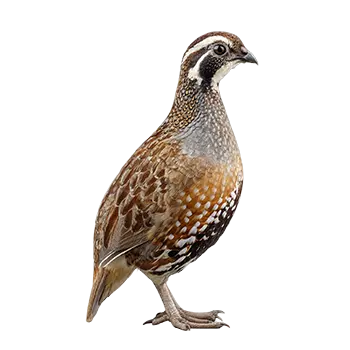

Bobwhite Quail are ground-dwelling game birds whose nutritional requirements differ sharply from those of parrots, finches, and other common companion bird species. In the wild, Bobwhites consume a seasonally shifting diet of weed seeds, waste grain, legume seeds, insects, and tender green shoots. Replicating the breadth and balance of that wild diet in captivity requires an understanding of the species' protein, energy, and micronutrient demands across different life stages, from newly hatched chicks through breeding adults and molting birds.
Protein is the single most critical macronutrient for Bobwhite Quail. Chicks require feed with a crude protein content of twenty-eight to thirty percent during the first six weeks of life to support rapid skeletal and feather growth. After that initial period, growing birds transition to a grower feed with roughly twenty to twenty-four percent protein, and adults in maintenance mode can be sustained on feeds containing sixteen to twenty percent protein. Breeding hens need a return to higher protein levels, typically twenty to twenty-three percent, along with elevated calcium to support eggshell formation.
Energy requirements are closely tied to ambient temperature and activity level. Bobwhites housed in outdoor flight pens during cold months burn considerably more calories maintaining body temperature than birds kept in climate-controlled facilities. Cold-weather rations often benefit from a modest increase in fat content, which can be achieved by adding small quantities of millet, milo, or black oil sunflower seeds to the base diet. Overfeeding energy-dense supplements in warm weather, however, leads to obesity and reduced fertility.
Micronutrients deserve careful attention even when a commercial game bird feed forms the dietary backbone. Vitamins A, D3, and E are essential for immune function, calcium metabolism, and reproductive health respectively. Most quality game bird feeds are fortified with these vitamins, but storage conditions matter: feeds stored in hot, humid environments lose vitamin potency over time, so purchasing in quantities that will be consumed within four to six weeks helps ensure nutritional integrity.