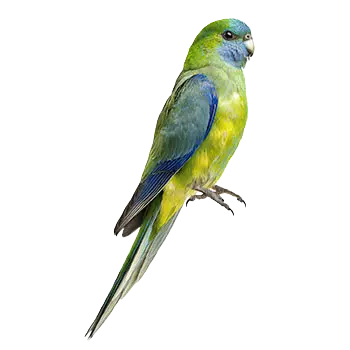

The Blue Winged Parakeet is an intelligent, active species that spends a significant portion of its day in the wild foraging through the dense canopy of the Western Ghats, manipulating seed pods, stripping bark, and navigating complex three-dimensional terrain. In captivity, where food is delivered in a bowl and the environment remains largely static, this behavioral drive has no natural outlet. Without adequate enrichment, the unspent energy and cognitive capacity that would otherwise go toward survival behaviors turns inward, manifesting as feather destructive behavior, excessive screaming, stereotypic pacing, and generalized anxiety.
Enrichment is not a luxury or an occasional treat. It is a fundamental component of responsible husbandry for any psittacine species, and it is particularly critical for Psittacula parakeets, which combine high intelligence with a strong independent streak that makes them prone to self-directed destructive behavior when bored. A well-designed enrichment program addresses multiple dimensions of the bird's behavioral repertoire: foraging, chewing, problem-solving, physical exercise, and social interaction. No single toy or device satisfies all of these needs, which is why a rotation of different enrichment types is essential.
The concept of behavioral budgets helps frame enrichment planning in practical terms. In the wild, a Blue Winged Parakeet might spend forty to sixty percent of its active hours foraging, fifteen to twenty percent in locomotion and flight, ten to fifteen percent in social interaction, and the remainder in maintenance behaviors like preening and resting. A captive enrichment program should aim to fill a comparable proportion of the bird's day with analogous activities, even though the specific behaviors look different in a cage or aviary than they do in a forest canopy.
The financial investment required for effective enrichment is often lower than owners expect. While commercially produced foraging toys and puzzle feeders have their place, many of the most effective enrichment items can be made from inexpensive or free materials: untreated wood blocks, plain paper, cardboard tubes, cleaned pinecones, and food items presented in novel ways. The key is variety and rotation rather than expense.