
Enclosure Size Requirements

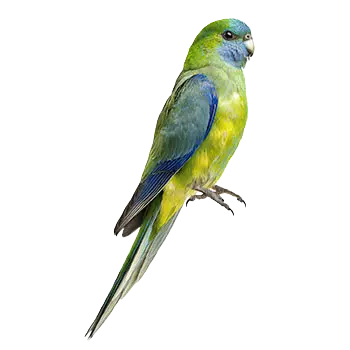
The Blue Winged Parakeet is a fast, agile flier with a long graduated tail that demands more enclosure length than many owners initially expect. At fourteen to sixteen inches from crown to tail tip, this bird needs room to move horizontally without damaging its tail feathers against cage walls or rear panels. The absolute minimum cage dimensions for a single Blue Winged Parakeet are thirty-six inches long by twenty-four inches deep by thirty-six inches tall, but these minimums assume the bird receives several hours of supervised out-of-cage flight time daily. A more generous enclosure of forty-eight inches or longer significantly improves the bird's quality of life and reduces stress-related behavioral issues.

For owners who cannot provide daily out-of-cage flight, a flight cage or small indoor aviary becomes essential rather than optional. Flight cages designed for medium parrots typically measure five to six feet in length and allow the bird to make short flights between perches, maintaining muscle tone and cardiovascular health that a standard cage cannot support. The Blue Winged Parakeet's natural habitat is dense forest canopy where it moves rapidly between trees, and its physiology is adapted for sustained flight rather than the sedentary perching that small cages impose.

Paired or group housing requires proportionally more space. Two Blue Winged Parakeets should have a minimum cage length of forty-eight inches, and a flight cage or aviary is strongly recommended for any group larger than a pair. Overcrowding in Psittacula species leads to feather plucking, aggression, and chronic stress, and these problems are far easier to prevent through adequate space than to resolve after they develop.

Cage shape matters as much as raw volume. Rectangular cages with greater horizontal length than height are functionally superior to tall, narrow designs for this species. Round cages should be avoided entirely, as they eliminate corners where the bird can retreat for security, distort the bird's spatial perception, and provide less usable interior space than a rectangular cage of equivalent footprint. Corner placement of a rectangular cage against two walls provides a sense of enclosure security while still allowing the keeper full access to doors and feeding stations.

Bar Spacing and Construction Materials

Bar spacing on any cage housing a Blue Winged Parakeet should fall between one-half inch and five-eighths inch. Spacing wider than five-eighths inch creates a risk of head entrapment, particularly in younger or smaller individuals, while spacing narrower than one-half inch is unnecessarily restrictive and can make it difficult for the bird to climb comfortably. Horizontal bar orientation on at least two sides of the cage is preferable, as Psittacula parakeets are active climbers that use horizontal bars as ladder rungs, while vertical bars offer less grip and climbing utility.

The most durable and safe cage construction material is powder-coated wrought iron or steel. High-quality powder coating provides a smooth, non-toxic surface that resists chipping under normal use. Stainless steel is the premium option, offering superior corrosion resistance and longevity, though it comes at a significantly higher price point. Stainless steel cages are particularly worthwhile in humid climates or for outdoor aviary panels where corrosion risk is elevated. Cages made from galvanized wire should be used with caution, as the zinc coating can flake or be ingested during chewing, leading to zinc toxicosis, a potentially fatal condition.

Weld quality is a detail that separates well-made cages from substandard ones. All bar intersections should be smoothly welded without protruding burrs, rough spots, or gaps where a toe or beak could become caught. Cage doors should close securely with latches that the bird cannot open, as Psittacula species are notably dexterous and many individuals learn to manipulate simple hook or slide latches within days. Spring-loaded or padlock-compatible latches provide greater security.

The cage tray should be constructed from a single piece of material, either powder-coated metal or high-impact plastic, that is easy to remove and clean without bending or cracking. A pull-out tray with a grate positioned above it allows droppings and discarded food to fall away from the bird's living area, improving hygiene and reducing the time required for daily cleaning. The grate spacing should be small enough that the bird's toes cannot pass through while still allowing debris to fall freely.

Perches and Interior Layout

Perch selection profoundly affects the foot health and overall comfort of a captive Blue Winged Parakeet. Natural wood perches of varying diameters should form the backbone of the cage interior, with diameters ranging from approximately one-half inch to one inch to exercise different foot muscles and prevent the pressure sores that develop when a bird grips the same diameter surface continuously. Hardwood branches from bird-safe trees such as manzanita, java wood, dragonwood, or pesticide-free apple and pear are excellent choices. Softwood branches from willow or poplar provide chewing enrichment but wear out more quickly.

Perch placement should prioritize horizontal flight paths within the cage. The two primary perches should be positioned at the same height near opposite ends of the cage, with enough clearance from the walls and ceiling that the bird's tail does not contact any surface when perched. This arrangement encourages the bird to fly between the main perches rather than climbing to and from a single high point. Secondary perches at intermediate heights and angles provide variety and route options without cluttering the flight path.

Rope perches and flexible spiral perches add textural variety and serve as comfortable sleeping spots for many parakeets. Cotton rope perches should be inspected regularly for fraying, as loose threads can entangle toes and pose a serious injury risk. Sisal rope is more resistant to fraying but rougher on the feet, so it works best as a supplemental perch rather than a primary resting surface. Heated perches are available for birds kept in cooler environments and can provide comfort during winter months, though they should be thermostatically controlled and positioned so the bird can move to an unheated perch at will.

Cement or grooming perches serve the specific function of keeping toenails and beak edges naturally worn. A single grooming perch placed near a food or water station, where the bird will stand on it regularly but briefly, is sufficient. These perches should never be used as the primary sleeping perch, as their abrasive surface causes calluses and sores with prolonged contact. Plastic perches, often included with new cages, offer no benefit over natural wood and should generally be replaced.

Aviary Design and Outdoor Housing

An outdoor or semi-outdoor aviary represents the ideal housing arrangement for the Blue Winged Parakeet, providing space for true flight, natural sunlight exposure, and environmental stimulation that no indoor cage can match. A planted aviary measuring at least eight feet long by four feet wide by six feet tall gives a single bird or pair room to fly, forage, and express natural behaviors. Larger dimensions are always better, and walk-in aviaries that allow the keeper to enter for cleaning, observation, and interaction are far more practical than external-access designs for a species that benefits from regular socialization.

Aviary mesh should be welded wire with a gauge heavy enough to resist both the bird's beak and potential predators. Fourteen-gauge welded wire with half-inch by one-inch openings provides an effective barrier against rats, snakes, and cats while maintaining good visibility. The mesh should be attached to a sturdy frame of powder-coated steel, aluminum, or treated hardwood, with all edges folded or capped to prevent injury. Double-door entry vestibules are essential to prevent escape during keeper access, and the vestibule should be large enough for the keeper to close the outer door fully before opening the inner one.

Climate considerations for the Blue Winged Parakeet reflect its native range in the Western Ghats, where it inhabits subtropical to tropical forests at moderate elevations. This species tolerates mild temperature fluctuations but is not cold-hardy and should not be kept outdoors year-round in regions where temperatures regularly drop below fifty degrees Fahrenheit. In temperate climates, a semi-outdoor arrangement with an insulated shelter attached to the flight area allows the bird to choose between outdoor and sheltered environments. Supplemental heating in the shelter section maintains a safe temperature during cold periods.

Aviary vegetation enhances both the aesthetic and functional quality of the enclosure. Non-toxic plants such as hibiscus, nasturtium, spider plants, and bird-safe grasses provide visual barriers, foraging opportunities, and perching surfaces. Live plants also contribute to humidity regulation and air quality within the aviary. However, any plant included must be verified as non-toxic to birds, and the soil should be free of fertilizers, pesticides, or vermiculite that the bird might ingest during ground foraging.

Substrate and Cleaning Systems

The choice of cage substrate affects daily maintenance time, air quality, and the keeper's ability to monitor the bird's droppings for health indicators. For cages with a grated tray system, plain newspaper or unprinted newsprint lining the tray beneath the grate is the most practical and economical option. It allows clear visual assessment of droppings, absorbs moisture adequately, and can be changed in seconds. Paper-based cage liners sold specifically for bird cages perform the same function at higher cost but with a more tailored fit.

Wood shavings and other particulate substrates are popular for aviary floors but should be chosen carefully. Kiln-dried pine shavings are generally considered safe for birds and provide good moisture absorption and odor control. Cedar shavings should be strictly avoided, as the aromatic oils they contain are irritants to the avian respiratory system and have been linked to liver damage with chronic exposure. Corn cob bedding absorbs moisture well but can harbor mold and bacteria if not changed frequently, and it may be ingested by curious parakeets, potentially causing crop impaction.

Cleaning frequency directly impacts the bird's respiratory health and overall wellbeing. The cage floor or tray should be cleaned daily, with food and water dishes washed in hot water and refilled at least once per day. A thorough weekly cleaning of the entire cage, including perches, grate, and all interior surfaces, prevents the buildup of dried droppings and food residue that harbor bacteria and fungi. A diluted avian-safe disinfectant or a solution of white vinegar and water works well for routine cleaning, followed by thorough rinsing and drying before the bird is returned to the cage.

Aviary floors require a different maintenance strategy than cage trays. A concrete or paver base with a top layer of clean pea gravel or washed river sand facilitates drainage and can be raked and spot-cleaned daily, with the entire surface replaced or pressure-washed periodically. Dirt or grass floors in planted aviaries are more naturalistic but harder to disinfect and should be monitored closely for parasite accumulation. Rotating the bird between aviary sections, if space permits, allows one section to rest and be treated while the other remains in use.

Cage Placement and Environmental Factors

Where a cage is placed within the home influences the bird's sense of security, sleep quality, exposure to environmental hazards, and overall stress level. The ideal location provides the bird with a view of household activity without placing it in the center of high-traffic zones where people and other animals constantly pass on all sides. Positioning the cage against one or two walls gives the bird a secure backdrop while allowing it to observe the room from a stable vantage point. Avoid placement directly in front of windows where the bird is exposed to temperature fluctuations, direct sunlight without shade options, and visual stress from outdoor predators such as hawks or cats.

Kitchen placement is one of the most dangerous choices for any bird cage. Fumes from overheated nonstick cookware coated with polytetrafluoroethylene release particulate matter that is lethal to birds even at concentrations imperceptible to humans. Self-cleaning oven cycles, aerosol sprays, scented candles, and smoke from cooking also pose respiratory hazards. The Blue Winged Parakeet's respiratory system is extremely efficient at gas exchange, which means it absorbs airborne toxins far more rapidly than a mammal of similar size.

Lighting conditions affect both the bird's circadian rhythm and its vitamin D metabolism. The Blue Winged Parakeet benefits from a consistent photoperiod of approximately twelve hours of light and twelve hours of darkness, which can be managed with a timer-controlled room light or a dedicated full-spectrum avian lamp positioned above the cage. Full-spectrum lamps that emit ultraviolet-A and ultraviolet-B wavelengths support vitamin D3 synthesis through the uropygial gland and preen oil, and they improve the bird's color perception, which influences feeding behavior and social interaction. The lamp should be mounted close enough to the cage that the UV wavelengths reach the bird before dissipating, typically within twelve to eighteen inches, and it should be replaced according to the manufacturer's schedule, as UV output diminishes long before the visible light output fades.

Noise and activity levels in the cage's environment should match the bird's tolerance. Blue Winged Parakeets are social birds that generally thrive with moderate ambient activity, but sudden loud noises, persistent vibrations from appliances, or proximity to speakers playing at high volume can cause chronic stress. A quiet room for nighttime sleep is particularly important. If the bird's cage is in a room that remains active in the evening, a sleep cage in a separate, dark, quiet room allows the bird to get uninterrupted rest for the ten to twelve hours it needs.

Always consult a qualified professional before making any health-related decisions. This content is provided for informational reference only and should not replace professional guidance specific to your animal.