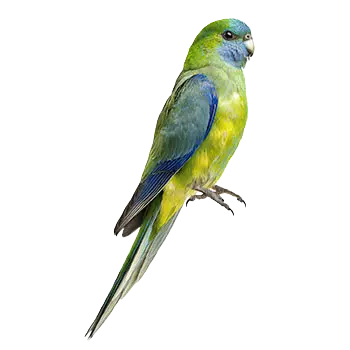

A well-designed travel carrier is one of the most important accessories a Blue Winged Parakeet owner can invest in, yet it is also one of the most frequently neglected. Every bird will eventually need to travel, whether for routine veterinary visits, emergency evacuations, or household moves, and having an appropriate carrier on hand before the need arises eliminates the dangerous improvisation that often occurs when owners are caught unprepared. The carrier should be viewed as permanent safety equipment rather than an occasional convenience item.
For the Blue Winged Parakeet's size, a carrier with interior dimensions of approximately twelve inches long by ten inches wide by twelve inches tall provides adequate space for short trips without being so large that the bird is thrown around during vehicle movement. Hard-sided carriers made from molded high-impact plastic with a wire or mesh front panel offer the best combination of durability, security, and ventilation. Soft-sided carriers designed for small dogs or cats can work in mild conditions but provide less structural protection during a vehicle accident and are more difficult to clean after the bird defecates.
The carrier door should open securely and latch with a mechanism the bird cannot manipulate from inside. A single perch mounted low in the carrier, roughly two inches from the floor, gives the bird something to grip during transport without positioning it high enough that a fall would cause injury. Many travel carriers come without perches or with perches mounted too high, so aftermarket fitting or custom dowel installation is often necessary. Line the carrier floor with a non-slip material such as a rubber shelf liner or a folded towel to prevent the bird from sliding during acceleration and braking.
Acclimating the Blue Winged Parakeet to its carrier well before the first actual trip reduces transport stress dramatically. Place the carrier near the cage with the door open so the bird can explore it voluntarily. Offering treats and meals inside the carrier over a period of days or weeks builds a positive association. Once the bird enters the carrier comfortably, practice closing the door for short intervals before progressing to brief car rides. This systematic desensitization is especially important for Psittacula species, which tend to be more reserved and stress-sensitive than some of the more adaptable parrot genera.