
Why Enrichment Matters

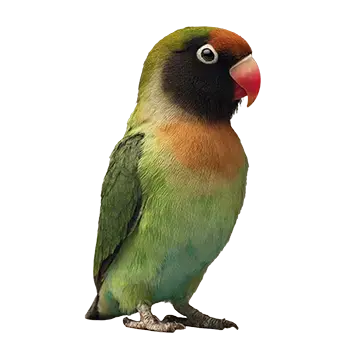
Black-Cheeked Lovebirds are among the most intellectually and physically active small parrots kept in captivity, and their need for mental stimulation rivals that of species many times their size. In the wild, Agapornis nigrigenis spends the majority of its waking hours engaged in complex behaviors: navigating the canopy along Zambian river corridors, manipulating seed heads with dexterous feet, negotiating social hierarchies within flocks, and investigating novel objects in its environment. Captivity eliminates most of these natural outlets, and without deliberate enrichment, the result is a bird with abundant energy and cognitive capacity but nothing meaningful to direct it toward.

The behavioral consequences of insufficient enrichment are well-documented in lovebirds. Feather barbering and plucking, repetitive pacing or route-tracing along cage bars, excessive screaming, self-mutilation, and aggression toward cage mates or handlers all escalate when a bird's environment fails to provide adequate stimulation. These are not personality flaws but predictable responses to an environment that does not meet the bird's neurological needs. Enrichment is not a luxury or a perk of ownership; it is a fundamental requirement on the same level as nutrition and veterinary care.

Effective enrichment targets multiple sensory and cognitive channels. A single hanging bell does not constitute an enrichment program. The goal is to provide opportunities for problem-solving, physical manipulation, destructive chewing, foraging behavior, locomotion, and social interaction across the course of each day. This requires a variety of toy types rotated on a regular schedule, supplemented by out-of-cage play time, training sessions, and environmental complexity that gives the bird reasons to think, explore, and make choices.

The financial investment in toys and enrichment materials need not be large. Many of the most engaging items for lovebirds can be assembled from inexpensive or household materials, and commercial toys range from a few dollars for simple shreddables to moderate prices for more complex foraging devices. The real investment is time and attention: observing what captures the bird's interest, rotating items before they become stale, and introducing novelty at a pace that challenges without overwhelming.

Foraging Toys

Foraging toys are arguably the most important category of enrichment for captive Black-Cheeked Lovebirds because they replicate the activity that dominates a wild bird's daily time budget. In their natural habitat, lovebirds spend hours locating, extracting, and processing food items. Placing all daily nutrition in an open dish reduces this complex behavioral sequence to a few minutes of eating, leaving hours of unoccupied time. Foraging toys reinsert effort, problem-solving, and time investment into the feeding process, transforming a passive act into an engaging challenge.

Entry-level foraging toys include devices as simple as a small paper cup filled with pellets and folded shut, a wiffle ball stuffed with leafy greens, or a commercially available acrylic foraging wheel that requires the bird to rotate a chamber to access seeds one at a time. These introductory devices teach the bird that food can be hidden and that manipulation yields a reward. Most lovebirds catch on quickly, often within a single session, because the foraging instinct is deeply embedded and readily activated even in birds that have never encountered hidden food before.

Intermediate foraging toys introduce additional layers of complexity. Stacked acrylic foraging boxes require the bird to lift lids, pull drawers, or navigate hinged barriers to reach the food inside. Skewered foraging kabobs thread chunks of vegetable, cubes of nutrient blocks, or woven palm leaf wraps onto a stainless steel rod, requiring the bird to tear through each layer to reach preferred items positioned deeper on the skewer. Some toys combine foraging with shredding by wrapping food rewards inside layers of paper, palm leaf, or corn husk that must be destroyed to access the prize.

Advanced foraging setups can involve multi-step puzzle feeders where the bird must perform a sequence of actions, such as unscrewing a bolt, sliding a panel, and lifting a cover, to access food. These are especially valuable for bonded pairs that may collaborate on the puzzle or compete for the solution. Rotating foraging toy complexity upward over time prevents habituation and maintains the cognitive challenge. If a bird consistently solves a foraging device within seconds, it is no longer providing meaningful enrichment and should be replaced with something more demanding or reconfigured with more difficult wrapping or smaller openings.

Shredding and Chewing Toys

The drive to chew and destroy is one of the strongest behavioral impulses in lovebirds, and Black-Cheeked Lovebirds are no exception. In the wild, this behavior serves multiple functions: stripping bark to access insects, processing seed husks, excavating and shaping nest cavities, and maintaining beak condition. Providing abundant chewable and shreddable materials in captivity channels this instinct into appropriate outlets rather than letting it manifest as destruction of cage components, furniture, clothing, or other household items during out-of-cage time.

Palm leaf and corn husk toys are among the most popular and cost-effective shredding options. These natural fiber materials can be woven, braided, or bundled into shapes that a lovebird can grip with one foot while systematically tearing strips with its beak. The fibrous texture provides satisfying resistance and produces long, thin strips that many lovebirds tuck into their rump feathers, a vestigial nesting behavior retained from their wild ancestors. Balsa wood blocks, yucca chips, sola wood pieces, and vine balls offer variations in density and texture that keep the shredding experience novel.

Paper-based toys provide another category of shredding enrichment. Cupcake liners stacked on a stainless steel skewer, rolls of adding machine paper threaded through cage bars, and small phone book pages crumpled into loose balls all provide satisfying destruction opportunities at minimal cost. The key safety consideration with paper is to use only undyed, uncoated paper free of adhesives and inks that could be toxic if ingested. Newspaper printed with soy-based inks is generally considered safe, but plain white paper eliminates any concern entirely.

Wood toys designed for small parrots should use only bird-safe species. Pine, balsa, birch, poplar, and untreated fruit woods are all appropriate, while pressure-treated lumber, cedar, and any wood of unknown origin should be avoided. The size of wooden toy components matters for safety: pieces small enough to be swallowed whole present a choking hazard, while pieces too large for a lovebird to grip are ignored. The sweet spot is components roughly the diameter of a pencil to a thumb, which the bird can hold in its foot and work with its beak comfortably.

Climbing and Physical Activity Toys

Physical activity toys complement the exercise a Black-Cheeked Lovebird gets from flying between perches by engaging different muscle groups and movement patterns. Ladders made from natural wood rungs and cotton or sisal rope sides provide a climbing surface that works the legs and feet differently than perching does. A ladder hung at an angle within the cage creates an inclined pathway that the bird can ascend and descend throughout the day, and many lovebirds treat a well-placed ladder as a preferred commuting route between upper and lower perches.

Swings are a staple enrichment item for lovebirds, and most birds develop a strong attachment to their preferred swing. The gentle motion engages the bird's vestibular system and core muscles as it balances, and many lovebirds spend extended periods swinging contentedly as a self-soothing activity. Choose a swing sized for small parrots, with a perch diameter of approximately half an inch and enough chain or rope length to allow a generous arc without hitting the cage walls at the extremes of the swing. Some swings incorporate beads, bells, or chewable elements at the top, adding sensory variety to the swinging experience.

Play gyms and tabletop stands provide essential out-of-cage activity platforms. A well-designed play gym for a lovebird includes multiple perches at varying heights, a few toy hanging points, and food dish stations that keep the bird engaged in a defined area rather than wandering to less safe parts of the room. Natural wood play gyms with branches of different diameters offer the most engaging surface variety. The play gym becomes a destination the bird associates with positive experiences, making out-of-cage time more structured and reducing the risk of the bird landing in hazardous locations.

Bungee-style hanging perches and spiral rope coils introduce dynamic, unpredictable motion into the cage environment. Unlike fixed perches that provide stable footing, these flexible structures bounce, sway, and twist when the bird lands or shifts its weight, challenging the bird's balance and coordination. Many lovebirds become visibly excited when interacting with bouncing perches, using them as launching platforms for short flights or hanging upside down from them in playful acrobatics. These items work best as supplements to a stable perch arrangement rather than replacements for firm footing options.

Noise and Sensory Toys

Black-Cheeked Lovebirds are auditory creatures that communicate through a range of chirps, chatters, and contact calls, and toys that produce sound can be highly engaging when selected appropriately. Small stainless steel bells are the most common sound-producing toy and remain popular for good reason: lovebirds quickly learn to ring a bell by striking it with their beak or shaking the toy it is attached to, and the immediate acoustic feedback creates a satisfying cause-and-effect loop. Choose bells made from stainless steel with a securely attached clapper that cannot be removed and swallowed. Jingle-style bells with open seams can trap toes and should be avoided entirely.

Musical toys and small percussion instruments designed for birds provide more complex auditory enrichment. Xylophones with color-coded keys, miniature chimes, and rattle-style toys that produce different sounds depending on how they are manipulated can hold a lovebird's attention for extended periods. The variety of sounds these toys produce appears to stimulate curiosity and experimentation, with many birds methodically testing different keys or striking surfaces to compare the results. These items are particularly valuable for single birds that lack the auditory stimulation of a flock mate's vocalizations.

Reflective and visual toys appeal to the lovebird's keen eyesight and social nature. Small mirrors have been a standard parakeet and lovebird toy for decades, and many birds do enjoy interacting with their reflection. However, mirrors should be used with caution for single lovebirds, as some individuals form an obsessive bond with their reflection that substitutes for genuine social interaction and can escalate into territorial aggression around the mirror. If a bird begins regurgitating to its reflection, spending excessive time staring at the mirror to the exclusion of other activities, or becoming aggressive when the mirror is approached, it should be removed.

Textured toys that engage the sense of touch round out a comprehensive sensory enrichment program. Leather strips, cotton knots, sisal tassels, and wooden beads of varying shapes and sizes all provide tactile variety as the bird manipulates them with its beak and feet. Many lovebirds are particularly attracted to toys with multiple textures combined in a single item, such as a leather strip threaded with wooden beads and knotted between sections of cotton rope. The variety of surfaces maintains the bird's interest longer than any single material would alone.

Toy Safety and Sizing

Safety is the non-negotiable starting point for every toy selection decision, because a toy that injures or poisons a bird has failed its fundamental purpose regardless of how engaging it might be. The most common toy-related injuries in lovebirds involve entanglement, ingestion, and entrapment. Entanglement hazards include frayed rope fibers that wrap around toes, long threads from fabric toys that loop around necks or wings, and chain links with open gaps that catch leg bands. Inspect every toy before installation and perform regular checks during use, removing or repairing any item that shows signs of wear that could create an entanglement risk.

Ingestion hazards arise when toys contain small components that can be detached and swallowed. This includes beads smaller than a pea, tiny metal clips, plastic snap-fit connectors, and glued-on decorative elements that a persistent beak can pry loose. Paint and dye safety is another ingestion concern: toys should use only vegetable-based dyes or food-grade coloring agents, and any toy with a chemical odor, sticky coating, or powdery residue should be discarded immediately. Zinc and lead are the metals of greatest concern, and both can be present in cheap imported toys with unregulated manufacturing standards.

Sizing a toy correctly for a Black-Cheeked Lovebird affects both safety and engagement. Toys designed for larger parrots may have components too heavy for a lovebird to manipulate, chains with links large enough to trap a foot, or hard plastic parts that resist a lovebird's smaller beak. Conversely, some toys marketed for finches or canaries are so small and fragile that a lovebird destroys them instantly, providing no sustained engagement and potentially creating sharp fragments. Look for toys specifically labeled for small parrots, lovebirds, parrotlets, or cockatiels, as these occupy the appropriate size and strength range.

Hanging hardware deserves particular attention. Quick-link connectors made from stainless steel are the safest attachment method, as they can be securely closed and resist the bird's attempts to unscrew them. C-clips and split rings can be pried open by determined birds and should be reinforced with pliers or replaced with quick-links. Plastic clips degrade in sunlight and under repeated beak pressure, eventually cracking and releasing the toy to fall to the cage floor where it becomes a foot hazard. Every attachment point in the cage should be checked weekly as part of routine maintenance.

Rotation and DIY Enrichment

Toy rotation is one of the simplest and most effective enrichment strategies, yet it is frequently overlooked by owners who install a set of toys and leave them in place indefinitely. Lovebirds, like most parrots, habituate to familiar objects over time. A toy that captivated a bird's attention for hours on its first day in the cage may be completely ignored two weeks later, not because it is a bad toy but because it has become part of the predictable background. Removing a toy for one to two weeks and then reintroducing it restores its novelty value, effectively doubling or tripling the enrichment return on every toy purchased.

A practical rotation system involves maintaining three sets of toys: one installed in the cage, one stored and resting, and one in the cleaning or inspection phase. Swapping one or two items from each set every few days keeps the cage environment dynamic without overwhelming the bird with wholesale changes that might cause anxiety. Some birds are neophobic and need new items introduced gradually, perhaps hung near but not inside the cage for a day before being moved inside. Others are neophilic and immediately investigate anything new with enthusiastic curiosity. Observing your bird's response pattern guides the appropriate rotation pace.

Do-it-yourself enrichment items are a valuable supplement to commercial toys and can be assembled from safe household materials at little or no cost. Untreated paper towel rolls can be flattened, folded around a few seeds, and tucked between cage bars as instant foraging puzzles. Popsicle sticks woven through the cage bars in a grid pattern create a climbing surface and chewing target. A cupcake liner layered stack threaded onto a short piece of leather lace becomes a shredding toy that takes seconds to assemble and provides minutes of focused activity.

Nature can supply some of the best enrichment materials at no cost at all. Fresh branches from safe tree species, harvested away from roadsides and pesticide-treated areas, provide chewing material, perching variety, and the sensory experience of a natural surface complete with bark texture and residual scent. Dried seed heads from ornamental grasses, untreated pinecones, and clean coconut shell halves all serve as enrichment items that approximate the textures and challenges a wild lovebird encounters in its native habitat. The critical step with any natural material is ensuring that it has not been exposed to pesticides, herbicides, or automotive exhaust, and washing and baking items at a low temperature for thirty minutes kills insects and surface pathogens before introduction to the cage.

Always consult a qualified professional before making any health-related decisions. This content is provided for informational reference only and should not replace professional guidance specific to your animal.