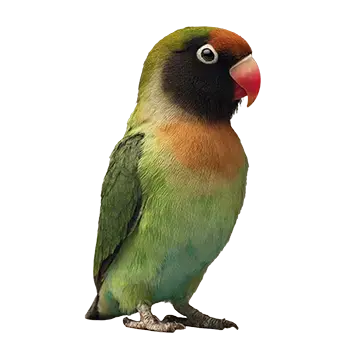

Lighting is one of the most frequently underestimated components of Black-Cheeked Lovebird care, yet it plays a foundational role in the bird's physical health, hormonal regulation, and psychological wellbeing. In their native southwestern Zambian habitat, these lovebirds experience intense equatorial sunlight rich in ultraviolet wavelengths that standard household bulbs do not produce. UVB radiation enables the synthesis of vitamin D3 in the skin, which is essential for calcium absorption and bone metabolism. Without adequate UVB exposure, even a calcium-rich diet cannot fully protect against the skeletal problems that plague captive birds.
Full-spectrum avian lighting fixtures are designed to replicate the spectral characteristics of natural sunlight, including the UVA and UVB wavelengths that glass windows filter out. When selecting a full-spectrum bulb, look for a color rendering index above ninety and a color temperature between 5000K and 6500K, which approximates midday daylight. The bulb should explicitly state its UVB output percentage, typically between two and five percent for companion bird applications. Fluorescent tube fixtures offer broad, even coverage suitable for illuminating an entire cage from above, while compact fluorescent or LED full-spectrum bulbs can be used in clamp-style fixtures for more targeted placement.
Placement distance matters because UVB intensity decreases rapidly with distance from the source. Most avian full-spectrum bulbs are effective at twelve to eighteen inches from the bird's primary perching area. Beyond twenty-four inches, UVB output drops to levels too low to support meaningful vitamin D synthesis. The bulb should be positioned so the bird can move into and out of the light zone by choosing different perches, allowing it to self-regulate exposure the way it would by moving between sun and shade in the wild. Never position the light so close that the bird cannot escape it, as prolonged forced exposure can cause eye strain and thermal discomfort.
A timer is essential for managing the photoperiod, which directly influences hormonal cycles, molt timing, and breeding behavior. Black-Cheeked Lovebirds in captivity generally thrive on a lighting schedule of ten to twelve hours of light followed by twelve to fourteen hours of uninterrupted darkness. Shortening the light period during seasons when you want to suppress breeding behavior and lengthening it slightly during desired breeding windows provides a non-invasive hormonal management tool. Sudden changes to the photoperiod should be avoided; adjust by fifteen-minute increments over several days to mimic the gradual seasonal shifts the bird's physiology is adapted to respond to.