Black-Cheeked Lovebird Species Guide - Furry Critter Network

Black-Cheeked Lovebird

Quick Facts

🔬 Scientific Name
Agapornis nigrigenis
📊 Care Level
Moderate
😊 Temperament
Gentle, Devoted, Calm, Affectionate
📏 Adult Size
5-5.5 inches
⏱️ Lifespan
10-15 years
🔊 Noise Level
Low
🗣️ Talking Ability
Limited
🍽️ Diet Type
Pellet/Seed/Omnivore
🌍 Origin
Zambia, Southwest Africa
🏠 Min Cage Size
24x24x24 inches
📐 Size
Small

Black-Cheeked Lovebird - Names & Recognition

The Black-Cheeked Lovebird receives its common name from the distinctive dark brownish-black coloring covering the cheeks, forecrown, and throat, creating a dark facial mask that represents the species' most prominent identifying feature. This dark coloring contrasts dramatically with the bright orange upper chest and green body, making identification straightforward and the common name immediately descriptive. The naming emphasizes the bird's most distinctive visual characteristic, following the tradition of descriptive common names highlighting unique features distinguishing species from closely related forms.

The scientific name Agapornis nigrigenis was assigned by William Lutley Sclater in 1906 based on specimens collected in what is now Zambia. The genus name Agapornis derives from Greek agape meaning "love" and ornis meaning "bird," creating the literal translation "love bird" that gives the entire genus its common name, referencing the strong pair bonding characteristic of all lovebird species. The species epithet nigrigenis comes from Latin niger meaning "black" and gena meaning "cheek," directly translating to "black-cheeked" and perfectly describing the bird's most distinctive feature. This straightforward nomenclature creates consistency between common and scientific names.

Common alternate names are limited compared to more widespread species, reflecting the Black-Cheeked Lovebird's restricted range and relative obscurity outside specialized aviculture. Some sources use Black-Faced Lovebird though this name is less accurate as the black coloring covers cheeks and throat more than the entire face. Historical literature occasionally references them as Sclater's Lovebird after their describer, though this name never gained widespread acceptance. In aviculture, they're sometimes simply called Black-Cheeks by breeders and enthusiasts familiar with the species. Regional name variations are minimal due to their limited distribution and small wild population.

No subspecies are recognized, with Agapornis nigrigenis considered monotypic throughout its restricted range in southwestern Zambia and adjacent areas. Unlike some widespread lovebird species showing geographic variation, Black-Cheeked Lovebirds occupy a limited area with minimal population structure warranting subspecific designation. In captivity, selective breeding has produced color mutations including blue (lacking yellow pigment), lutino (yellow with red eyes), and various pied patterns, though these mutations remain quite rare compared to mutations in more commonly bred species like Peach-Faced Lovebirds. Most captive breeding focuses on maintaining wild-type coloring and healthy populations given the species' vulnerable conservation status making preservation of natural characteristics important for potential future conservation breeding programs supporting wild populations.

Black-Cheeked Lovebird Physical Description

The Black-Cheeked Lovebird is a small, compact parrot measuring approximately five to five and one-half inches in total length from beak to tail tip, making them among the smaller lovebird species. Adults typically weigh between 1.3 to 1.6 ounces, with males and females similar in size making weight unreliable for sex determination. Their build is stocky and robust typical of lovebirds, with a large rounded head, short neck, and powerful hooked beak creating characteristic proportions. The short, squared tail contributes minimally to overall length, and the compact body structure reflects their active, acrobatic lifestyle.

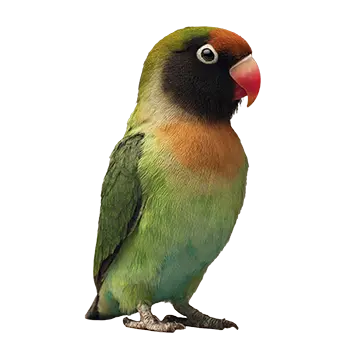
Wild-type coloration creates striking contrasts between dark and bright areas. The most distinctive feature is the dark brownish-black coloring covering the forecrown, lores, cheeks, and throat, creating an extensive dark facial mask. This dark area grades into the bright orange-red coloring of the upper breast and neck band, creating dramatic color transition. The lower breast and belly are green grading to yellowish-green toward the vent. The back, wings, and rump are bright green with darker flight feathers. The short tail is green with black and yellow markings. The overall impression is of a primarily green bird with striking dark face contrasting with bright orange breast band.

Prominent white eye-rings surround each eye, standing out dramatically against the dark facial coloring and creating one of the species' most distinctive features. These orbital rings are broader and more prominent than in many lovebird species, contributing to their gentle facial expression. The contrast between white eye-rings, dark cheeks, and bright orange breast creates a unique color pattern distinguishing Black-Cheeked Lovebirds from all other lovebird species at a glance.

Sexual dimorphism is minimal to absent, with males and females essentially identical in external appearance making visual sexing impossible. Both sexes display the same dark facial coloring, orange breast band, and green body. DNA testing or surgical sexing provides the only reliable sex determination. Behavioral differences during breeding season including male courtship feeding may provide clues though remain unreliable in non-breeding birds. The lack of sexual dimorphism is typical of many lovebird species.

Juvenile birds resemble adults but show duller, less intense coloring overall. The black facial coloring appears more brownish and less dark, the orange breast band is paler and less extensive, and overall green coloring is more subdued. Young birds gradually acquire full adult coloring between four to eight months of age. The beak shows dark markings at the base that fade with maturity, providing age indicators in young birds. Full adult plumage indicates sexual maturity.

The beak is bright coral-red in adults, large and powerful relative to body size, capable of delivering painful bites despite small overall size. Juvenile beaks show dark horn-colored base markings disappearing with age. Eyes are dark brown surrounded by the prominent white orbital rings. Legs and feet are gray with strong toes and sharp claws adapted for climbing. The overall impression is of a small, colorful, robust parrot with distinctive facial pattern and compact, powerful build reflecting their energetic, active nature.

Color mutations developed in captivity include blue forms lacking yellow pigment showing white replacing orange and yellow areas while retaining the dark face, lutino birds with yellow bodies and pale heads with red eyes, and various pied patterns creating irregular color patches. These mutations remain relatively rare as Black-Cheeked Lovebirds are less extensively bred than common species, with conservation-focused breeding emphasizing wild-type coloring. Natural coloring remains preferred by serious breeders concerned with species preservation.

Affection Level
Black-Cheeked Lovebirds are exceptionally affectionate with their chosen companions, forming intense bonds rivaling any lovebird species. Hand-raised individuals become devoted to caregivers, seeking physical closeness and enjoying gentle handling. They express affection through preening, soft vocalizations, and contentedly sitting close to their bonded companion. Their gentle nature makes their devotion less overwhelming than more aggressive lovebird species.
Sociability
Highly social birds requiring constant companionship from either another lovebird or intensive human interaction. They form strong pair bonds and maintain almost constant contact with mates. In the wild, they occur in flocks showing complex social behaviors. Single birds bond intensely with humans but require extraordinary attention. Their social needs are absolute, making them unsuitable for people unable to provide constant companionship.
Vocalization
Quieter than most lovebird species with softer, less shrill vocalizations. Their contact calls and chirping are pleasant and relatively subdued compared to Masked or Fischer's Lovebirds. They vocalize regularly but without the piercing quality of related species. While not silent, their moderate volume and gentler tone make them more suitable for apartments and noise-sensitive situations than louder lovebird relatives.
Intelligence
Highly intelligent with excellent problem-solving abilities and quick learning capacity. They master foraging puzzles, learn routines rapidly, and understand social dynamics within pairs and flocks. Some individuals learn simple words or phrases. Their intelligence combined with gentler temperament makes training more pleasant than with aggressive species. They're observant, curious, and mentally capable though less manipulative than feistier lovebirds.
Exercise Needs
Very active birds requiring substantial daily out-of-cage time for flying, climbing, and exploring. Minimum 2-3 hours of supervised exercise prevents obesity and behavioral problems. They're enthusiastic flyers and acrobatic climbers enjoying vertical and horizontal space. Without adequate exercise, they become restless, may develop health issues, and show behavioral problems. Their high energy demands commitment to daily supervised activity.
Maintenance Level
Moderate to moderately-high maintenance due to social demands, exercise requirements, and regular cage cleaning needs. They're less messy than some lovebird species and less destructive than larger parrots. Their gentler temperament reduces behavioral management challenges. However, their absolute requirement for companionship and daily interaction creates substantial time commitment. Overall care is manageable for dedicated owners but demands consistent daily attention.
Trainability
Highly trainable when motivated by positive reinforcement and strong bonds with trainers. They learn tricks, recall training, and basic commands willingly. Their gentler nature compared to aggressive lovebird species makes training sessions more pleasant and productive. They respond well to patient, consistent methods and enjoy the mental stimulation of learning. Their intelligence and desire to please bonded companions facilitate successful training.
Independence
Extremely dependent on companionship with minimal ability to entertain themselves for extended periods without distress. Single birds become intensely attached to their person, showing anxiety when separated. Even paired birds appreciate regular human interaction beyond their bird companionship. They're completely unsuitable for people wanting low-maintenance pets, requiring someone home most of the time or provision of a compatible companion bird.

Natural Habitat & Range

Black-Cheeked Lovebirds occupy an extremely restricted range in southwestern Zambia, occurring primarily in the upper Zambezi River valley and adjacent areas near Victoria Falls. Their total distribution area is remarkably small compared to most parrot species, estimated at less than 2,500 square miles of suitable habitat. This limited range centered in a specific geographic region makes them among the most range-restricted lovebird species and contributes to their vulnerable conservation status. Small populations may extend into extreme northern Zimbabwe and possibly northeastern Namibia and northwestern Botswana, though core populations remain concentrated in Zambia. This geographic restriction makes them vulnerable to habitat changes within their limited range.

The natural habitat consists of mopane woodland, particularly areas dominated by Colophospermum mopane trees providing both food sources and nesting sites. They show strong association with riparian woodland along seasonal streams and rivers, concentrating in areas where water availability is more reliable than surrounding drier regions. They inhabit altitudes primarily between 2,000 to 4,000 feet in regions characterized by seasonal rainfall with distinct wet and dry seasons. Their habitat preferences differ from many African parrots, favoring specific woodland types rather than ranging across diverse habitat types. This habitat specialization contributes to their restricted distribution.

Black-Cheeked Lovebirds are highly social, occurring in flocks ranging from small groups of six to twelve birds to larger congregations of fifty or more individuals at favored feeding or watering sites. They maintain strong pair bonds within flocks, with mated pairs staying close together even in large aggregations. Daily movements follow patterns between roosting sites, feeding areas, and water sources. Unlike nomadic species, they show relatively sedentary behavior within their range, maintaining territories when conditions are favorable. However, they may move locally in response to seasonal food availability and water distribution.

Feeding behavior involves consuming grass seeds, millet, and seeds from various native plants. They feed primarily on the ground, walking through grass picking up fallen seeds and occasionally taking seeds directly from grass seed heads. Their diet varies seasonally based on seed availability, with particular preference for seeding grasses during dry season when seeds are most abundant. They also consume some fruits, berries, and agricultural crops including cultivated millet where their range overlaps with farming. Foraging occurs in flocks with sentinel birds watching for predators while others feed, providing mutual protection through collective vigilance.

Nesting occurs in tree cavities, particularly in mopane trees and acacias. They show preference for natural hollows in dead or dying branches where cavity formation is most advanced. Competition for suitable nest sites with other cavity-nesting species creates breeding challenges. Breeding season typically occurs during dry season from January through June when grass seeds are most available. Pairs defend cavity sites while maintaining social connections with the flock. Unlike some lovebird species that carry nest material tucked in rump feathers, Black-Cheeked Lovebirds carry bark strips and grass in their beaks. Multiple pairs may nest in relative proximity in suitable trees.

Population status is considered vulnerable to near-threatened, with wild populations estimated at 10,000 to 20,000 individuals though exact numbers remain uncertain due to their restricted range and limited surveys. The species faces conservation challenges including habitat loss from agricultural development, drought affecting water availability and food resources, capture for pet trade though now largely illegal, and competition for nest sites from introduced species. Climate change potentially threatens their already restricted habitat through altered rainfall patterns. They occur in some protected areas though much of their range lacks formal protection. Conservation priorities include habitat preservation, nest box provision, and captive breeding programs maintaining genetic diversity supporting potential future reintroduction efforts. Their vulnerable status makes responsible captive breeding important for species preservation while ensuring wild populations are not depleted through collection.

Temperament

The Black-Cheeked Lovebird displays a notably gentler temperament compared to more commonly kept lovebird species, combining the intense devotion and affectionate bonding characteristic of the genus with reduced aggression and quieter demeanor making them more manageable companions. These differences in personality make them appealing alternatives to feistier species for owners seeking lovebird companionship without extreme behavioral challenges. However, they retain substantial social needs and active personalities requiring significant commitment, making them demanding pets despite their gentler nature compared to relatives.

Pair bonding behavior remains intensely strong as in all lovebird species, with bonded pairs maintaining almost constant physical contact and showing obvious distress when separated. Mates sit pressed together, preen each other extensively, and coordinate movements throughout the day. This devoted bonding extends to human companions when birds are kept singly, with hand-raised individuals forming all-consuming attachments to their chosen person. However, the expression of this bond is generally gentler than in Masked or Fischer's Lovebirds, with less aggressive territoriality and reduced jealous behaviors toward others approaching their bonded companion, though individual variation exists.

Energy levels are high typical of lovebirds, with Black-Cheeked Lovebirds displaying constant activity during waking hours. They climb, swing, explore, manipulate toys, and engage in perpetual environmental investigation. Their activity style is somewhat calmer than the most hyperactive lovebird species, showing more controlled, purposeful movement rather than frenetic chaos. They're playful and curious, investigating novel objects and solving foraging puzzles, though they may approach new items more cautiously than bolder species. Their active nature requires substantial stimulation preventing boredom-related behavioral problems.

Playfulness manifests through toy manipulation, social play with mates or human companions, and foraging activities. They enjoy puzzle toys, shreddable materials, and climbing structures. Their play often serves social bonding purposes, with birds presenting toys to mates or humans and engaging in gentle interactive games. This playfulness makes them entertaining companions though also demanding, requiring regular provision of enrichment maintaining interest. Understimulated birds may develop problems including excessive vocalization and destructive behaviors.

Aggression levels are notably lower than in many lovebird species, representing a significant temperament advantage. While they may defend their cage or bonded companion, their defensive behaviors are less intense and frequent than in Masked Lovebirds. They're less likely to attack other birds, household members, or visitors approaching their territory or person. Bites, while still possible and sometimes painful given their powerful beaks, occur less frequently and with less aggression. This gentler disposition makes them more suitable for multi-person households and less likely to create serious behavioral challenges, though they're not completely non-aggressive and require appropriate respect.

Territorial behaviors exist but remain moderate, with birds showing some defense of cages and preferred areas without the extreme territoriality of feistier species. They may object to hands entering their space but typically without the vicious attacks some lovebirds deliver. Proper socialization and consistent handling reduce territorial tendencies. Same-sex aggression between unbonded individuals can still occur requiring careful introduction protocols though appears less severe than in more aggressive species.

Jealousy and possessiveness over bonded companions occur but generally with less intensity than in other lovebirds. Single birds bonded to humans may show preference for their person and some protectiveness, but extreme jealous attacks on family members are less common. Paired birds focus devotion on mates with less obsessive territoriality toward humans. Managing jealousy through consistent multi-person handling from young age remains beneficial though less critical than with more jealous species.

Separation sensitivity means Black-Cheeked Lovebirds tolerate solitude poorly, requiring constant companionship preventing distress. Single birds need someone home most of the time or develop behavioral problems including excessive calling and anxiety. Working owners should seriously consider keeping pairs rather than singles. Even paired birds appreciate regular human interaction beyond their bird companionship. They're unsuitable for people wanting decorative cage birds requiring minimal attention.

Handling tolerance in hand-raised birds is generally good, with most individuals accepting and enjoying gentle interaction with trusted people. They may seek physical contact including cuddling, head scratches, and shoulder perching. Their gentler nature makes handling more pleasant than with nippy aggressive species. However, they retain strong personalities and may nip when annoyed or frightened, requiring respectful interaction. Parent-raised birds may remain resistant to handling though typically less aggressively defensive than other species.

The combination of intense devotion, high energy, substantial intelligence, and notably gentler temperament compared to common lovebird species creates appealing companions for those seeking affectionate bonds without extreme behavioral challenges. However, their social needs, exercise requirements, and personality complexity still demand significant commitment. They're best suited to dedicated owners prepared for lovebird care intensity while appreciating their gentler disposition as advantage over more aggressive relatives. Their vulnerable conservation status adds responsibility to captive breeding and care, making them suitable for committed aviculturists rather than casual pet owners.

Care Requirements

Caring for Black-Cheeked Lovebirds requires commitment to meeting their substantial social, physical, and environmental needs while recognizing their vulnerable conservation status adding ethical responsibilities to their care. These active, social birds need spacious housing, extensive out-of-cage time, abundant enrichment, and either constant human companionship or compatible bird companions. Their somewhat gentler nature compared to other lovebirds makes some aspects of care more manageable, though their needs remain substantial requiring realistic assessment of whether their requirements match potential owners' lifestyles and commitment levels.

Cage size must prioritize horizontal space for flight over excessive height, as lovebirds are active flyers benefiting from length. Minimum cage size for a single bird should be 24 inches wide by 24 inches deep by 24 inches high, with larger always preferable. Pairs require minimum 32 inches wide by 24 inches deep by 24 inches high though substantially larger cages support better health. Bar spacing must not exceed 1/2 inch preventing escape or injury. Choose powder-coated or stainless steel construction avoiding galvanized metal containing potentially toxic zinc. Ensure multiple perch levels and horizontal bars facilitating climbing.

Cage placement should balance social needs with practical considerations. Position in main family areas where birds receive frequent interaction and feel included in household activities, as they're highly social becoming distressed when isolated. However, avoid kitchens due to cooking fume dangers. Avoid locations with drafts, direct heating/cooling vents, or extreme temperature fluctuations. Position at comfortable viewing height around 4-5 feet. Ensure stable temperature between 65-80°F. Provide natural light cycles or supplement with full-spectrum lighting.

Out-of-cage time is essential requiring minimum 2-3 hours daily of supervised freedom in bird-safe rooms. Lovebirds denied adequate exercise become obese and develop behavioral problems. Create dedicated bird-safe spaces removing hazards including open water, toxic plants, other pets, ceiling fans, and windows lacking barriers. Close doors preventing escapes. Cover windows preventing collisions. Supervise closely as curiosity drives investigation and destruction of household items. Their powerful beaks can damage furniture and electronics within reach.

Perch variety supports foot health and enrichment. Include natural wood branches from safe species in varying diameters from 1/2 to 3/4 inch. Position perches at different heights and angles. Ensure perches don't cross over food and water. Avoid sandpaper perches damaging feet. Include one rougher perch for nail maintenance. Rope perches provide variety though require monitoring for fraying creating entanglement hazards.

Toys are essential with lovebirds requiring substantial enrichment. Provide multiple toys rotated regularly maintaining novelty. Suitable toys include shreddable items, wood chews, foraging puzzles, small bells, ropes, and puzzle toys. Avoid toys with small swallowable parts, long strings creating entanglement, or toxic materials. Lovebirds destroy toys enthusiastically requiring regular replacement and ongoing toy budget.

Bathing opportunities should be provided several times weekly. Offer shallow dishes of lukewarm water, spray gently, or allow bathing under gentle sink faucets under supervision. Some birds enjoy showering with owners when temperature and pressure are appropriate. Ensure birds can dry thoroughly in warm, draft-free environments. Never force bathing on reluctant birds.

Companionship requirements are substantial with single birds demanding extraordinary human interaction or paired birds requiring avian companionship. Single lovebirds bond intensely with their person requiring someone home most of the day. Working owners should seriously consider pairs. However, introducing mates requires careful protocols as lovebirds can reject proposed partners. Some individuals never accept mates requiring extensive human interaction. Pairs reduce human demands but still appreciate daily handling.

Safety considerations include ensuring escape-proof housing as lovebirds are clever and may manipulate latches. Use clips or locks on doors. Check cage integrity regularly. Protect from other pets. Avoid unsupervised access by children. Their curious nature and powerful beaks mean they investigate and chew anything accessible requiring vigilant supervision.

Cleaning requirements are substantial as lovebirds are messy eaters scattering food widely, producing significant droppings, and actively destroying items creating debris. Daily tasks include replacing cage liners, refreshing food and water, removing discarded food, and spot-cleaning. Weekly complete cage cleaning includes washing all components with bird-safe cleaners. Monthly deep cleaning addresses all areas. Their messiness requires placing cages on washable flooring or using protective mats.

Conservation considerations add ethical dimensions to Black-Cheeked Lovebird care. Their vulnerable status means captive breeding should focus on maintaining healthy, genetically diverse populations. Responsible breeders participate in conservation-focused breeding programs, maintain accurate records, and avoid indiscriminate breeding. Potential owners should acquire birds only from reputable sources practicing responsible breeding supporting long-term species conservation. With commitment to providing spacious housing, extensive interaction, abundant enrichment, appropriate companionship, and responsible breeding practices, Black-Cheeked Lovebirds thrive as gentle devoted companions while contributing to species preservation through conscientious captive management.

Feeding & Nutrition

Black-Cheeked Lovebirds require varied, nutritionally balanced diets supporting their high activity levels, rapid metabolism, and potential ten to fifteen year lifespan. As small active parrots with substantial nutritional demands relative to size, they need daily access to quality foods providing complete nutrition. Historical seed-based diets proved inadequate causing nutritional deficiencies and shortened lifespans. Modern understanding emphasizes pellet-based diets supplemented with seeds, fresh foods, and appropriate supplements providing optimal nutrition supporting vibrant health and preventing diet-related diseases.

High-quality pellets formulated for small parrots or lovebirds should comprise 60-70% of total diet providing complete balanced nutrition including vitamins, minerals, proteins, and essential nutrients. Pellets eliminate selective feeding causing nutritional deficiencies when birds consume only preferred seeds while ignoring others. Choose pellets sized appropriately for lovebirds. Organic, colored, or flavored pellets offer variety though nutritional content matters most. Introduce pellets gradually when transitioning from seed-based diets, mixing increasing proportions with seeds over several weeks. Some lovebirds resist change requiring patience. Once accepting pellets, most birds consume appropriate amounts maintaining healthy weight.

Seeds provide variety, enrichment, and psychological satisfaction comprising 20-30% of diet. Offer high-quality small parrot seed mixes containing safflower, canary seed, various millets, and small amounts of other seeds. Avoid cheap mixes containing excessive fatty sunflower seeds. Some owners prefer creating custom mixes controlling proportions. Sprouted seeds enhance nutritional value and provide enrichment. Prepare sprouts carefully preventing bacterial contamination through proper rinsing and storage. Discard sprouts smelling off or showing mold. The combination of pellets and seeds provides nutritional completeness with variety.

Fresh vegetables should be offered daily comprising approximately 10-15% of diet providing essential vitamins, minerals, and phytonutrients. Suitable options include dark leafy greens (kale, collard greens, dandelion greens, romaine lettuce), carrots, broccoli, bell peppers, peas, corn, squash, and sweet potato. Chop vegetables into small pieces or attach to cage sides using clips. Introduce variety gradually. Some lovebirds eagerly consume fresh foods while others require patient encouragement. Remove uneaten vegetables within 2-3 hours preventing spoilage and bacterial growth.

Fruits offer natural treats providing vitamins and variety but should be limited to 5% of diet due to high sugar content potentially contributing to obesity and yeast overgrowth. Suitable fruits include apple, pear, berries, melon, mango, papaya, and banana. Remove seeds, pits, and cores. Offer fruits 2-3 times weekly in small quantities. Most lovebirds enjoy fruit making it excellent for training rewards and bonding.

Protein sources beyond pellets can include well-cooked eggs, cooked beans, and whole grain breads in small amounts. Avoid raw beans containing toxins requiring cooking. Scrambled eggs with vegetables make nutritious occasional meals. Limit protein supplementation unless advised by veterinarian as excessive protein may contribute to hormonal behaviors.

Calcium supplementation is essential particularly for breeding females. Provide cuttlebone or mineral blocks constantly allowing self-regulation. Most lovebirds nibble regularly with increased consumption during breeding. Crushed oyster shell or calcium powder may be sprinkled on foods for birds not using cuttlebone adequately. Breeding females have extremely high calcium requirements preventing egg binding.

Vitamin and mineral supplementation beyond calcium is generally unnecessary when birds consume pellet-based diets. However, birds refusing pellets or during stressful periods may benefit from supplements added to water or soft foods. Use supplements specifically formulated for birds following instructions as over-supplementation causes toxicity. Consult avian veterinarian about appropriate supplementation.

Fresh clean water must be available constantly in clean containers changed at least daily, more frequently if soiled. Lovebirds often dunk food requiring frequent changes. Some birds enjoy bathing in water dishes necessitating multiple daily changes. Position water away from perches preventing contamination. Consider multiple water sources. Monitor consumption as changes may indicate health problems.

Feeding schedule can involve free-choice availability of pellets and seeds with fresh foods offered morning and afternoon allowing removal before spoilage. Some owners prefer scheduled times controlling portions and encouraging pellet consumption. Monitor consumption ensuring adequate intake. Adjust quantities based on individual bird maintaining healthy weight with easily palpable keel bone without excessive fat.

Foods to avoid include avocado, chocolate, caffeine, alcohol, salt, xylitol, onions, garlic, and moldy items. Many human foods are toxic requiring careful research. When uncertain, research thoroughly. Avoid feeding from human mouths due to bacterial risks. Never share alcohol or caffeine.

Weight monitoring through regular weighing using gram-accurate scales detects problems early. Lovebirds should maintain stable weight with minor fluctuations. Significant changes require dietary adjustment and veterinary consultation. Obesity from excessive seeds and inadequate exercise requires modification and increased activity. With varied balanced nutrition emphasizing pellets, limited seeds, fresh foods, appropriate supplements, and fresh water, Black-Cheeked Lovebirds maintain vibrant health, beautiful plumage, and energetic personalities throughout long lives as gentle devoted companions.

Black-Cheeked Lovebird Health & Lifespan

Black-Cheeked Lovebirds are generally hardy when provided appropriate care, though their small size means health problems can progress rapidly requiring vigilant monitoring and prompt veterinary intervention. Their specific requirements and somewhat sensitive nature compared to hardier species mean they're less forgiving of suboptimal conditions. Average lifespan in captivity ranges from ten to fifteen years with proper care, though some individuals may reach eighteen years under optimal conditions. Establishing regular veterinary care with an avian specialist experienced in small parrots and maintaining annual wellness examinations supports early detection and treatment of health issues, particularly important given their tendency to hide illness until quite advanced as prey species instinctively masking vulnerability.

Respiratory infections represent common health concerns particularly when birds are housed in dusty, poorly ventilated environments or exposed to drafts, temperature extremes, or airborne irritants. Symptoms include labored breathing, tail bobbing, nasal discharge, sneezing, reduced activity, and fluffed appearance. Lovebirds possess efficient respiratory systems supporting their active lifestyle, but this efficiency makes them vulnerable to airborne toxins and pathogens. Prevention requires maintaining clean, well-ventilated housing with stable temperatures between 65-80°F, avoiding drafts and temperature fluctuations, eliminating cigarette smoke and cooking fumes, and ensuring cage placement away from aerosols and other chemical irritants. Prompt veterinary care when respiratory symptoms appear prevents progression to potentially fatal pneumonia.

Psittacosis (Chlamydia psittaci) can affect lovebirds causing serious respiratory disease transmissible to humans creating both bird health and public health concerns. Symptoms include respiratory distress, lethargy, lime-green droppings, weight loss, and eye discharge. The disease can be fatal without treatment. Testing and treatment protocols exist requiring veterinary supervision. Prevention includes quarantining new birds, purchasing from reputable sources practicing disease screening, and maintaining excellent hygiene. Human cases require medical treatment, emphasizing prevention importance.

Feather plucking and self-mutilation can develop particularly in single birds lacking adequate social interaction or paired birds separated from mates. Stress, boredom, nutritional deficiencies, and medical conditions all contribute. Unlike some larger parrots developing severe psychological plucking, Black-Cheeked Lovebird feather problems often stem from social deprivation, inadequate enrichment, or medical issues. Addressing underlying causes through improved social opportunities, environmental enrichment, dietary optimization, and veterinary examination typically resolves problems. Chronic cases may persist requiring ongoing management.

Beak and nail overgrowth occurs when birds lack appropriate wear surfaces. Providing cuttlebone, mineral blocks, natural wood perches of varying diameters, and rough perches prevents most cases. Regular veterinary trimming when needed prevents complications. Beak overgrowth may indicate liver disease or nutritional problems requiring diagnostic evaluation.

Egg binding affects breeding females particularly first-time layers, obese birds, or those with calcium deficiency. This emergency condition occurs when eggs lodge in the reproductive tract causing straining, abdominal swelling, weakness, and potentially death without intervention. Prevention includes ensuring breeding females receive adequate calcium, maintaining healthy weight, providing appropriate nest boxes, and limiting breeding to mature healthy birds. Emergency veterinary care is essential when egg binding is suspected.

Intestinal parasites including roundworms, tapeworms, and protozoa can affect lovebirds particularly birds kept outdoors or exposed to wild birds. Symptoms include weight loss, diarrhea, poor feather quality, and lethargy. Regular fecal examinations during wellness visits detect parasites before heavy infestations develop. Prevention includes scrupulous sanitation, preventing wild bird contact, and quarantining new birds. Treatment with appropriate medications eliminates parasites effectively.

Polyomavirus can affect young lovebirds causing acute death in nestlings or chronic disease in older birds. Vaccination protocols exist and should be discussed with avian veterinarians. Psittacine Beak and Feather Disease (PBFD) is a potentially fatal viral disease causing feather abnormalities and immunosuppression. Testing protocols exist. Purchasing from reputable breeders testing breeding stock reduces risk.

Nutritional deficiencies develop when diet consists primarily of seed without supplementation. Vitamin A deficiency causes respiratory problems, poor feather quality, and compromised immune function. Calcium deficiency leads to egg binding in females and weak bones. Iodine deficiency causes goiter. Prevention requires balanced diet including pellets, fresh vegetables, and appropriate supplements. Obesity from seed-heavy diets and inadequate exercise leads to fatty liver disease and shortened lifespan. Maintaining healthy weight through proper diet and adequate exercise prevents obesity-related conditions.

Toxic exposures from inappropriate foods, plants, or household items cause serious illness or death. Avocado, chocolate, caffeine, alcohol, and xylitol are toxic. Heavy metal poisoning from zinc or lead causes neurological symptoms and organ damage. Prevention requires bird-proofing environments and using safe materials. Trauma from flight accidents, predator attacks, or cage components causes injuries requiring veterinary care. Preventing free-flight escapes and ensuring predator-proof housing protects birds.

Regular wellness examinations annually or twice yearly for older birds allow early detection of problems. Physical examination, weight monitoring, fecal testing, and blood work assess overall health. Prompt attention to behavioral changes, appetite alterations, or droppings changes enables early intervention. With proper preventive care including balanced nutrition, appropriate housing, regular exercise, stress minimization, and prompt veterinary attention, Black-Cheeked Lovebirds enjoy long healthy lives bringing gentle devoted companionship to dedicated owners meeting their substantial care requirements while contributing to conservation of this vulnerable species through responsible captive breeding.

Black-Cheeked Lovebirds are generally hardy when provided appropriate care, though their small size means health problems can progress rapidly requiring vigilant monitoring and prompt veterinary intervention. Their specific requirements and somewhat sensitive nature compared to hardier species mean they're less forgiving of suboptimal conditions. Average lifespan in captivity ranges from ten to fifteen years with proper care, though some individuals may reach eighteen years under optimal conditions. Establishing regular veterinary care with an avian specialist experienced in small parrots and maintaining annual wellness examinations supports early detection and treatment of health issues, particularly important given their tendency to hide illness until quite advanced as prey species instinctively masking vulnerability.

Respiratory infections represent common health concerns particularly when birds are housed in dusty, poorly ventilated environments or exposed to drafts, temperature extremes, or airborne irritants. Symptoms include labored breathing, tail bobbing, nasal discharge, sneezing, reduced activity, and fluffed appearance. Lovebirds possess efficient respiratory systems supporting their active lifestyle, but this efficiency makes them vulnerable to airborne toxins and pathogens. Prevention requires maintaining clean, well-ventilated housing with stable temperatures between 65-80°F, avoiding drafts and temperature fluctuations, eliminating cigarette smoke and cooking fumes, and ensuring cage placement away from aerosols and other chemical irritants. Prompt veterinary care when respiratory symptoms appear prevents progression to potentially fatal pneumonia.

Psittacosis (Chlamydia psittaci) can affect lovebirds causing serious respiratory disease transmissible to humans creating both bird health and public health concerns. Symptoms include respiratory distress, lethargy, lime-green droppings, weight loss, and eye discharge. The disease can be fatal without treatment. Testing and treatment protocols exist requiring veterinary supervision. Prevention includes quarantining new birds, purchasing from reputable sources practicing disease screening, and maintaining excellent hygiene. Human cases require medical treatment, emphasizing prevention importance.

Feather plucking and self-mutilation can develop particularly in single birds lacking adequate social interaction or paired birds separated from mates. Stress, boredom, nutritional deficiencies, and medical conditions all contribute. Unlike some larger parrots developing severe psychological plucking, Black-Cheeked Lovebird feather problems often stem from social deprivation, inadequate enrichment, or medical issues. Addressing underlying causes through improved social opportunities, environmental enrichment, dietary optimization, and veterinary examination typically resolves problems. Chronic cases may persist requiring ongoing management.

Beak and nail overgrowth occurs when birds lack appropriate wear surfaces. Providing cuttlebone, mineral blocks, natural wood perches of varying diameters, and rough perches prevents most cases. Regular veterinary trimming when needed prevents complications. Beak overgrowth may indicate liver disease or nutritional problems requiring diagnostic evaluation.

Egg binding affects breeding females particularly first-time layers, obese birds, or those with calcium deficiency. This emergency condition occurs when eggs lodge in the reproductive tract causing straining, abdominal swelling, weakness, and potentially death without intervention. Prevention includes ensuring breeding females receive adequate calcium, maintaining healthy weight, providing appropriate nest boxes, and limiting breeding to mature healthy birds. Emergency veterinary care is essential when egg binding is suspected.

Intestinal parasites including roundworms, tapeworms, and protozoa can affect lovebirds particularly birds kept outdoors or exposed to wild birds. Symptoms include weight loss, diarrhea, poor feather quality, and lethargy. Regular fecal examinations during wellness visits detect parasites before heavy infestations develop. Prevention includes scrupulous sanitation, preventing wild bird contact, and quarantining new birds. Treatment with appropriate medications eliminates parasites effectively.

Polyomavirus can affect young lovebirds causing acute death in nestlings or chronic disease in older birds. Vaccination protocols exist and should be discussed with avian veterinarians. Psittacine Beak and Feather Disease (PBFD) is a potentially fatal viral disease causing feather abnormalities and immunosuppression. Testing protocols exist. Purchasing from reputable breeders testing breeding stock reduces risk.

Nutritional deficiencies develop when diet consists primarily of seed without supplementation. Vitamin A deficiency causes respiratory problems, poor feather quality, and compromised immune function. Calcium deficiency leads to egg binding in females and weak bones. Iodine deficiency causes goiter. Prevention requires balanced diet including pellets, fresh vegetables, and appropriate supplements. Obesity from seed-heavy diets and inadequate exercise leads to fatty liver disease and shortened lifespan. Maintaining healthy weight through proper diet and adequate exercise prevents obesity-related conditions.

Toxic exposures from inappropriate foods, plants, or household items cause serious illness or death. Avocado, chocolate, caffeine, alcohol, and xylitol are toxic. Heavy metal poisoning from zinc or lead causes neurological symptoms and organ damage. Prevention requires bird-proofing environments and using safe materials. Trauma from flight accidents, predator attacks, or cage components causes injuries requiring veterinary care. Preventing free-flight escapes and ensuring predator-proof housing protects birds.

Regular wellness examinations annually or twice yearly for older birds allow early detection of problems. Physical examination, weight monitoring, fecal testing, and blood work assess overall health. Prompt attention to behavioral changes, appetite alterations, or droppings changes enables early intervention. With proper preventive care including balanced nutrition, appropriate housing, regular exercise, stress minimization, and prompt veterinary attention, Black-Cheeked Lovebirds enjoy long healthy lives bringing gentle devoted companionship to dedicated owners meeting their substantial care requirements while contributing to conservation of this vulnerable species through responsible captive breeding.

Common Health Issues

  • Respiratory infections represent common health concerns particularly when birds are housed in dusty - Poorly ventilated environments or exposed to drafts, temperature extremes, or airborne irritants.
  • Lovebirds possess efficient respiratory systems supporting their active lifestyle - But this efficiency makes them vulnerable to airborne toxins and pathogens.
  • Prompt veterinary care when respiratory symptoms appear prevents progression to potentially fatal pneumonia. - Prompt veterinary care when respiratory symptoms appear prevents progression to potentially fatal pneumonia.
  • Psittacosis - Chlamydia psittaci, can affect lovebirds causing serious respiratory disease transmissible to humans creating both bird health and public health concerns.
  • Symptoms include respiratory distress - Lethargy, lime-green droppings, weight loss, and eye discharge.
  • Feather plucking and self-mutilation can develop particularly in single birds lacking adequate social interaction or paired birds separated from mates. - Feather plucking and self-mutilation can develop particularly in single birds lacking adequate social interaction or paired birds separated from mates.
  • Beak and nail overgrowth occurs when birds lack appropriate wear surfaces. - Beak and nail overgrowth occurs when birds lack appropriate wear surfaces.
  • Egg binding affects breeding females particularly first-time layers - Obese birds, or those with calcium deficiency.

Preventive Care & Health Monitoring

  • Establishing regular veterinary care with an avian specialist experienced in small parrots and maintaining annual wellness examinations supports early detection and treatment of health issues - Particularly important given their tendency to hide illness until quite advanced as prey species instinctively masking vulnerability.
  • Stress, boredom - Nutritional deficiencies, and medical conditions all contribute.
  • Addressing underlying causes through improved social opportunities - Environmental enrichment, dietary optimization, and veterinary examination typically resolves problems.
  • Regular veterinary trimming when needed prevents complications. - Regular veterinary trimming when needed prevents complications.
  • Beak overgrowth may indicate liver disease or nutritional problems requiring diagnostic evaluation. - Beak overgrowth may indicate liver disease or nutritional problems requiring diagnostic evaluation.
  • Egg binding affects breeding females particularly first-time layers - Obese birds, or those with calcium deficiency.

Training & Vocalization

Black-Cheeked Lovebirds present both opportunities and some limitations regarding training and vocalization, combining high intelligence and strong bonding facilitating learning with limited talking ability and absolute social needs requiring management. Their gentler temperament compared to aggressive lovebird species makes training more pleasant and productive, while their quieter vocalizations reduce noise concerns. Understanding their communication style and learning capabilities allows development of realistic training expectations while implementing effective methods supporting positive behaviors and minimizing potential problems.

Vocalization characteristics make Black-Cheeked Lovebirds notably quieter than most lovebird species, producing softer, less shrill calls throughout the day. Their contact calls, chirping, and chattering while regular are gentler in tone and lower in volume compared to Masked or Fischer's Lovebirds. The sounds they produce are pleasant rather than piercing, creating background noise many households find acceptable. Individual birds vary in volume with some relatively quiet while others more vocal. Pairs vocalize maintaining contact and strengthening bonds. Morning and evening periods bring increased vocalization though without the extreme volume changes of louder species. Their moderate noise levels make them more suitable for apartments and noise-sensitive situations than louder lovebird relatives.

Talking ability is limited but occasionally present with some individuals learning to repeat a few words or short phrases through extensive patient training. Vocabulary rarely exceeds 5-10 words with clarity often poor compared to larger parrots. Males may show slightly more potential for speech though neither sex approaches talking ability of renowned species. Their small size and voice structure limits clarity. Natural vocalizations dominate with talking being novelty rather than expectation. Owners attracted primarily by talking ability should choose species better known for speech as lovebirds are primarily personality and visual companions.

Natural vocalizations serve important communication functions. Contact calls between mates maintain awareness. Alarm calls warn of perceived dangers. Contentment sounds including soft chirping indicate relaxation. Aggressive calls accompany territorial defense though occur less frequently than in aggressive species. Learning to recognize different vocalizations helps owners understand emotional states and needs. The intensity and frequency of calling reflects health, happiness, and social satisfaction with excessive calling often indicating problems.

Basic obedience training succeeds well using positive reinforcement capitalizing on intelligence and desire to please bonded companions. Step-up training forms handling foundation teaching birds to step onto offered finger on command. Begin training in calm environments when birds are relaxed. Offer finger at chest level while saying "step up," gently pressing lower chest if needed. Reward immediately with favorite treats and verbal praise. Practice daily until stepping becomes automatic. Most Black-Cheeked Lovebirds master this within days to weeks of consistent training.

Recall training teaches birds to fly to owners on command useful during supervised out-of-cage time and strengthening bonds. Begin with very short distances in confined spaces calling bird's name followed by "come" while showing favorite treat. Reward immediately when bird flies to you. Gradually increase distance as reliability improves. Practice in low-distraction environments before attempting larger spaces. Most individuals enjoy this game flying enthusiastically to trusted owners.

Trick training including turning in circles, waving, playing basketball, or retrieving objects succeeds with patient positive reinforcement. Break complex behaviors into small steps rewarding approximations toward final behavior. Keep sessions brief (5-10 minutes) ending on success. Use high-value food rewards. Some lovebirds enjoy trick training while others show limited interest. Never force unwilling birds causing stress and damaging trust.

Bite pressure training helps minimize painful biting by teaching acceptable pressure limits. When birds bite too hard say "no" firmly and immediately end interaction by putting bird down or leaving briefly. Reward gentle interactions with treats and attention. Consistency across all family members teaches that hard biting ends fun while gentle behavior brings rewards. Black-Cheeked Lovebirds typically respond better to this training than more aggressive species.

Target training using a stick teaches birds to touch target with beak on command useful for directing movement, veterinary exam cooperation, and forming foundation for complex trick chains. Hold target near beak, reward when bird investigates and touches. Gradually require intentional touching moving target to direct movement. Most lovebirds master targeting quickly.

Socialization with multiple people prevents exclusive bonding to one person reducing jealous behaviors. Have various family members participate in feeding, training, and handling from young age. Properly socialized Black-Cheeked Lovebirds accept interaction from different people while maintaining strong primary bonds.

Problem behavior management addresses issues including screaming and biting. Their gentler nature means problems are typically less severe than in aggressive species. Screaming often indicates boredom, attention-seeking, or inadequate social time requiring environmental modifications. Ignoring screaming while rewarding quiet behavior helps though requires consistency. Biting may stem from fear, territoriality, or hormonal issues requiring identifying triggers and modifying approach. Never punish by hitting or yelling as this damages trust.

With realistic expectations, patient positive methods, and understanding of their vocal nature and strong personalities, Black-Cheeked Lovebirds become cooperative, entertaining companions capable of learning various behaviors while maintaining the devoted, affectionate charm making them beloved by those appreciating their gentler temperament within the characteristically intense lovebird personality spectrum.

Children & Other Pets

Black-Cheeked Lovebirds present specific considerations regarding interactions with children and other household pets due to their small size, gentler but still capable beaks, moderate vocalizations, and territorial behaviors. While they can coexist in family environments with appropriate supervision and management, their needs and characteristics require careful assessment whether this species suits households with young children or multiple pets. Their gentler nature compared to aggressive lovebird species offers advantages though doesn't eliminate all challenges requiring realistic understanding and appropriate safety protocols.

Interactions with children require close supervision given lovebirds' bite potential and sensitive care requirements. Black-Cheeked Lovebirds are less likely to deliver serious aggressive bites than Masked Lovebirds but can still bite painfully when frightened or annoyed. Their gentler temperament makes them more tolerant of gentle handling from children though their small size means rough handling risks injury. Young children (under age 8-10) typically lack impulse control and gentle handling skills necessary for safe interaction making direct handling inappropriate. Older children can learn proper techniques under adult supervision though supervision should never be eliminated.

Teaching children appropriate bird care and observation provides educational opportunities. Children can participate in daily feeding, water changes, and toy rotation under adult oversight learning responsibility. However, adults must ensure consistent care occurs even when children lose interest. Observing lovebird behaviors teaches about animal communication, social bonds, and natural history. The combination of educational value and manageable interaction makes them more suitable for families with older children than very young children.

Noise tolerance is important though Black-Cheeked Lovebirds' quieter nature compared to other lovebirds creates fewer problems. Their moderate vocalizations rarely disturb naps or create stress. However, very loud chaotic households may still stress these birds requiring quiet retreat areas. Families must assess whether bird vocal patterns and children's noise tolerance are compatible.

Interactions with other pet birds vary depending on species compatibility. Black-Cheeked Lovebirds can show aggression toward other parrot species particularly other parrots perceived as competition. Their gentler nature means aggression is less severe than in some lovebird species but housing with budgerigars, cockatiels, or other parrots still requires caution. Successfully bonded pairs typically live peacefully together. Same-species aggression between unbonded lovebirds can occur requiring careful introduction. Introducing new mates requires patience as many lovebirds reject proposed partners.

Compatibility with finches, canaries, and other non-parrot species is generally poor as lovebirds may attack smaller passive birds. Mixed-species aviaries are risky. Lovebirds are best housed exclusively with their own species or singly with human companionship.

Dog interactions present substantial dangers as even friendly dogs may injure or kill small birds through predatory instinct or rough play. Never allow direct contact between Black-Cheeked Lovebirds and dogs. Dogs with high prey drives may fixate on bird cages requiring complete separation. Position cages where dogs cannot reach or disturb. Train dogs to ignore bird areas using "leave it" commands but never trust dogs completely around small birds.

Cat interactions present extreme danger as cats are natural predators with hunting instincts triggered by bird movements and sounds. Never allow cats access to rooms with free-flying lovebirds. Cats can reach through cage bars injuring or killing birds or knock cages over. Even declawed cats pose serious risks. Some cats become obsessed with bird cages causing chronic stress requiring complete separation. Unlike larger parrots potentially intimidating cats, small lovebirds are clearly prey-sized triggering instinctive hunting. Absolute separation is essential.

Small mammal interactions require complete separation. Ferrets are obligate predators that will kill birds given opportunity. Rabbits and guinea pigs while herbivorous may accidentally injure birds and pose disease transmission risks. All small mammals share different care requirements making cohabitation inappropriate.

Establishing household rules protects Black-Cheeked Lovebirds. Designate bird-safe rooms for out-of-cage time with doors closed preventing other pet access. Create no-touch zones around cages. Teach all family members to announce intentions before reaching into cages. Ensure everyone understands door protocols preventing escapes. Supervise all child interactions.

Safety protocols include secure cage construction, positioning cages inaccessible to cats and dogs, and never leaving lovebirds unsupervised with children or other pets. Regular safety checks ensure cage integrity and household bird-proofing remains effective. Emergency protocols should be established for escapes or injuries.

With extensive supervision, strict safety rules, realistic expectations about interaction limitations, and careful management of multi-species households, Black-Cheeked Lovebirds can exist in family environments. Their gentler temperament compared to aggressive lovebird species offers advantages making them more manageable in families though they thrive best in quieter adult households where their substantial care requirements and conservation importance receive full attention without complications from children or other pets creating additional management challenges.