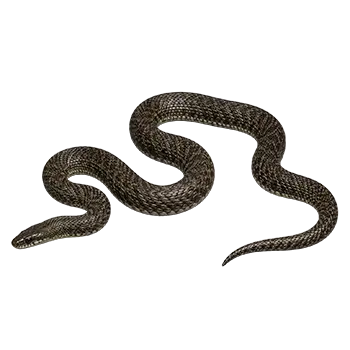

Characteristics of the Mature File Snake

Adult File Snakes (genus Acrochordus) are among the most morphologically distinctive serpents in captivity. Upon reaching full maturity — typically between three and five years of age — these snakes exhibit the loose, heavily granulated skin, broad flattened head, and dorsally positioned eyes that define the genus. Acrochordus javanicus, the Javan or elephant trunk snake, is the largest species and commonly reaches five to eight feet in total length with a correspondingly heavy body mass. Acrochordus arafurae, the Arafura file snake, matures at a more moderate four to six feet. Acrochordus granulatus, the little file snake, is the smallest at two to four feet and is the only species in the genus adapted to brackish and marine habitats.

Sexual dimorphism is well established in mature animals. Females of all three species are substantially larger than males, often exceeding them in both length and girth by twenty to thirty percent or more. Male File Snakes tend to be more slender in build, and in Acrochordus granulatus, males possess proportionally longer tails relative to body length than females. These differences are important for keepers planning to house or breed adults, as enclosure sizing and prey selection must account for the considerable size variation between sexes.

The skin of an adult File Snake is its most remarkable feature and a constant focus of husbandry attention. The dorsal and lateral surfaces are covered in small, roughly textured granular scales that do not overlap as they do in most other snake species. This unique integument serves a functional purpose in the wild, providing grip on slippery fish prey and creating hydrodynamic properties suited to underwater ambush predation. In captivity, the non-overlapping scale arrangement makes the skin more permeable than that of typical terrestrial snakes, which is why water quality management is disproportionately important for this genus compared to other commonly kept species.

The metabolic rate of adult File Snakes is remarkably low, even by snake standards. Studies of wild Acrochordus arafurae have documented some of the lowest metabolic rates recorded in any vertebrate, allowing these animals to survive on infrequent meals and minimize energy expenditure between feeding opportunities. This low metabolic rate directly influences captive husbandry practices, as adult File Snakes require less frequent feeding, produce less metabolic waste per unit body mass, and are generally less active than comparably sized snakes from other families.

Long-Term Aquatic Enclosure Management

Housing an adult File Snake is fundamentally an exercise in aquarium management. The enclosure for a mature Acrochordus javanicus should provide a minimum of seventy-five to one hundred gallons of water volume, while the smaller species can be maintained in enclosures of forty to sixty gallons. These are minimums for a single animal; additional volume improves water stability and provides more space for the snake to express natural behavior. The enclosure should be longer and wider than it is tall, reflecting the species' bottom-dwelling habits. Purpose-built glass or acrylic aquariums, large stock tanks, and custom-fabricated enclosures with integrated plumbing are all suitable options for long-term housing.

Filtration is the cornerstone of adult File Snake enclosure management. A high-quality canister filter rated for at least one and a half times the enclosure volume is the minimum standard for biological, mechanical, and chemical filtration. Many experienced keepers run dual filtration systems — a canister filter for primary biological and mechanical filtration paired with an internal or hang-on-back filter for supplemental chemical filtration via activated carbon. The goal is to maintain ammonia and nitrite at consistently undetectable levels and nitrate below twenty parts per million, which requires not only adequate filtration capacity but also regular maintenance including filter media rinsing and replacement on the manufacturer's recommended schedule.

Water changes remain essential regardless of filtration quality. A weekly water change of twenty-five to thirty percent of total volume, using temperature-matched and dechlorinated water, dilutes dissolved organic compounds, replenishes trace minerals, and prevents the gradual drift in pH and hardness that occurs in all closed aquatic systems. For Acrochordus granulatus enclosures, replacement water must be mixed to the appropriate salinity and aged for at least twenty-four hours before addition. Consistency in water change schedule and technique contributes significantly to the long-term health and longevity of these animals.

Enclosure security is a practical consideration that increases in importance with the animal's size. Adult File Snakes, particularly Acrochordus javanicus, are heavy and powerful enough to displace poorly secured lids, and the wet environment makes some closure mechanisms prone to corrosion and failure over time. Hinged lids with stainless steel or plastic latches, weighted screen tops, or custom-fitted sliding covers all provide secure containment. Equally important is ensuring that all electrical equipment — heaters, filter intakes, pumps, and lights — is properly installed with ground-fault circuit interrupter protection and positioned so the snake cannot come into direct contact with heating elements or become trapped in filter intakes.

Adult Diet & Feeding Management

Adult File Snakes continue the strictly piscivorous diet established during the juvenile stage, but feeding frequency decreases significantly in mature animals. Most healthy adults require feeding only once every ten to twenty-one days, depending on prey size, the animal's body condition, and the ambient temperature of the enclosure. The extraordinarily low metabolic rate of adult File Snakes means they derive sustained nutritional benefit from each meal, and overfeeding is a genuine risk that can lead to hepatic lipidosis and other obesity-related conditions over time.

Prey size for adults should be appropriately scaled. For Acrochordus javanicus, suitable prey includes medium to large tilapia, adult convict cichlids, large shiners, or comparably sized freshwater fish. Acrochordus arafurae accepts similar prey at a slightly smaller scale, while Acrochordus granulatus does well on medium-sized mollies, killifish, and other small to medium brackish-water or marine-adapted fish. As with juveniles, diet variety across multiple fish species provides a more complete nutritional profile and reduces the risk of nutrient deficiencies or thiaminase exposure.

The transition from live to pre-killed or frozen-thawed fish, if not accomplished during the juvenile stage, becomes increasingly valuable for adult animals. Pre-killed fish eliminate the risk of prey-inflicted injuries, allow the keeper to source parasite-free prey from reputable suppliers, and simplify meal preparation considerably. Adults that have been conditioned to accept non-living prey from an early age are generally easier to manage long-term. For stubborn individuals that refuse pre-killed fish, continuing to offer live prey is acceptable provided the fish are quarantined and maintained on a quality diet before being fed to the snake.

Body condition scoring should be performed monthly for adult File Snakes. The animal should appear robust and well-rounded in cross-section, with its characteristic loose skin fitting comfortably around the body without either deep furrows indicating underweight condition or taut stretching indicating obesity. The ventral surface should feel firm and muscular, and the animal should maintain steady body weight between feeding events with only minor fluctuations. Unexplained weight loss exceeding five to ten percent of body mass between weigh-ins warrants investigation into water quality, prey refusal, or potential health issues.

Routine Health Maintenance & Disease Prevention

Preventive health care for adult File Snakes centers on environmental management, routine observation, and periodic veterinary evaluation. An annual wellness examination by a reptile-experienced veterinarian should include a full physical assessment, fecal parasite screening, and a review of the keeper's husbandry practices including water quality test results. This yearly check-in provides an opportunity to detect subtle health changes that may not be apparent to even attentive keepers and establishes a longitudinal health record that becomes increasingly valuable as the animal ages.

Skin health is the most accessible and informative health indicator in adult File Snakes. The granular integument should appear uniformly textured and consistently colored across the body surface. Focal areas of discoloration, smoothness, ulceration, or excessive shed accumulation are all potential signs of bacterial or fungal dermatitis and warrant prompt attention. Daily visual inspection of the snake during its resting period, combined with closer examination during scheduled water changes when the enclosure is partially drained, provides adequate monitoring without requiring stressful handling events.

Water quality testing should be performed weekly using a reliable liquid test kit that measures ammonia, nitrite, nitrate, and pH. For brackish-water Acrochordus granulatus setups, salinity should also be measured weekly with a refractometer. Keeping a water quality log allows the keeper to identify trends and catch gradual parameter drift before it reaches levels harmful to the snake. Any detectable ammonia or nitrite reading is cause for immediate investigation, typically pointing to filtration failure, overfeeding, or inadequate water change frequency.

Quarantine procedures should be rigorously observed when introducing any new animal, equipment, or prey source to an established adult File Snake's environment. New animals should be quarantined for sixty to ninety days in a completely separate system with dedicated tools and equipment. Even objects as seemingly innocuous as new driftwood or decorations should be cleaned and soaked before introduction to prevent the inadvertent transfer of pathogens or parasites. This level of caution may seem excessive, but the difficulty of treating infections in fully aquatic snakes — where systemic medications must be administered by injection and topical treatments are washed away by the water — makes prevention far more practical and humane than cure.

Vaccinations are not applicable to reptiles, so disease prevention relies entirely on biosecurity, optimal husbandry, and early detection. Maintaining the enclosure at appropriate and stable temperatures, providing excellent water quality, feeding a varied and nutritionally complete diet, and minimizing handling stress collectively create an environment in which the snake's immune system can function optimally. This holistic approach to preventive health care is particularly important for File Snakes, whose permeable skin and fully aquatic lifestyle make them more vulnerable to environmental pathogens than their terrestrial counterparts.

Behavioral Patterns & Daily Life

Adult File Snakes are remarkably sedentary animals that spend the vast majority of their time motionless among submerged cover. This extreme inactivity is not a sign of ill health but rather a fundamental aspect of the species' energy conservation strategy, refined over millions of years of evolution in nutrient-poor aquatic environments. Keepers accustomed to the more visually engaging behavior of terrestrial snakes must recalibrate their expectations when keeping File Snakes, understanding that a healthy adult may move only a few body lengths in an entire twenty-four-hour period outside of feeding events.

Activity follows a strongly crepuscular to nocturnal pattern. Adults typically begin moving shortly before lights-out, positioning themselves at preferred ambush sites and making periodic trips to the surface to breathe. Breathing frequency varies with temperature and activity level but generally occurs every fifteen to forty minutes in resting animals. Observing the snake's surfacing behavior provides useful health information: an animal that surfaces frequently and appears to labor at breathing may be experiencing respiratory distress, while one that surfaces on a relaxed, predictable schedule is likely in good respiratory health.

Response to keeper presence varies between individuals and species but is generally muted compared to more interactive snake species. Most adult File Snakes show little reaction to activity outside their enclosure and will not track movement or display feeding responses unless directly stimulated by prey scent in the water. This low reactivity makes them unsuitable as display animals for keepers who value interactive behavior but ideal for those who appreciate observing a highly specialized predator adapted to a unique ecological niche.

Seasonal behavioral shifts may be observed in adult File Snakes maintained under conditions that include photoperiod and temperature cycling. Animals may become somewhat more active and feed more aggressively during simulated warm or wet season conditions and slow down or refuse food during cooler or drier periods. These cycles mirror the natural seasonal rhythms of wild populations and, when managed appropriately, can contribute to overall health by providing physiological rest periods. Keepers who maintain constant year-round conditions may not observe these cycles, and the absence of seasonal behavior variation is not harmful to the animal's long-term health.

Handling Considerations for Adult File Snakes

Handling adult File Snakes requires a fundamentally different approach from handling terrestrial species due to the animals' complete aquatic adaptation and stress sensitivity. The loose, heavily folded skin that provides hydrodynamic advantages in water becomes a liability out of it, as the skin cannot support the animal's considerable body weight against gravity the way the taut integument of a python or boa can. Extended out-of-water handling causes visible physical distress, with the animal's body sagging heavily between points of support and the skin stretching uncomfortably. For this reason, handling should be limited to essential purposes and conducted as efficiently as possible.

When handling is necessary — for veterinary examinations, enclosure transfers, or health inspections — the animal should be supported in a shallow container of water from its enclosure. A plastic storage container or basin with two to three inches of water provides adequate support while keeping the animal contained and accessible. Two people are recommended for handling adult Acrochordus javanicus, as large females can exceed eight feet in length and twenty pounds or more in body mass. The animal's weight and powerful body make it difficult for a single handler to manage safely for both the snake and the keeper.

File Snakes are generally not aggressive and rarely bite in captivity, but they do possess an effective defensive mechanism in their rough skin texture. An agitated File Snake may thrash and wrap its body around the handler's arm or hand, and the coarse granular scales can abrade skin surprisingly effectively, leaving superficial scratches and irritation similar to rope burn. Wearing lightweight gloves during handling can prevent this abrasion, though it reduces tactile sensitivity. The snake's overall temperament is docile bordering on apathetic during handling events, with most individuals simply remaining limp and motionless rather than actively resisting.

The key principle governing all handling interactions with adult File Snakes is brevity. In and out of water quickly, minimal manipulation, and immediate return to the enclosure once the purpose of handling is accomplished. Prolonged or unnecessary handling provides no benefit to the animal, contributes to chronic stress that can manifest as immune suppression and feeding refusal, and in extreme cases can result in physical injury to an animal whose body simply was not designed to be supported by anything other than water.

Always consult a qualified professional before making any health-related decisions. This content is provided for informational reference only and should not replace professional guidance specific to your animal.