
Growth Rates & Physical Development

The juvenile stage in Egg-Eating Snakes spans roughly from six months of age through sexual maturity, which is typically reached between eighteen and twenty-four months depending on species, sex, and husbandry conditions. During this period, a Dasypeltis that measured ten to twelve inches at the end of its hatchling phase will gradually lengthen to approximately eighteen to twenty-four inches, with females generally attaining slightly greater length and girth than males of the same age. Growth is steady rather than dramatic, reflecting the comparatively low caloric density of an egg-only diet and the moderate metabolic rate characteristic of this genus.

Weight gain during the juvenile period serves as a more reliable indicator of health than length alone, because Dasypeltis are slender-bodied snakes whose length can be difficult to measure accurately without causing stress. A healthy juvenile should show a gradual upward trend in body mass when weighed weekly or biweekly on a precision gram scale. Periods of weight stagnation lasting one to two weeks around shed cycles are expected and should not prompt concern, but any sustained weight loss over three or more consecutive weigh-ins warrants a review of husbandry conditions, egg quality, and potential health issues.

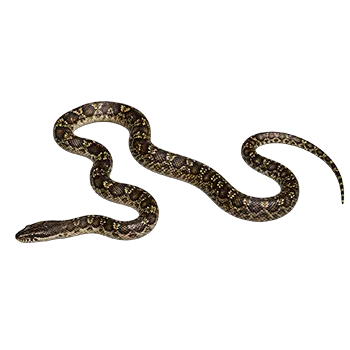
Physical changes during the juvenile phase extend beyond simple growth in length and mass. The body proportions of a juvenile Dasypeltis shift subtly as it matures, with the head remaining proportionally small relative to the body and the neck region developing the distinctive flexibility that allows the species to swallow eggs significantly larger than its head diameter. The keeled lateral scales, which juveniles use in defensive displays to produce a rasping warning sound, become more pronounced as the snake grows. Coloration may also intensify or shift slightly during this period, with the dark saddle-shaped dorsal blotches becoming more crisply defined against the lighter ground color.

Shed frequency during the juvenile stage is typically every four to six weeks under optimal conditions, slowing gradually as the snake approaches adult size. Each shed event should produce a complete, intact skin in a single piece, including the spectacle caps covering the eyes. Monitoring shed quality provides an ongoing assessment of hydration and environmental humidity. Incomplete or fragmented sheds indicate that humidity levels need adjustment, and recurring shed problems can lead to secondary complications such as retained eye caps or constriction bands around the tail tip.

Dietary Progression & Egg Sourcing

The most consequential transition during the juvenile stage is the dietary shift from finch eggs to larger egg types as the snake's gape and body size increase. Most Dasypeltis juveniles can begin accepting small quail eggs, specifically those from Button Quail or similarly diminutive quail species, once they reach approximately fourteen to sixteen inches in total length. Standard Coturnix quail eggs are substantially larger and are typically not manageable until the snake approaches eighteen to twenty inches, though this varies among individuals. The transition should be gradual and guided by the individual snake's willingness and physical capacity rather than by an arbitrary timeline.

Sourcing eggs reliably remains the primary logistical challenge throughout the juvenile period. Button Quail eggs can sometimes be obtained from specialty poultry breeders, aviculturists, and online hatchery suppliers, though availability is often seasonal and region-dependent. Standard Coturnix quail eggs are more widely available through grocery stores, farmers' markets, and Asian specialty markets, making them the dietary staple for most captive Dasypeltis once the snake is large enough to accept them. Building a network of reliable egg sources well in advance of the snake's dietary transition point is essential for maintaining consistent feeding schedules.

Feeding frequency during the juvenile stage should be every seven to ten days, with each meal consisting of a single egg of appropriate size. The correct egg size produces a visible but moderate bulge in the snake's midsection after swallowing and should be fully processed within twenty-four to thirty-six hours, at which point the snake will regurgitate a tightly compressed pellet of shell fragments. This regurgitation of shell material is a normal and essential part of the Dasypeltis feeding process and should not be confused with pathological regurgitation of undigested food, which would indicate illness or environmental stress.

Nutritional supplementation is generally unnecessary for juvenile Egg-Eating Snakes that are consuming fresh, fertile bird eggs, as these eggs provide a complete nutritional profile including protein, fat, calcium, and essential vitamins. However, some keepers choose to offer eggs that have been lightly dusted with a reptile-specific calcium and vitamin D3 powder as an added precaution, particularly for juveniles that are growing rapidly or that have shown any signs of metabolic irregularity. The eggs offered should always be fresh and ideally from free-range or naturally raised birds, as the nutritional content of commercially produced eggs can vary significantly depending on the birds' own diet and living conditions.

Enclosure Upgrades & Environmental Management

As a juvenile Egg-Eating Snake grows beyond the hatchling shoebox-style enclosure, a transition to a larger habitat becomes necessary to accommodate increased activity levels and to provide adequate space for a proper thermal gradient. A well-ventilated enclosure measuring approximately 24 by 12 by 12 inches is suitable for most juveniles through the sub-adult stage. Dasypeltis are semi-arboreal in nature, and juvenile enclosures benefit from vertical space and climbing opportunities more than many terrestrial snake species, so taller enclosures with secure climbing branches are preferable to long, low tanks of equivalent floor area.

The thermal gradient for juveniles should be maintained with a warm end of 82 to 85 degrees Fahrenheit and a cool end of 72 to 75 degrees, consistent with the hatchling stage. Nighttime temperatures can safely drop to 68 to 72 degrees, which mimics the natural temperature fluctuations these snakes experience across their wide sub-Saharan African range. Heating should be provided via overhead ceramic heat emitters or radiant heat panels controlled by a proportional or pulse-proportional thermostat, as on-off thermostats produce temperature swings that can stress the animal. Under-tank heat mats are less ideal for arboreal setups because the snake may spend most of its time on elevated perches, away from the substrate-level heat source.

Furnishing the juvenile enclosure with appropriate decor serves both functional and behavioral needs. Provide at least two secure hides, one on the warm end and one on the cool end, to allow the snake to thermoregulate without sacrificing its sense of security. Cork bark tubes, half-round cork flats, and commercially available reptile caves all serve this purpose well. Climbing branches should be roughly the diameter of the snake's body or slightly larger, securely anchored to prevent collapse, and arranged to provide access to different temperature zones within the vertical space. Live or artificial foliage can be added to provide additional visual barriers and climbing surfaces, though live plants require careful selection to avoid species that are toxic or that harbor pests.

Humidity management during the juvenile stage follows the same parameters as the hatchling phase, with ambient levels maintained between 50 and 65 percent and temporary increases to 65 to 75 percent during pre-shed periods. The transition to a larger enclosure often requires adjustments to humidity management strategies, as greater air volume and increased ventilation can reduce ambient moisture levels. A large water dish placed near the warm end of the enclosure encourages evaporation, and the substrate layer can be misted lightly as needed to maintain target humidity without saturating the bedding. Coconut coir, cypress mulch, or a mixture of organic topsoil and sphagnum moss are excellent substrate choices for juvenile Dasypeltis, offering good moisture retention, natural burrowing opportunities, and resistance to mold when maintained properly.

Behavioral Development & Temperament

Juvenile Egg-Eating Snakes undergo significant behavioral maturation as they transition from the cautious, primarily defensive posture of neonates to the confident, exploratory demeanor characteristic of established captive specimens. During the early juvenile months, most Dasypeltis still display occasional defensive behaviors when startled, including the laterally keeled scale rasping that produces a hissing sound, body inflation to appear larger, and closed-mouth strikes that mimic the threat display of venomous night adders. These behaviors become progressively less frequent with consistent, gentle handling and predictable husbandry routines.

Nocturnal activity becomes more pronounced and patterned during the juvenile stage. Juveniles typically emerge from their hides shortly after lights-out and spend several hours actively exploring their enclosure, climbing branches, and tongue-flicking along surfaces in search of chemical cues that might indicate the presence of bird eggs. This foraging behavior is instinctive and persists regardless of whether food is present. Keepers who observe their juvenile Dasypeltis under red or dim blue lighting during the evening hours will gain valuable insight into the snake's activity levels, preferred perching locations, and overall behavioral health.

Social tolerance is another behavioral dimension that develops during the juvenile period, though Egg-Eating Snakes are fundamentally solitary animals in the wild. In captivity, juveniles housed individually tend to display more relaxed behavior, feed more reliably, and grow more consistently than those maintained in groups. While occasional cohabitation of similarly sized juveniles does not carry the predation risk seen in species that consume other snakes, the stress of shared space can suppress appetite and increase defensive behavior in subordinate individuals. Individual housing remains the recommended standard for optimizing health and behavioral outcomes.

Environmental enrichment during the juvenile stage should focus on providing opportunities for the snake to express natural behaviors. Rearranging enclosure furnishings every few weeks during routine cleaning stimulates exploratory behavior and prevents the lethargy that can develop in static, understimulating environments. Offering eggs in different locations within the enclosure, rather than always in the same spot, encourages active foraging behavior. Some keepers also introduce novel scent stimuli, such as feathers or nesting material from finches or quail, placed intermittently within the enclosure to provide olfactory enrichment that engages the snake's highly developed chemosensory system.

Health Monitoring & Common Juvenile Issues

Ongoing health monitoring during the juvenile stage builds upon the baseline established during hatchling veterinary examinations and expands to address the specific risks and developmental concerns of growing Dasypeltis. Regular weight tracking remains the most accessible and informative monitoring tool available to keepers. Weighing the snake every one to two weeks and recording the data in a logbook or digital spreadsheet creates a growth curve that can reveal subtle trends, both positive and negative, long before they become visually apparent on such a slender-bodied species.

Parasite management is an important consideration during the juvenile stage, particularly for animals acquired from multi-species collections, reptile expos, or retail environments where cross-contamination is possible. Snake mites are the most common external parasite encountered in captive Dasypeltis and are recognizable as tiny black or reddish-brown dots moving along scale edges, around the eyes, and in the gular fold beneath the chin. An infestation manifests through excessive soaking, restless movement, and visible mites in the water dish. Treatment involves isolating the affected animal, replacing all substrate with paper towels, treating the snake with a veterinarian-approved miticide, and thoroughly sanitizing the enclosure and all furnishings before reintroduction.

Internal parasites, including nematodes and protozoans such as Cryptosporidium, represent a more insidious threat that requires fecal testing for detection. Annual fecal examinations performed by a reptile-experienced veterinarian should be considered standard preventive care for juvenile Dasypeltis. Symptoms of significant internal parasite burden include progressive weight loss despite regular feeding, regurgitation of eggs rather than only shell material, lethargy, and abnormal fecal consistency. Treatment protocols are species-specific and should always be directed by a qualified veterinarian rather than attempted through over-the-counter products or anecdotal remedies.

Respiratory health should be monitored continuously through observation of the snake's breathing patterns and nasal area. A healthy juvenile Dasypeltis breathes silently with its mouth closed at all times during rest. Any audible wheezing, clicking sounds during respiration, visible mucus at the nares, or persistent open-mouth breathing indicates a respiratory infection that requires veterinary evaluation. Juvenile Egg-Eating Snakes are particularly susceptible to respiratory infections when humidity levels are chronically elevated above 70 percent in poorly ventilated enclosures, or when ambient temperatures fall below the recommended range for extended periods. Prompt veterinary intervention with appropriate antibiotic therapy, combined with correction of the underlying environmental conditions, typically resolves respiratory infections before they progress to life-threatening pneumonia.

Preparing for the Transition to Adulthood

The transition from juvenile to adult status in Egg-Eating Snakes is a gradual process that typically occurs between eighteen and twenty-four months of age, though it can extend to thirty months in some individuals and species within the Dasypeltis complex. The most reliable indicators that a juvenile is approaching maturity include a marked slowing of the growth rate, stabilization of body mass at or near adult weight ranges, and the completion of body proportional changes that give the adult Dasypeltis its distinctive slender, elongated appearance with a small, narrow head and highly flexible neck.

As the snake approaches adult size, the enclosure should be upgraded to its permanent adult habitat. An enclosure measuring approximately 36 by 18 by 18 inches provides adequate space for a single adult Egg-Eating Snake, with sufficient room for a proper thermal gradient, multiple hides, climbing opportunities, and a water dish large enough for soaking. Making this transition during the late juvenile stage rather than waiting until the snake has reached full adult size allows the animal to acclimate to its new environment while still growing, reducing the stress that can accompany a sudden habitat change in an established adult.

Dietary management during the late juvenile phase should focus on completing the transition to Coturnix quail eggs, which will serve as the primary dietary staple throughout adulthood. Most Dasypeltis that have reached twenty to twenty-four inches in length can comfortably manage standard Coturnix quail eggs, though individual variation exists. Some keepers find it helpful to offer smaller-than-standard Coturnix eggs during the transitional period, selecting the smallest eggs from a given batch or sourcing eggs from younger quail hens, which tend to produce smaller eggs than mature birds. Once the snake can reliably swallow and process standard Coturnix eggs, the dietary regimen is simplified considerably, as these eggs are readily available year-round from numerous retail and agricultural sources.

Behavioral readiness for adulthood manifests as a settled, confident demeanor characterized by predictable activity patterns, reliable feeding responses, and minimal defensive behavior during handling. A well-socialized juvenile Dasypeltis that has been handled regularly, fed consistently, and maintained in a stable, appropriate environment will transition smoothly into the adult phase with few behavioral disruptions. Conversely, juveniles that have experienced inconsistent husbandry, prolonged periods of food refusal due to egg sourcing difficulties, or insufficient socialization may carry heightened stress responses and irregular feeding patterns into adulthood, making the juvenile stage a critical investment period for long-term husbandry success.

Always consult a qualified professional before making any health-related decisions. This content is provided for informational reference only and should not replace professional guidance specific to your animal.