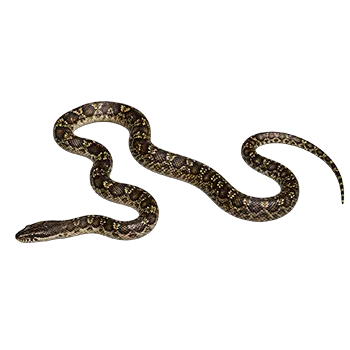

Sexual Maturity & Pre-Breeding Assessment

Egg-Eating Snakes of the genus Dasypeltis typically reach sexual maturity between eighteen and thirty months of age, with males generally maturing several months earlier than females. Sexual maturity in this genus is determined more by body size and condition than by chronological age alone, and individuals that have experienced suboptimal nutrition or prolonged periods of food refusal during their juvenile development may reach reproductive readiness later than well-nourished peers. As a general guideline, males should be at least eighteen inches in total length with good muscle tone and consistent feeding history before being considered breeding candidates, while females should measure at least twenty to twenty-two inches and have maintained stable body weight over a period of several months.

Sexual dimorphism in Dasypeltis is subtle but discernible to the experienced eye. Males tend to be slightly shorter and more slender-bodied than females of the same species and age, with proportionally longer tails relative to total body length. The most reliable method of sex determination is probing, in which a small, blunt, lubricated probe is gently inserted into the cloaca and directed caudally. In males, the probe passes into the inverted hemipenis pocket and advances a relatively greater number of subcaudal scales compared to females, in which the probe enters the shallow musk gland and stops much sooner. Probing should only be performed by experienced keepers or veterinary professionals, as improper technique can cause injury to the delicate cloacal tissues.

Pre-breeding health assessment is essential for both prospective parents. Each animal should be examined by a reptile veterinarian and screened for parasites, respiratory infections, and any condition that might compromise reproductive success or be transmissible to a mate. Females in particular must be in robust body condition before breeding is attempted, as the metabolic demands of egg production can significantly deplete energy reserves. A female that is underweight, recently recovered from illness, or still actively growing should not be bred, as doing so increases the risk of egg binding, nutritional depletion, and post-laying complications.

Breeding Egg-Eating Snakes in captivity requires a firm commitment to the logistical challenges of rearing the resulting offspring. Before pairing any animals, the breeder must have a reliable source of finch eggs or similarly small eggs to feed hatchlings, as this is the critical bottleneck in Dasypeltis husbandry. Establishing a finch breeding colony or confirming a dependable external source months in advance of the expected hatching date is not optional but rather a prerequisite for responsible reproduction. Without a secure food supply for neonates, breeding should not be attempted regardless of the readiness of the adult pair.

Conditioning & Brumation Cycling

Successful reproduction in captive Dasypeltis typically requires a period of seasonal cooling known as brumation, which mimics the cooler, drier winter months experienced across the species' native range in sub-Saharan Africa. Brumation triggers hormonal changes in both sexes that prepare the reproductive organs for gamete production and mating behavior. While some Egg-Eating Snake species from equatorial regions may breed without a pronounced cooling period, the majority of commonly kept Dasypeltis benefit significantly from a structured brumation protocol that lasts approximately six to eight weeks.

Pre-brumation conditioning begins four to six weeks before the planned cooling period and involves increasing feeding frequency slightly to build the snake's energy reserves. Both males and females should be offered eggs every seven to eight days during this conditioning phase, and all food should be withheld for at least two weeks before temperatures are reduced to ensure the digestive tract is completely empty. Undigested food remaining in the gut during brumation can ferment and cause fatal bacterial infections, making the fasting period before cooling a critical safety measure that must not be shortened or skipped.

The brumation protocol involves gradually reducing the ambient temperature in the snakes' enclosures over a period of seven to ten days until the warm end reaches approximately 68 to 72 degrees Fahrenheit and the cool end drops to 60 to 65 degrees. Photoperiod should be simultaneously reduced to eight hours of light and sixteen hours of darkness to reinforce the seasonal cue. During brumation, the snakes will become largely inactive, remaining in their hides and moving only occasionally to drink. Fresh water must be available at all times throughout the brumation period, and the snakes should be visually inspected weekly to ensure they are maintaining body condition and showing no signs of respiratory distress or other illness.

The brumation period is terminated by gradually increasing temperatures and photoperiod over seven to ten days, reversing the process used to initiate cooling. Once temperatures have returned to normal operating ranges, feeding should be resumed promptly, starting with slightly smaller eggs than the snake's pre-brumation diet and increasing to full-sized meals over the course of two to three feedings. Both males and females typically resume feeding eagerly after brumation, and the post-brumation feeding period serves to restore energy reserves while the reproductive hormonal cascade initiated by the cooling period reaches its peak. Males may begin exhibiting restless, searching behavior within two to three weeks of warming, indicating readiness for introduction to a female.

Courtship & Mating Behavior

Introduction of the male to the female's enclosure should occur after both animals have resumed feeding post-brumation and the male is displaying active searching behavior during his nocturnal active period. Placing the male into the female's established territory, rather than vice versa, is the standard protocol for most colubrid species and works well with Dasypeltis. The introduction should be conducted during the evening hours when both snakes are naturally most active, and the keeper should observe the pair's initial interactions closely to assess compatibility and watch for any signs of aggression, though serious conflict between Egg-Eating Snakes during breeding introductions is rare given the genus's docile nature.

Courtship behavior in Dasypeltis follows the general colubrid pattern but is subtle and can be easily missed by keepers who are not watching attentively. The male approaches the female with rapid tongue-flicking along her body, tracing her dorsal surface from tail to head as he assesses her reproductive status through pheromone detection. If the female is receptive, she remains relatively stationary and allows the male to align his body alongside hers. The male then loops his tail beneath the female's cloacal region, and copulation occurs with hemipenis insertion. Mating events typically last from fifteen minutes to several hours, and the pair may remain loosely intertwined for some time afterward.

Multiple mating sessions over a period of one to three weeks increase the likelihood of successful fertilization. The male can be left in the female's enclosure for several days at a time, removed for a rest period of two to three days with access to food and water, and then reintroduced. Monitoring both animals' body condition and stress levels during the mating period is important, as the male may lose weight from reduced feeding during courtship activity. If either animal shows signs of excessive stress, persistent avoidance of the other, or deteriorating body condition, the breeding attempt should be paused and the animals separated.

Confirming successful mating can be challenging in real time, and keepers often rely on post-mating behavioral and physical changes in the female as indicators of gravidity. A successfully bred female will typically show a noticeable increase in girth over the following four to six weeks as follicles develop into shelled eggs. She may also exhibit changes in thermoregulatory behavior, spending extended periods at the warm end of her enclosure to support embryonic development, and she will often refuse food during the later stages of gravidity as the developing eggs occupy abdominal space that would normally be used for egg processing.

Egg Deposition & Incubation

A gravid female Egg-Eating Snake will typically deposit her clutch approximately four to eight weeks after successful mating, though this timeline varies with species, individual physiology, and environmental conditions. As the deposition date approaches, the female becomes increasingly restless, spending significant time investigating every corner and crevice of her enclosure as she searches for a suitable nesting site. Providing a dedicated laying box filled with slightly damp sphagnum moss or vermiculite gives the female a secure, appropriately humid location for egg deposition. The laying box should be large enough for the female to coil comfortably inside and should have a single entrance that provides privacy while remaining accessible for the keeper to check.

Dasypeltis clutch sizes are modest compared to many other colubrid species, typically ranging from six to eighteen eggs depending on the species, the female's size and condition, and whether it is her first clutch or a subsequent reproduction. The eggs are elongated, soft-shelled, and white to off-white in color, with a slightly adhesive surface that may cause them to adhere to one another or to the laying substrate. If the eggs are adherent, they should not be forcibly separated, as tearing the delicate shell can kill the developing embryo. Instead, the entire cluster can be carefully transferred to the incubation container as a single unit.

Incubation should take place in a dedicated container filled with a moistened substrate of vermiculite, perlite, or a commercial reptile egg incubation medium. The substrate should be mixed with water at a ratio of approximately one part water to one part substrate by weight, producing a damp but not saturated medium. Each egg should be half-buried in the substrate with the upper surface exposed to the air. The incubation container should have a secure lid with small ventilation holes to maintain high humidity while preventing stagnation. Incubation temperature should be maintained between 78 and 82 degrees Fahrenheit, which can be achieved with a commercially available reptile egg incubator or by placing the container on a thermostatically controlled heat mat in a stable room.

The incubation period for Dasypeltis eggs ranges from approximately fifty-five to seventy-five days depending on temperature, with slightly warmer temperatures producing somewhat shorter incubation times. During incubation, the eggs should be checked every two to three days for signs of mold, which appears as fuzzy white or green growth on the shell surface and can be gently wiped away with a dry cotton swab if caught early. Fertile eggs will gradually increase in size and may develop visible veining when candled with a small flashlight in a darkened room. Infertile or non-viable eggs typically yellow, collapse, or develop persistent mold and should be removed from the incubation container to prevent contamination of viable eggs.

Post-Laying Recovery

The egg-laying process is physically demanding for female Egg-Eating Snakes, and post-deposition recovery requires attentive care to restore the female's body condition and energy reserves. Immediately after laying, the female should be offered fresh water and allowed to soak if she chooses, as dehydration is common following the exertion of oviposition. The laying box should be removed from the enclosure once all eggs have been collected, and the enclosure should be cleaned and returned to its normal configuration to provide the female with a familiar, stress-free recovery environment.

Feeding should be resumed within three to five days of egg deposition, starting with a small egg that is easy for the depleted female to process. Feeding frequency during the recovery period should be increased to every five to seven days for the first six to eight weeks, providing the female with the caloric intake needed to rebuild muscle mass, replenish fat stores, and restore overall body condition. Weight monitoring during recovery is essential, with weekly weigh-ins providing objective data on the rate and trajectory of condition restoration. A female that fails to resume feeding within ten days of laying, or that continues to lose weight despite regular food offerings, should be evaluated by a veterinarian for complications.

Post-laying complications, while uncommon in Dasypeltis, can include egg retention (dystocia), cloacal prolapse, and secondary infections of the reproductive tract. Egg retention is the most serious of these and is suspected when the female continues to show a distended mid-body profile and restless nesting behavior for more than forty-eight hours after the initial deposition. A veterinarian can confirm retained eggs through palpation or radiography and determine whether medical intervention, hormonal induction, or surgical extraction is required. Prompt veterinary attention for suspected dystocia is critical, as retained eggs can cause tissue necrosis and fatal septicemia if left untreated.

The decision of whether to breed a female in consecutive seasons should be based on her recovery trajectory and overall body condition rather than on a fixed calendar schedule. A female that has fully recovered her pre-breeding body weight and condition within four to five months of laying can be safely cycled again the following season. However, a female that is slow to recover, fails to regain her baseline weight, or shows any lingering health concerns should be rested for at least one full year before brumation and breeding are attempted again. Prioritizing the long-term health of the breeding female over the desire for annual production is essential for sustainable, ethical captive breeding.

Genetic Considerations & Record Keeping

Responsible captive breeding of Egg-Eating Snakes requires careful attention to genetic management, particularly given the relatively small size of the captive Dasypeltis population in most regions. Inbreeding depression, which can manifest as reduced fertility, smaller clutch sizes, lowered hatchling viability, and increased susceptibility to disease, is a genuine concern when the available breeding stock is drawn from a limited number of founder lineages. Maintaining detailed pedigree records for every animal in a breeding program allows breeders to make informed pairing decisions that maximize genetic diversity and minimize the accumulation of deleterious recessive alleles.

Accurate species identification within the Dasypeltis complex is a critical prerequisite for any breeding effort. The genus contains multiple species that are superficially similar in appearance and have overlapping geographic ranges in the wild. Hybridization between different Dasypeltis species produces offspring of uncertain taxonomic status and dubious value to conservation or education, and it dilutes the genetic integrity of captive populations of individual species. Breeders should confirm the species identity of their animals through consultation with experienced Dasypeltis keepers, comparison with authoritative taxonomic references, and locality data if available from the animal's lineage history.

Breeding records should document every aspect of the reproductive process, including the identities of both parents, brumation dates and parameters, introduction dates, observed mating events, pre-lay shed date, oviposition date and clutch size, incubation conditions and duration, hatch rates, and the initial condition and disposition of each hatchling. These records serve multiple purposes: they allow the breeder to refine husbandry protocols based on empirical data, they provide essential pedigree information for future pairing decisions, and they contribute to the broader body of knowledge about Dasypeltis reproduction in captivity, which remains less extensively documented than that of more commonly bred snake genera.

Collaboration with other Dasypeltis breeders is strongly encouraged to expand the available gene pool and share husbandry knowledge. Online communities, herpetological societies, and reptile breeding cooperatives can facilitate exchanges of unrelated breeding stock, disseminate information about successful husbandry techniques, and coordinate efforts to maintain genetically robust captive populations. Some breeders participate in informal studbook programs that track the lineage and distribution of captive Dasypeltis across multiple collections, providing a framework for long-term genetic management that benefits the species as a whole. The ultimate goal of any captive breeding program should be the production of healthy, genetically diverse offspring that can sustain the captive population without ongoing dependence on wild-collected animals.

Always consult a qualified professional before making any health-related decisions. This content is provided for informational reference only and should not replace professional guidance specific to your animal.