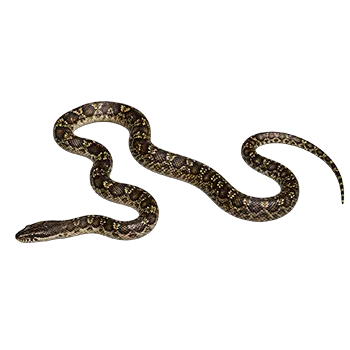

Adult Egg-Eating Snakes of the genus Dasypeltis reach their full body length between two and three years of age, with most commonly kept species settling into an adult range of twenty-four to thirty-six inches depending on species and individual genetics. Dasypeltis scabra, the most frequently encountered species in the pet trade, typically reaches the upper end of this range, while some of the smaller-bodied species within the complex may remain closer to twenty inches at maturity. Females are generally slightly longer and more robust than males, a size disparity that becomes increasingly apparent after the second year of life and is most pronounced during the breeding season when gravid females gain additional weight from developing eggs.
Assessing body condition in adult Dasypeltis requires familiarity with the species' naturally slender build, which can be mistaken for underweight condition by keepers accustomed to heavier-bodied species like ball pythons or boa constrictors. A healthy adult Egg-Eating Snake has a gently rounded cross-sectional profile with no visible spine ridge, no prominent rib outlines, and no loose, wrinkled skin along the flanks. The ventral surface should be flat to slightly convex, and the animal should feel firm and muscular when handled, not limp or flaccid. The tail should taper smoothly to a fine point without any kinks, bends, or retained shed constrictions.
Body weight in adult Dasypeltis varies considerably by species and individual but generally ranges from sixty to one hundred and twenty grams for the commonly kept species. Maintaining a consistent weighing schedule of once per month during the adult stage allows keepers to track long-term weight trends and detect gradual changes that might indicate emerging health issues. Adult snakes that are maintaining stable weight, feeding reliably, producing normal fecal output, and shedding completely are in excellent condition regardless of whether they fall at the lighter or heavier end of the expected weight range.
Skin and scale condition in healthy adults should be smooth, glossy after shedding, and free of any discoloration, blistering, or raised areas that might indicate dermal infection. The ventral scales should be uniformly colored without brown or pink spots that could signal early-stage scale rot. The eyes should be clear and bright outside of the pre-shed opaque phase, and the oral cavity, though difficult to examine in an intact Dasypeltis without causing significant stress, should be uniformly pink and free of cheesy white deposits or petechial hemorrhaging that would suggest stomatitis.