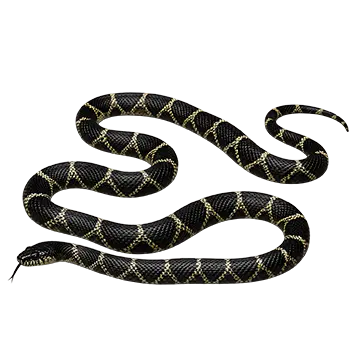

The juvenile stage of the Eastern Kingsnake (Lampropeltis getula) spans roughly from four months of age through the onset of sexual maturity, which typically occurs between eighteen and thirty-six months depending on feeding regimen, ambient conditions, and individual genetic variation. During this period the snake undergoes its most dramatic physical transformation, growing from a slender twelve-to-eighteen-inch hatchling into a robust sub-adult measuring twenty-four to thirty-six inches or more. The rate of growth is most rapid in the first twelve months and then gradually decelerates as the animal approaches adult proportions, though consistent feeding and optimal temperatures will sustain meaningful length and mass gains throughout the entire juvenile phase.
Shedding frequency is the most visible indicator of active growth during the juvenile period. A healthy juvenile Eastern Kingsnake sheds approximately every three to five weeks, with shorter intervals during periods of accelerated growth and slightly longer intervals as growth slows toward the end of the juvenile stage. Each shed cycle should produce a complete, intact skin from rostral scale to tail tip. Frequent incomplete sheds suggest environmental deficiencies — most often inadequate humidity or dehydration — and should be addressed promptly to prevent secondary complications such as retained spectacles or constricted circulation at the tail tip.
Body proportionality changes noticeably as juveniles mature. Hatchlings have relatively large heads compared to their body width, giving them a somewhat disproportionate appearance. As the body fills out during the juvenile stage, head-to-body proportions normalize, and the snake develops a more cylindrical, evenly muscled profile. The characteristic glossy black coloration of the Eastern Kingsnake intensifies during this period, and the white or cream chain-link crossbands become more sharply defined against the dark dorsum. In some geographic populations the banding may widen or narrow relative to hatchling patterning, reflecting local genetic variation.
Weekly weight measurements remain an important monitoring tool throughout the juvenile stage. A consistently growing juvenile should show a steady upward weight trend with minor fluctuations around shed events, when temporary weight loss due to reduced feeding and fluid redistribution is normal. Prolonged weight plateaus or unexplained weight loss between sheds warrant investigation, starting with a review of enclosure temperatures and feeding response and progressing to a veterinary consultation if no husbandry cause is identified. A simple digital kitchen scale accurate to one gram is adequate for tracking juvenile growth.