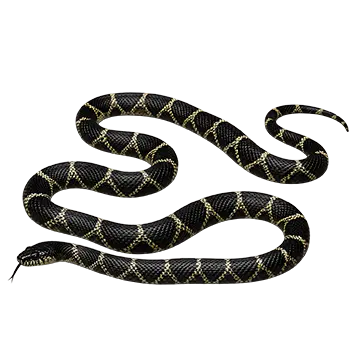

Physical Maturity & Characteristics

The Eastern Kingsnake (Lampropeltis getula) reaches physical maturity between two and four years of age, at which point most individuals measure thirty-six to forty-eight inches in total length, with exceptional specimens occasionally exceeding fifty inches. Adult body weight typically falls between one and two pounds, with females tending toward the heavier end of the range, particularly during the breeding season when developing follicles add substantial mass. The adult body is powerfully muscled and cylindrical, reflecting the species' constricting predatory strategy and its capacity to overpower prey items including other snakes that may approach its own body length.

The adult coloration of the Eastern Kingsnake is among the most striking of any North American colubrid. The dorsum is a deep, glossy black adorned with a series of white or cream-colored crossbands that form a chain-like pattern along the length of the body — the origin of the common name "chain kingsnake" used in some regions. The ventral surface is a checkerboard of black and white. Geographic variation in patterning exists across the species' extensive range from southern New Jersey through Florida and west to the Appalachian foothills, with some populations exhibiting wider bands, reduced patterning, or a more speckled appearance. These regional variants are occasionally marketed under locality-specific names, but they all represent the same species.

Once an Eastern Kingsnake reaches its adult length, growth effectively ceases, though the snake may continue to add modest body mass over subsequent years. Shedding frequency decreases to approximately every six to ten weeks in a healthy adult, reflecting the greatly reduced rate of new tissue production compared to the juvenile stage. Each shed should remain complete and intact. An adult that begins producing fragmented or incomplete sheds after years of clean cycles is signaling a change in environmental conditions or an emerging health concern that warrants investigation.

Sexual dimorphism in adult Eastern Kingsnakes is subtle but detectable with experience. Males tend to have slightly longer tails relative to body length, with a more gradual taper past the cloaca, reflecting the internal hemipene structures. Females are often marginally thicker through the midsection, particularly during follicle development. Definitive sex determination can be performed by a veterinarian or experienced breeder through probing, a minimally invasive technique in which a blunt-tipped probe is inserted into the cloaca to measure hemipene pocket depth. This procedure should only be performed by someone trained in the technique to avoid injury.

Nutrition & Feeding Schedule

Adult Eastern Kingsnakes require a significantly reduced feeding frequency compared to growing juveniles. A single appropriately sized prey item offered every ten to fourteen days is sufficient to maintain optimal body condition in a healthy adult. The standard prey item for an adult kingsnake is a medium adult mouse or, for larger individuals, a small weaned rat. Prey size should produce a modest but visible lump in the snake's midsection after ingestion — if no lump is visible, the prey is too small, and if the lump is pronounced enough to impede movement, the prey is too large.

Obesity is the most prevalent nutritional disorder in captive adult kingsnakes and is directly attributable to overfeeding. An obese Eastern Kingsnake displays a rounded cross-sectional profile with visible fat pads along the spine and at the base of the tail, and the body feels soft and doughy rather than firmly muscled when handled. Chronic obesity in snakes leads to hepatic lipidosis (fatty liver disease), reduced reproductive fitness, compromised immune function, and shortened lifespan. Prevention is straightforward: feed the correct prey size at the correct interval, resist the temptation to offer extra meals because the snake appears eager, and monitor body condition regularly through visual assessment and periodic weighing.

Seasonal variation in appetite is normal and expected in adult Eastern Kingsnakes, particularly in collections that experience natural light cycle fluctuations or that undergo brumation (the reptilian analog of hibernation). Many adults voluntarily reduce or cease feeding during the shorter days of autumn and winter, even when enclosure temperatures are maintained at normal levels. This seasonal anorexia is a physiologically normal response driven by photoperiod cues and should not prompt concern as long as the snake maintains adequate body condition and shows no signs of illness. Attempting to force-feed or otherwise override this natural cycle is unnecessary and counterproductive.

Frozen-thawed rodents remain the safest and most practical food source for adult kingsnakes. Thaw prey to room temperature in a sealed bag submerged in warm water. Present with long tongs, using gentle movement to trigger the strike response. After feeding, allow the snake a minimum of forty-eight hours of undisturbed rest for digestion before any handling or enclosure maintenance. Ambient temperatures on the warm side of the enclosure must be maintained at 85 to 88 degrees Fahrenheit to support effective digestion — temperatures below this range slow digestive enzymes and gastric motility, increasing the risk of regurgitation or incomplete digestion.

Permanent Enclosure & Habitat Management

The adult Eastern Kingsnake's permanent enclosure should provide sufficient space for thermoregulation, exercise, and behavioral expression while maintaining the security necessary to contain this notoriously escape-prone species. A minimum enclosure footprint of 36 by 18 inches is adequate, though a 48 by 18-inch enclosure is preferable and allows for a more developed environmental gradient and richer enrichment layout. Enclosure height is less critical for this primarily terrestrial species, but a minimum of 12 to 18 inches accommodates low climbing structures and prevents the snake from reaching overhead heat fixtures.

The thermal gradient for adult enclosures mirrors the parameters established during the juvenile stage: a warm end of 85 to 88 degrees Fahrenheit and a cool end of 72 to 76 degrees. Nighttime temperatures can drop to 70 to 72 degrees across the entire enclosure without adverse effects, mimicking the natural diel temperature fluctuation the species experiences in the wild. All heat sources must be regulated by a proportional thermostat — not a simple on/off switch — to prevent dangerous temperature spikes that can cause thermal burns or heat stress. Thermostats with digital displays and probe placement directly on the substrate surface under the primary heat source provide the most accurate regulation.

Substrate for the adult enclosure should balance humidity management, ease of maintenance, and naturalistic aesthetics. Aspen shavings remain the most popular choice for Eastern Kingsnakes due to their excellent absorbency, burrowing potential, and neutral odor. Cypress mulch is preferred in drier climates or homes where ambient humidity is chronically low, as it retains moisture far more effectively than aspen. Bioactive substrates — layered systems incorporating drainage media, organic soil mixes, and microfauna such as springtails and isopods to break down waste — are an increasingly popular advanced option for keepers willing to invest the initial setup effort in exchange for a largely self-maintaining, naturalistic environment.

Furnishing the adult enclosure should address both the snake's functional needs and its behavioral repertoire. At minimum, two hides (warm and cool side), a large water dish, and a textured surface for shedding assistance (such as a piece of cork bark or a rough-surfaced rock) are required. Beyond these essentials, the addition of cork tubes, driftwood branches, leaf litter, and artificial or live plants creates a stimulating environment that encourages exploration and exercise. Eastern Kingsnakes in enriched enclosures tend to be more active, display a wider range of natural behaviors, and maintain better muscle tone than those kept in minimalist setups.

Enclosure maintenance for adult kingsnakes follows a predictable routine. Spot-clean fecal deposits and urates within twenty-four hours of observation. Replace the water dish contents daily. Perform a complete substrate change and enclosure disinfection every four to six weeks using a reptile-safe disinfectant solution, rinsing all surfaces thoroughly and allowing them to dry completely before replacing substrate and furnishings. Quarterly deep-cleaning sessions should include disinfection of all furnishings — hides, branches, dishes — and a thorough inspection of enclosure seals, lid clips, and ventilation screens for any signs of wear or compromise that could present an escape opportunity.

Behavior & Temperament

Adult Eastern Kingsnakes that received consistent socialization during their juvenile stage are among the most docile and handleable snakes available in the reptile hobby. Most well-acclimated adults tolerate extended handling sessions of twenty to thirty minutes or more without any display of defensive behavior, making them an excellent species for public education programs, classroom presentations, and first-time snake keepers seeking a manageable, forgiving species. Their calm disposition combined with their bold black-and-white coloration has made them one of the most enduringly popular colubrid species in captivity.

Despite their generally tractable nature, adult Eastern Kingsnakes retain strong prey-drive instincts that keepers must respect. The species is ophiophagous — a predator of other snakes — and this predatory instinct extends to conspecifics. Two Eastern Kingsnakes should never be housed together except during brief, supervised breeding introductions. An adult kingsnake housed with a cage mate will, in virtually every case, eventually attempt to consume the other snake, regardless of relative size. This is not aggression in the behavioral sense but an expression of hardwired predatory behavior that cannot be trained or socialized away.

Seasonal behavioral shifts are common in adult Eastern Kingsnakes, particularly those maintained on natural light cycles or those that undergo brumation. In spring, both males and females may exhibit increased restlessness, roaming behavior, and reduced feeding as hormonal changes associated with the breeding season take effect. Males may rub their chins along enclosure surfaces (scent-marking behavior) and may become more active during evening hours. Females approaching ovulation may display a characteristic "lumpy" appearance as follicles enlarge, and they may seek out the warm side of the enclosure more frequently. These seasonal behaviors are entirely normal and resolve on their own once the breeding season passes.

Activity patterns in captive adult Eastern Kingsnakes tend toward crepuscular — most active during dawn and dusk — though individuals vary and some become more diurnal or nocturnal depending on enclosure placement, lighting schedule, and household activity patterns. Providing a consistent photoperiod of twelve hours of light and twelve hours of darkness during the active season, adjusted to ten hours of light and fourteen hours of darkness during winter months, supports natural circadian and seasonal rhythms. Abrupt changes in lighting schedule should be avoided, as they can disrupt feeding, shedding, and reproductive cycles.

Health Maintenance & Common Conditions

Preventive health care for adult Eastern Kingsnakes centers on maintaining optimal husbandry conditions and conducting routine health assessments. An annual veterinary examination by a reptile-experienced practitioner is the gold standard, incorporating a physical examination, body condition scoring, fecal parasite screening, and evaluation of oral health. Many common health problems in captive kingsnakes are detectable through subtle changes in behavior, appetite, or appearance well before they progress to an acute stage, and the combination of attentive keeper observation and periodic veterinary assessment provides the most reliable safety net.

Respiratory infections remain a risk throughout the Eastern Kingsnake's life, though the incidence decreases in well-maintained adult enclosures compared to the hatchling and juvenile stages. The clinical presentation is consistent across age groups: audible respiratory noise, nasal or oral discharge, open-mouth breathing, and lethargy. In adults, respiratory infections may also manifest as a subtle head tilt or asymmetric nasal discharge if the infection is unilateral. Treatment typically involves a course of injectable antibiotics prescribed by a veterinarian, combined with correction of any environmental factors — particularly low temperatures and poor ventilation — that predisposed the animal to infection.

Stomatitis, commonly known as mouth rot, is a bacterial infection of the oral mucosa that presents as reddened, swollen, or cheesy-white lesions along the gum line and oral lining. It is most commonly caused by traumatic injury to the mouth from striking at enclosure walls, rough prey items, or abrasive substrate, followed by secondary bacterial colonization of the wound. Early-stage stomatitis responds well to daily oral irrigation with a dilute antiseptic solution and a short course of systemic antibiotics. Advanced cases may involve necrosis of the jaw bone and require extensive veterinary intervention, reinforcing the importance of early detection and treatment.

Inclusion body disease (IBD) is a fatal viral condition caused by arenaviruses that primarily affects boid snakes but has been documented in kingsnakes and other colubrids. Symptoms include chronic regurgitation, neurological signs such as stargazing (sustained upward head posture), disorientation, and progressive loss of righting reflex. There is no treatment or cure for IBD, and affected animals should be humanely euthanized to prevent suffering and transmission. The primary preventive measure is strict quarantine of all new acquisitions — a minimum of ninety days in a separate room with dedicated equipment — before introducing any new snake to an existing collection.

External parasites, particularly snake mites (Ophionyssus natricis), can affect adult Eastern Kingsnakes at any point in their lives if biosecurity is breached. Mites are introduced through new acquisitions, contaminated substrate or equipment, or contact with infested animals at shows or veterinary clinics. An adult kingsnake with a mite infestation will soak excessively, rub against cage furnishings, and may display small reddish-brown moving dots in the periocular region or between scales. Treatment requires simultaneous treatment of the snake and complete decontamination of the enclosure, and it often necessitates multiple treatment cycles to eliminate all life stages of the parasite.

Long-Term Husbandry & Enrichment

Maintaining an Eastern Kingsnake through its prime adult years — a period that can span well over a decade — requires a commitment to consistency in husbandry practices while remaining responsive to the individual animal's evolving needs. The fundamentals of temperature, humidity, feeding, and sanitation do not change significantly once the snake reaches adulthood, but the keeper's attention to detail and willingness to make incremental adjustments in response to the animal's condition and behavior are what distinguish adequate care from excellent long-term husbandry.

Environmental enrichment is an area of reptile husbandry that has gained increasing recognition in recent years, and adult Eastern Kingsnakes respond well to a thoughtfully furnished enclosure. Periodic rearrangement of cage furnishings — moving hides to new positions, introducing a novel piece of cork bark or driftwood, or adding a layer of leaf litter over the substrate — stimulates exploratory behavior and provides cognitive engagement. These changes should be made during routine substrate changes rather than as standalone disturbances, and the thermal gradient and hide accessibility must always be preserved regardless of layout changes.

Record-keeping should continue throughout the adult years and becomes increasingly valuable as a longitudinal dataset. Feeding records, shedding logs, weight measurements, and veterinary visit notes create a detailed health profile that allows keepers to identify gradual trends that might otherwise go unnoticed. A slowly declining feeding response over six months, for example, might not alarm a keeper on a week-to-week basis but becomes unmistakable when charted over time. Digital spreadsheets or dedicated reptile record-keeping apps make this process efficient and searchable.

Community engagement and continuing education benefit both the keeper and the animal. Reptile keeping is a field where knowledge is continually evolving — new research on thermal ecology, nutrition, and disease management appears regularly, and husbandry standards that were considered optimal a decade ago may have been superseded by better practices. Participating in herpetological societies, attending reptile expos and educational seminars, and staying current with peer-reviewed literature and reputable online forums keeps keepers informed and ensures that their animals benefit from the most up-to-date care standards available.

Always consult a qualified professional before making any health-related decisions. This content is provided for informational reference only and should not replace professional guidance specific to your animal.