
Recognizing the Senior Stage

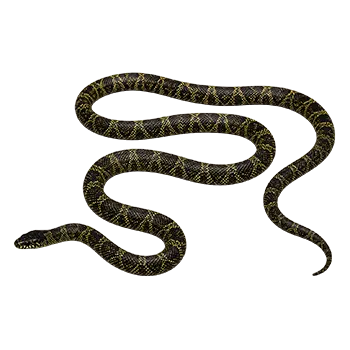
Desert Kingsnakes (Lampropeltis splendida) enter their senior years at approximately ten to twelve years of age, though the precise onset of geriatric changes varies considerably among individuals depending on genetics, lifetime husbandry quality, and reproductive history. Unlike mammals, snakes do not undergo a sharply defined transition into old age. Instead, the hallmarks of aging accumulate gradually over months and years, making attentive long-term record-keeping essential for distinguishing the normal deceleration of aging from the onset of disease.

The earliest and most reliable indicator of the senior transition is a progressive decline in metabolic rate manifested through decreasing appetite and lengthening intervals between voluntary feeding. A mature adult that reliably accepted prey every ten to fourteen days may begin refusing occasional meals or showing delayed interest in prey presentations. Simultaneously, shedding frequency decreases as the slower metabolic rate reduces the turnover of epidermal cells. An adult that previously shed every six to eight weeks may shift to intervals of ten to twelve weeks or longer, with shed quality sometimes declining as the skin loses some of its youthful elasticity.

Physical changes associated with aging in Desert Kingsnakes include a gradual loss of muscle tone along the dorsal surface, a subtle dulling of pattern contrast as melanin deposition patterns change with age, and a slight decrease in overall body mass even when feeding remains relatively consistent. The skin may develop a rougher texture and lose some of the glossy luster characteristic of younger animals. The spectacle scales covering the eyes may become slightly more opaque between sheds, though pronounced opacity is more suggestive of retained spectacles or ocular disease than of normal aging.

Behavioral changes in senior Desert Kingsnakes are typically subtle but measurable over time. Activity levels decline, with the snake spending longer periods in its preferred hide and showing less interest in exploring its enclosure during its normal crepuscular active periods. Handling tolerance generally remains stable or even improves in well-socialized individuals, as the reduced energy and defensive vigor of old age often make senior kingsnakes exceptionally calm and easy to handle. Keepers who have maintained careful behavioral logs throughout the animal's life are best positioned to identify these gradual shifts and adjust husbandry accordingly.

Dietary Adjustments for Aging Snakes

The caloric requirements of a senior Desert Kingsnake are substantially lower than those of a prime-age adult, and feeding protocols must be adjusted to reflect this metabolic reality. Continuing to feed on the adult schedule of one prey item every ten to fourteen days will almost certainly lead to obesity in a senior animal whose activity level and metabolic rate have declined. A feeding interval of every fourteen to twenty-one days is appropriate for most senior kingsnakes, with the prey size remaining the same or being reduced by one size category depending on the individual's body condition.

Body condition scoring becomes particularly important during the senior years because the margin between healthy weight and pathological weight loss narrows with age. A senior Desert Kingsnake in appropriate condition will have a smoothly rounded body profile with a slight but not excessive amount of soft tissue over the spine and ribs. The snake should not appear gaunt or angular, but neither should it display the flattened, overstuffed appearance of an obese animal. Monthly weight measurements plotted on a graph provide the clearest picture of whether the animal is maintaining, gaining, or losing mass over time, and any sustained downward trend warrants veterinary evaluation.

Digestive efficiency declines with age in many reptile species, and senior Desert Kingsnakes may occasionally regurgitate meals that they would have processed without difficulty in their younger years. When regurgitation occurs in a senior animal, allow a full fourteen days before offering food again, and reduce the next prey item by one size category. If regurgitation becomes a recurring pattern, a veterinary evaluation is warranted to rule out gastrointestinal obstruction, neoplasia, or hepatic disease. Chronically elevated basking temperatures — two to three degrees above the normal range — can sometimes improve digestion in senior animals by supporting the enzymatic processes that break down prey, but this adjustment should be made carefully and monitored to prevent dehydration.

Hydration management deserves increased attention in senior kingsnakes. Older snakes may drink less frequently or less efficiently than younger animals, and the reduced metabolic rate decreases the water intake obtained incidentally through prey digestion. Ensuring that the water dish is positioned in an easily accessible location — at ground level, near a hide, and not requiring the snake to climb or navigate obstacles — removes barriers to drinking. Some keepers of senior snakes find that offering water via gentle misting of the enclosure walls, which encourages the snake to drink droplets, supplements traditional dish-based hydration effectively.

Environmental Modifications

The enclosure environment that served a Desert Kingsnake well through its prime adult years may require thoughtful modifications as the animal enters its senior stage. The primary goals of these adjustments are to reduce physical demands on an aging body, ensure effortless access to essential resources, and maintain the thermal and humidity parameters that support declining metabolic function.

Hide placement should be reviewed to ensure that the senior snake can reach both the warm-end and cool-end hides without navigating complex obstacles, climbing steep surfaces, or traveling long distances. Some keepers find that adding a third hide at an intermediate temperature zone gives the aging snake more thermoregulatory options without requiring the full traverse of the enclosure. Hide openings should be sized so that the snake can enter and exit without scraping its body against rough edges, as aging skin is more susceptible to abrasion and slower to heal than the resilient integument of a younger animal.

Substrate depth and texture become more consequential for senior snakes. Thick, loose substrates that a vigorous adult navigated effortlessly can impede locomotion in a snake with declining muscle strength. Reducing substrate depth to approximately one inch and ensuring an even, flat surface allows the senior kingsnake to move efficiently without exhausting itself. Paper towel or thin aspen shavings provide a stable footing that minimizes the effort required for normal movement. Any climbing structures or elevated enrichment items should be evaluated for fall risk and removed or lowered if the snake shows reduced coordination or grip strength.

Temperature management may need fine-tuning as the snake ages. Senior Desert Kingsnakes often gravitate toward the warmer end of their enclosure more consistently than they did during their prime years, reflecting an increased reliance on external heat to drive metabolic processes that the body can no longer sustain as efficiently at lower temperatures. Raising the warm-end temperature by two to three degrees — to 88 or 90 degrees — can support digestion and immune function without introducing overheating risk, provided the cool end remains at 75 to 78 degrees so that the snake can escape excess heat. Thermostat accuracy should be verified more frequently for senior animals because the consequences of temperature fluctuations are more severe when physiological resilience is diminished.

Common Age-Related Health Concerns

Neoplasia, or cancer, is one of the most significant health threats facing senior Desert Kingsnakes and indeed all long-lived captive reptiles. Tumors can develop in virtually any organ system, with the liver, kidneys, reproductive tract, and integument being the most commonly affected sites in aged colubrids. External tumors present as visible lumps or masses beneath the skin that grow progressively over weeks to months, while internal neoplasms may produce no outward signs until they are advanced enough to cause systemic effects such as weight loss, appetite suppression, or behavioral depression. Veterinary ultrasound and radiography are the primary diagnostic tools for identifying internal masses in snakes.

Renal disease is another concern in geriatric kingsnakes. The kidneys are responsible for filtering metabolic waste products from the blood and regulating fluid balance, and their functional capacity diminishes with age. Signs of renal insufficiency in snakes are often vague and nonspecific, including generalized lethargy, reduced appetite, and abnormal urate production — urates that are yellow, green, or consistently liquid rather than the normal chalky white paste may indicate compromised kidney function. Blood chemistry panels that measure uric acid levels can detect renal disease before clinical signs become severe, underscoring the value of periodic geriatric blood work.

Musculoskeletal degeneration manifests in senior kingsnakes as reduced muscle mass along the dorsal ridge, decreased constriction strength during feeding, and occasionally as visible spinal irregularities such as kinking or stiffness in segments of the vertebral column. Arthritis of the vertebral joints, while difficult to diagnose definitively without advanced imaging, likely contributes to the reduced mobility and flexibility observed in many geriatric snakes. There are no curative treatments for degenerative musculoskeletal conditions in snakes, but supportive measures including optimized temperatures, reduced handling intensity, and appropriately sized prey that does not require vigorous constriction can improve comfort and maintain quality of life.

Ophthalmic changes, including persistent spectacle opacity, retained spectacles that accumulate over multiple shed cycles to form layered retained eye caps, and occasional corneal clouding, are increasingly common as Desert Kingsnakes age. A veterinarian experienced in reptile ophthalmology can distinguish between benign age-related changes and pathological conditions requiring intervention. Retained spectacles that layer over successive sheds create a progressively thickened covering that can impair vision and must be carefully removed by a professional using moistening agents and fine instruments to avoid damaging the underlying corneal surface.

Veterinary Care & Geriatric Screening

The veterinary care paradigm for senior Desert Kingsnakes shifts from the annual wellness check appropriate for prime adults to a more frequent and comprehensive geriatric screening protocol. Biannual examinations — once in spring and once in autumn — are recommended for kingsnakes over ten years of age. These visits should include a thorough physical examination, body condition scoring, fecal parasite screening, and discussion of any behavioral or appetite changes the keeper has observed since the last visit.

Blood chemistry panels become increasingly valuable as a diagnostic tool during the senior years. While baseline values for reptilian blood chemistry are less precisely defined than those for mammalian patients, establishing an individual baseline during the early adult years and tracking changes over time provides a powerful tool for detecting organ dysfunction before it becomes clinically apparent. Key parameters include uric acid levels as a marker of renal function, liver enzyme levels as indicators of hepatic health, and total protein and albumin as reflections of nutritional status and synthetic liver function.

Diagnostic imaging, including radiography and ultrasonography, may be recommended during geriatric screening visits even in the absence of specific clinical concerns. Radiographs can reveal skeletal abnormalities, pulmonary infiltrates suggestive of chronic respiratory disease, and mineralized masses that might otherwise go undetected. Ultrasound provides soft-tissue visualization that can identify hepatic masses, renal enlargement or irregularity, and reproductive tract abnormalities in both sexes. These imaging modalities are non-invasive and can be performed with minimal restraint in most cooperative adult kingsnakes, making them practical additions to the geriatric screening protocol.

The keeper's role in geriatric health management extends well beyond transporting the snake to veterinary appointments. Daily visual assessment of the snake's posture, movement quality, respiratory effort, and skin condition provides a continuous stream of health data that no biannual veterinary visit can replicate. Keepers should know what their individual snake's normal baseline looks like in detail — how it typically rests in its hide, how quickly it moves when active, how it positions itself relative to the heat source, and how it responds to the enclosure being opened — so that deviations from this individual norm are recognized promptly.

Quality of Life Assessment

Evaluating quality of life in a senior Desert Kingsnake requires a fundamentally different framework than the one used for mammalian pets, because snakes lack the facial expressions, vocalizations, and overt pain behaviors that make welfare assessment comparatively intuitive in dogs and cats. Instead, quality of life in snakes must be inferred from a constellation of behavioral and physiological indicators assessed systematically over time.

The most important positive indicators of adequate quality of life in a senior kingsnake include voluntary feeding at some regular interval, voluntary movement within the enclosure during normal activity periods, the ability to thermoregulate by moving between warm and cool zones, normal respiratory effort without audible distress sounds, and the absence of visible wounds, masses, or discharge. A senior snake that demonstrates all of these behaviors, even at reduced intensity compared to its younger self, is generally experiencing an acceptable quality of life.

Negative indicators that suggest quality of life may be deteriorating include prolonged food refusal spanning more than two months in the absence of a normal seasonal appetite reduction, persistent open-mouth breathing or audible respiratory distress, inability to right itself when placed on its back, sustained postural abnormalities such as stargazing or persistent lateral lying, progressive weight loss despite offered food, and the development of non-healing wounds or rapidly growing masses. Any single indicator may have a benign explanation, but the accumulation of multiple negative indicators simultaneously or the progression of a single indicator despite appropriate veterinary intervention suggests that the animal's welfare is compromised.

Quality of life assessment should be an ongoing conversation between the keeper and the veterinarian rather than a single decision point. Some keepers find it helpful to maintain a simple weekly scoring system, rating key indicators on a numerical scale and tracking the trend over months. A gradual decline in overall score, even when individual visits to the veterinarian produce no alarming findings, can provide the objective evidence needed to have honest conversations about whether the animal's welfare needs are being met and what palliative or end-of-life options may need to be considered.

It is worth noting that snakes, as ectothermic animals with relatively low metabolic rates and simple neurological architecture, may experience illness and decline differently than warm-blooded pets. The absence of obvious suffering does not necessarily mean the animal is thriving, and the presence of reduced activity does not necessarily mean the animal is in distress. Thoughtful, informed assessment that draws on veterinary input, long-term observational records, and an honest evaluation of the animal's trajectory over time is the most responsible approach to this complex and emotionally charged aspect of long-term reptile ownership.

Always consult a qualified professional before making any health-related decisions. This content is provided for informational reference only and should not replace professional guidance specific to your animal.