
The First 24 Hours

Desert Kingsnakes (Lampropeltis splendida) are oviparous, depositing clutches of five to twelve leathery-shelled eggs that hatch after an incubation period of approximately fifty-five to seventy-five days depending on temperature. Hatchlings emerge by slitting the eggshell with a small, keratinized egg tooth located on the tip of the upper jaw, a process known as pipping. The initial slit may appear hours before the hatchling fully exits the egg, and keepers should resist intervening during this window. Premature assistance can tear delicate blood vessels that are still connected to the inner membrane and may prevent complete absorption of the remaining yolk sac, which serves as the hatchling's sole nutritional reserve during its first days of life.

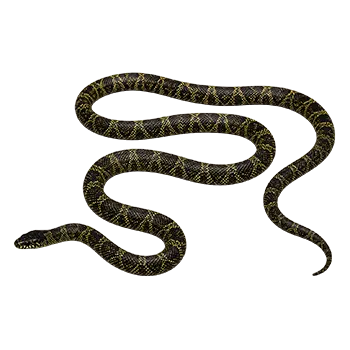
Newly emerged Desert Kingsnake hatchlings measure between eight and twelve inches in length and display the species' characteristic pattern of dark brown or black dorsal banding over a bright yellow or cream base color, though neonatal coloration is often more vivid than that of adults. Hatchlings are alert and mobile almost immediately upon emergence, and they will explore their immediate surroundings within minutes. Despite the species' generally docile adult temperament, hatchlings are understandably skittish and may vibrate their tails, musk, and attempt to flee when first encountered. These defensive responses are normal and will diminish with age and regular handling.

The hatching container should remain undisturbed until all viable eggs in the clutch have pipped and the hatchlings have fully emerged. In most clutches this process spans twelve to thirty-six hours from the first pip to the last emergence. Once all hatchlings have exited their eggs and are moving freely, they can be individually transferred to small, secure holding enclosures. Any eggs that remain unpipped forty-eight hours after the final successful hatch are unlikely to produce viable offspring and should be carefully opened to check for development before being discarded.

Sanitation during the first twenty-four hours sets the tone for long-term health. Remove all eggshell fragments, non-viable eggs, and residual fluids from the hatching container promptly to minimize bacterial colonization. The ambient temperature in the hatching area should be maintained between 82 and 85 degrees Fahrenheit with relative humidity around 70 to 75 percent. These conditions approximate the final incubation environment and allow hatchlings to acclimate gradually to the slightly drier, individually managed enclosures they will occupy within the first day.

First Feeding & Nutrition

Hatchling Desert Kingsnakes typically undergo their first ecdysis within seven to twelve days of emergence. This initial shed is a significant physiological marker indicating that the yolk reserves have been fully metabolized and the digestive tract is prepared for external prey. Most hatchlings will refuse food offered before this first shed, and pressing the issue by leaving prey items in the enclosure overnight only introduces unnecessary stress and the risk of substrate contamination from decomposing rodents.

The first prey item should be a pinky mouse, appropriately sized so that its widest point does not exceed one and a half times the diameter of the hatchling's midsection at its thickest point. Desert Kingsnakes are constrictors and enthusiastic feeders as a rule, and the majority of hatchlings will strike at a pre-killed or thawed-frozen pinky within seconds of its presentation. Use long hemostatic forceps or feeding tongs to present the prey item, gently wiggling it near the hatchling's head to simulate movement. If the hatchling does not respond within ten to fifteen minutes, remove the prey, wait three days, and try again. Persistent refusal beyond three or four attempts warrants investigation into environmental parameters rather than forced feeding.

Feeding frequency for neonatal Desert Kingsnakes should be once every five to seven days. Each meal should produce a modest but visible lump in the snake's midsection, confirming appropriate prey sizing. Avoid offering multiple prey items per feeding session or advancing to larger prey sizes prematurely. Overfeeding causes regurgitation, which is physiologically taxing and can trigger a cycle of feeding refusal that is difficult to break in young snakes. Steady, moderate meals produce reliable growth without the metabolic strain associated with aggressive feeding schedules.

Fresh water must be available at all times in a shallow, stable dish that the hatchling can enter but not tip over. Desert Kingsnakes, despite their arid natural range, drink regularly and will occasionally soak, particularly during the pre-shed period when increased humidity around the skin facilitates a clean, complete shed. Replace the water daily or immediately upon soiling. Signs of dehydration in hatchlings include sunken eyes, wrinkled lateral skin folds, difficulty shedding, and reduced interest in food, all of which can be prevented through consistent access to clean water and appropriate ambient humidity.

Developmental Milestones

Growth in hatchling Desert Kingsnakes proceeds at a moderate pace relative to the species' modest adult size. A hatchling that emerges at nine or ten inches can reasonably be expected to reach fourteen to eighteen inches by the end of its first six months under proper husbandry conditions. This growth is contingent on consistent feeding, appropriate thermal gradients, and freedom from chronic stressors such as excessive handling, cohabitation, or unstable environmental parameters.

The first shed remains the most important early milestone. A complete, unbroken shed skin indicates that humidity levels are adequate and that the hatchling's overall hydration and health are in good order. Retained shed, particularly around the tail tip, spectacle caps over the eyes, or along the labial scales, signals that humidity needs adjustment. If retained shed occurs, a brief soak in shallow lukewarm water followed by gentle removal with a damp cotton swab usually resolves the issue, but the underlying humidity problem must be corrected to prevent recurrence.

By four to six weeks of age, hatchlings should be feeding reliably with consistent defecation between meals. Fecal output provides useful diagnostic information: well-formed, dark-colored fecal matter accompanied by a chalky white urate component indicates healthy digestion and adequate hydration. Excessively runny stools, unusual coloration, or the presence of visible mucus may indicate parasitic infection or bacterial imbalance and warrants a veterinary fecal examination.

Weekly weighing on a digital gram scale is the most objective method for tracking hatchling development. Record each weight in a simple log alongside the date and feeding notes. Healthy hatchlings should show a consistent upward trend in body mass from week to week, with temporary plateaus around shed cycles being entirely normal. A hatchling that loses weight over two or more consecutive weigh-ins without an obvious explanation such as shedding should be evaluated for illness, parasites, or environmental inadequacies.

Temperature & Environment

Proper thermoregulation is fundamental to every aspect of hatchling kingsnake health, from digestion and immune function to growth rate and behavioral stability. The enclosure should provide a clear thermal gradient with a warm end maintained at 85 to 88 degrees Fahrenheit and a cool end at 75 to 78 degrees. A localized basking area at the warm end can reach 90 degrees but should not exceed this threshold, as sustained temperatures above 90 degrees can cause heat stress in this species. Under-tank heat mats connected to a proportional thermostat are the most commonly used heat source for hatchling kingsnake enclosures, though overhead ceramic heat emitters are a suitable alternative provided they are regulated by a thermostat and positioned to prevent direct contact.

Humidity requirements for Desert Kingsnake hatchlings are relatively modest compared to tropical species but should not be neglected. Ambient humidity of 40 to 50 percent is appropriate for day-to-day maintenance, with a localized humidity retreat — a small hide box containing dampened sphagnum moss — available at all times. During pre-shed periods, when the hatchling's skin becomes dull and its eyes take on a milky blue-gray opacity, the humid hide becomes especially important. Keepers who rely solely on ambient room humidity without providing a humid microclimate often encounter chronic shedding problems that compound into skin infections over time.

Enclosure size for neonatal Desert Kingsnakes should be appropriately small to reduce stress and facilitate thermoregulation. A plastic enclosure or tub measuring roughly 16 by 10 by 6 inches is suitable for the first three to four months of life. The enclosure must have secure, tight-fitting closures because kingsnakes are exceptional escape artists. Even hatchlings will relentlessly probe every seam, ventilation hole, and lid edge for weaknesses, and an unsecured enclosure will almost certainly result in an escaped snake. Ventilation holes should be small enough to prevent the hatchling from pushing through — holes drilled at one-eighth inch diameter or smaller are generally safe for neonates.

Substrate choices for hatchlings should prioritize hygiene and ease of monitoring over aesthetics. Paper towels or unprinted newspaper are the preferred substrates during the neonatal period because they allow immediate detection of fecal deposits, regurgitation, or abnormal discharge. They also eliminate the risk of accidental substrate ingestion during feeding, which can cause intestinal impaction in very small snakes. As the hatchling grows and develops more precise striking and constriction behaviors, a gradual transition to aspen shavings or a similar dry, non-aromatic substrate can be made. Cedar and pine shavings must never be used, as the volatile phenolic compounds in these woods are toxic to reptiles and cause respiratory distress and neurological damage.

Handling & Early Socialization

Desert Kingsnakes are widely considered one of the most handleable kingsnake species, and this reputation is well earned — but it must be cultivated, not assumed. Hatchlings emerge with a natural wariness of large moving objects, which in the wild would represent predators. Tail vibrating, musking, and rapid flight responses are standard defensive behaviors in neonatal kingsnakes and should be expected during the first several weeks. These behaviors are not signs of aggression or poor temperament; they are survival instincts that diminish predictably with consistent, low-stress handling.

Handling should not begin until the hatchling has completed its first shed and has accepted at least two consecutive meals without regurgitation. Attempting to socialize a hatchling that has not yet established a reliable feeding routine can disrupt the feeding response and create a cycle of stress-induced food refusal. Once these benchmarks have been met, brief handling sessions of three to five minutes can commence, conducted no more than once daily and never within forty-eight hours of a meal. Handling a recently fed hatchling risks triggering regurgitation, which is far more physiologically damaging in neonates than in adults.

The handling technique itself should be gentle, deliberate, and non-restrictive. Approach the enclosure calmly, lift the hatchling by sliding a hand beneath its midsection rather than grasping from above, and allow it to move freely through your fingers and hands. Avoid sudden movements, loud sounds, and tight gripping. The goal during these early sessions is simply to teach the hatchling that being picked up does not result in harm. Over the course of several weeks of consistent short sessions, most Desert Kingsnake hatchlings will transition from defensive flight behavior to calm, exploratory movement during handling.

One behavioral quirk that keepers should be aware of is the kingsnake's feeding response to scent cues. Desert Kingsnakes are ophiophagous in the wild, meaning they consume other snakes, and they are highly scent-driven feeders. If a keeper handles another snake before picking up a kingsnake hatchling, the residual scent on the hands can trigger a feeding strike rather than a defensive strike. Always wash hands thoroughly with unscented soap between handling different animals, and never handle a Desert Kingsnake hatchling immediately after handling prey items or other reptiles.

Health Screening & Veterinary Care

A veterinary examination by a reptile-experienced practitioner within the first thirty days of life is recommended for all hatchling Desert Kingsnakes, particularly those obtained from breeders, pet stores, or reptile expos rather than produced in the keeper's own collection. The initial exam should include a visual assessment of body condition, oral cavity inspection for signs of stomatitis, evaluation of skin condition for retained shed or ectoparasites, and a fecal float or direct smear to screen for internal parasites. Captive-bred Desert Kingsnakes generally carry a lower parasite burden than wild-caught individuals, but cryptosporidium, flagellates, and pinworm infections can be present in even the cleanest breeding colonies.

Respiratory infections are among the most common health problems encountered in hatchling kingsnakes and are almost always the result of improper environmental management rather than inherent vulnerability. Symptoms include audible wheezing or clicking during respiration, open-mouth breathing, excessive mucus visible in the oral cavity, and lethargy. The most frequent causes are chronically excessive humidity without adequate ventilation, temperatures consistently below the recommended range, and dirty substrate that harbors bacterial growth. Correcting the environmental deficiency is as important as veterinary treatment, because antibiotics alone will not resolve a respiratory infection if the snake is returned to the same conditions that caused it.

Mite infestations, while less common in captive-bred neonates than in wild-caught or pet-store animals, can devastate a hatchling if left untreated. Snake mites (Ophionyssus natricis) are tiny black or dark red ectoparasites visible as small moving dots on the snake's skin, particularly around the eye scales, gular fold, and vent area. Infested hatchlings will soak excessively, display restless behavior, and may develop secondary infections at bite sites. Treatment involves isolating the affected animal, stripping and disinfecting the enclosure completely, and applying a veterinarian-recommended miticide. Over-the-counter mite treatments should be avoided for hatchlings, as many contain concentrations of permethrin or other chemicals that are unsafe for very small snakes.

Maintaining detailed health records from the day of hatching onward creates an invaluable reference for identifying trends and catching problems early. Record each feeding date and prey size, each shed date and whether the shed was complete, weekly weight measurements, any behavioral changes, and the dates and findings of veterinary visits. This log transforms subjective impressions into objective data, enabling both the keeper and the veterinarian to detect gradual changes — such as a slow decline in feeding frequency or a progressive weight plateau — that might otherwise go unnoticed until they become clinically significant.

Always consult a qualified professional before making any health-related decisions. This content is provided for informational reference only and should not replace professional guidance specific to your animal.