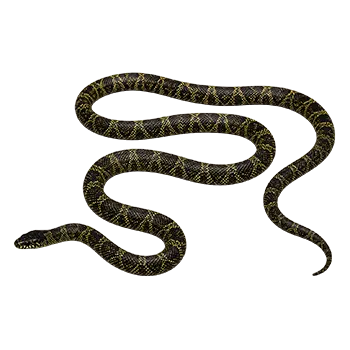

The juvenile stage in Desert Kingsnakes (Lampropeltis splendida) begins at approximately four to six months of age, when the snake has typically reached a length of fourteen to eighteen inches and has established a consistent feeding and shedding routine. This transition is not marked by a single dramatic event but rather by a gradual accumulation of physical and behavioral changes that distinguish the growing juvenile from the fragile neonate. The snake's body proportions begin to shift during this period, with the head becoming more defined relative to the neck and the body filling out into the muscular, cylindrical profile characteristic of healthy kingsnakes.
One of the most noticeable changes during the early juvenile period is a shift in coloration and pattern contrast. Hatchling Desert Kingsnakes often display vivid yellow or cream banding against dark brown or black dorsal saddles, and while adults of this species retain strong patterning, the colors may mellow somewhat as the snake grows. Each successive shed reveals subtle refinements in pattern intensity that contribute to the individual's mature appearance. These color shifts are entirely normal and should not be mistaken for signs of nutritional deficiency or health problems.
Behaviorally, juveniles become markedly more confident and exploratory compared to the skittish, flight-oriented neonates they once were. A well-socialized juvenile Desert Kingsnake will investigate its enclosure with purpose, moving through hides, climbing low branches if provided, and approaching the enclosure wall when it detects the keeper's presence. The exaggerated tail-vibrating and musking behaviors common in hatchlings typically diminish significantly by this stage, though they may resurface temporarily during periods of stress such as enclosure changes or veterinary visits.
The juvenile phase is also when individual temperament differences become most apparent within a clutch. Some juveniles will be bold and eager feeders from the start, striking at prey the moment it enters their visual field, while others may be more cautious and methodical in their approach to food and handling. These personality differences are largely innate and, while socialization can moderate extremes, keepers should accept and work with each individual's baseline temperament rather than attempting to force uniform behavior across all animals.