
Reaching Full Maturity

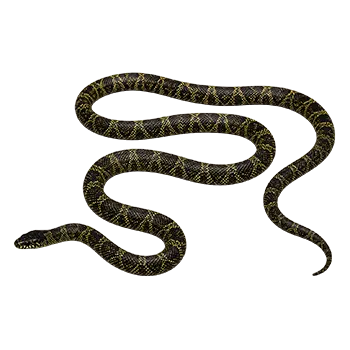
Desert Kingsnakes (Lampropeltis splendida) reach full physical maturity at approximately two and a half to three years of age, at which point most individuals measure between thirty-six and forty-eight inches in total length and weigh between 400 and 800 grams depending on sex and individual variation. Females tend to be slightly heavier-bodied than males of equivalent length, a dimorphism related to the physiological demands of egg production even in females that are never bred. The transition from subadult to adult is gradual rather than abrupt, marked by a progressive slowing of the growth rate until skeletal elongation effectively ceases and the animal's body proportions stabilize into their permanent adult form.

Adult coloration in Desert Kingsnakes is typically somewhat less vivid than the striking contrast seen in hatchlings and juveniles. The dark dorsal bands, which range from deep brown to black, remain prominent against a yellow to tan background, but the overall palette tends to deepen and mellow with maturity. Some adult individuals develop speckled or stippled patterning within the lighter interspaces between the dark bands, adding visual complexity that distinguishes them from younger animals. These color changes continue subtly over the animal's lifetime and are influenced by genetics, diet quality, and light exposure rather than by any controllable husbandry variable.

The prime adult years, spanning roughly from age three through age ten, represent the period of greatest physiological stability and lowest veterinary risk in a Desert Kingsnake's life. The immune system is fully developed, the musculoskeletal system is at peak strength, and the animal has established a stable metabolic baseline that makes deviations from normal behavior and appetite readily detectable by an attentive keeper. This stability should not breed complacency, however. The habits and routines established during the prime years — feeding schedules, handling protocols, enclosure maintenance standards, and veterinary check-up frequency — form the foundation that determines whether the animal transitions into old age with resilience or with accumulated deficits.

Sexual maturity in Desert Kingsnakes typically coincides with or slightly precedes full physical maturity, with males becoming reproductively capable as early as eighteen months of age and females usually reaching breeding condition between two and three years. Even keepers with no intention of breeding their animals should be aware of the behavioral changes that reproductive maturity can introduce. Males may exhibit increased restlessness and reduced appetite during the spring breeding season, while females may display similar seasonal fluctuations even in the absence of a mate. These cyclical behavioral shifts are hormonally driven and entirely normal in healthy adults.

Adult Feeding & Nutrition

Feeding frequency for adult Desert Kingsnakes should be reduced significantly from the juvenile schedule to prevent obesity, which is the single most prevalent nutritional disorder in captive adult kingsnakes. An adult Desert Kingsnake in good body condition requires one appropriately sized meal every ten to fourteen days. The prey item — typically an adult mouse or a small weaned rat depending on the snake's individual size — should produce a barely perceptible lump in the snake's midsection after swallowing. If no lump is visible, the prey item may be too small to provide adequate nutrition; if the lump is pronounced and the snake appears sluggish afterward, the prey is too large.

Obesity in adult kingsnakes develops insidiously and is often unrecognized by keepers who associate a plump snake with a healthy one. Clinical signs of obesity include a body cross-section that appears flattened rather than cylindrical, visible fat deposits along the lateral body walls that cause the dorsal pattern to appear stretched, ventral scales that separate to reveal skin between them, and reduced mobility and willingness to explore. Obese snakes are predisposed to hepatic lipidosis, reproductive complications, shortened lifespan, and increased anesthetic risk during veterinary procedures. Reversing obesity requires a gradual reduction in feeding frequency and prey size rather than abrupt food withholding, which can trigger metabolic stress.

Seasonal appetite variation is common and biologically appropriate in adult Desert Kingsnakes. Many individuals, particularly males, exhibit reduced feeding interest during late autumn and winter months, even when maintained at consistent year-round temperatures. This attenuation of appetite reflects the species' natural activity cycle in its native range across the southwestern United States and northern Mexico, where cooler winter temperatures reduce both activity and metabolic rate. Keepers should not attempt to force-feed a healthy adult that declines food during these months; instead, simply offer prey at the normal interval and remove uneaten items without concern.

Water consumption in adult Desert Kingsnakes follows a less predictable pattern than feeding. Some individuals drink deeply from their water dish several times per week, while others seem to drink rarely and obtain most of their moisture from prey items. Regardless of observed drinking behavior, a clean, appropriately sized water dish must be available at all times. The dish should be large enough for the adult snake to submerge its entire body, as even arid-adapted kingsnakes will soak periodically, particularly during pre-shed periods. Water should be replaced every twenty-four to forty-eight hours or immediately upon soiling.

Enclosure Design & Enrichment

An adult Desert Kingsnake requires an enclosure that balances adequate space for natural movement with the security and controllability needed for proper thermoregulation and humidity management. The minimum recommended enclosure dimensions for a single adult are 36 by 18 by 18 inches, with larger enclosures preferred when space allows. Front-opening enclosures with secure latching mechanisms are ideal because they allow access without approaching the snake from directly above, which can trigger a startle response, and because they typically offer better ventilation management than top-opening designs.

The thermal gradient for adults mirrors the parameters established during the juvenile stage: a warm end at 85 to 88 degrees Fahrenheit and a cool end at 75 to 78 degrees, with a localized basking area that may reach 90 degrees. In a larger adult enclosure, achieving and maintaining this gradient across the full floor area requires careful thermostat calibration and strategic heat source placement. Overhead radiant heat panels or ceramic heat emitters are increasingly preferred over under-tank heat mats for adult enclosures because they warm the air column more effectively and create a more natural top-down heat gradient that mimics solar warming in the wild.

Environmental enrichment for adult Desert Kingsnakes should go beyond the basic two-hide, one-water-dish configuration that suffices for juveniles. Cork bark flats and rounds, artificial rock formations, sturdy branches positioned at low angles, and textured climbing surfaces encourage the snake to exhibit a broader range of natural behaviors including climbing, exploring, and pushing through tight spaces. Research in reptile welfare science has increasingly demonstrated that snakes provided with complex, enriched environments show reduced stereotypic behaviors, improved feeding responses, and better overall body condition compared to those maintained in barren enclosures. Enrichment items should be secured against shifting and sized so that the snake cannot become wedged or trapped.

Lighting in the adult enclosure is often overlooked but contributes meaningfully to behavioral regularity and physiological health. While Desert Kingsnakes do not require ultraviolet-B lighting for calcium metabolism in the same way that many lizard species do, there is growing evidence that access to a natural or simulated photoperiod — roughly twelve hours of light and twelve hours of darkness, adjusted seasonally — supports healthy circadian rhythms, hormonal cycling, and immune function. A low-wattage LED fixture on a timer, positioned outside the enclosure to avoid creating an additional uncontrolled heat source, is the simplest way to provide consistent photoperiod regulation.

Behavioral Patterns & Temperament

Adult Desert Kingsnakes that have been properly socialized during their hatchling and juvenile stages are among the most reliably docile and handleable of all commonly kept colubrid species. The typical adult will tolerate handling sessions of fifteen to thirty minutes with calm, steady movement through the keeper's hands and minimal defensive behavior. This temperament, combined with the species' manageable adult size and attractive appearance, accounts for the Desert Kingsnake's enduring popularity among both novice and experienced reptile keepers.

Despite their general tractability, adult Desert Kingsnakes retain the strong feeding response that characterizes all members of the Lampropeltis genus. The most common context in which an otherwise calm adult will strike at a keeper is when hands enter the enclosure carrying the scent of rodents, other snakes, or any warm-blooded animal. Hook-training — the practice of gently touching the snake with a snake hook before picking it up to signal that handling rather than feeding is occurring — remains an effective protocol throughout the animal's adult life. Adults that have been consistently hook-trained will typically relax visibly upon feeling the initial hook contact, a learned response that distinguishes the handling stimulus from the feeding stimulus.

Activity patterns in adult Desert Kingsnakes tend toward crepuscular and nocturnal, with the greatest period of voluntary movement occurring during the early evening hours and again in the pre-dawn period. During the day, most adults will rest in their preferred hide, emerging primarily to thermoregulate, drink, or investigate environmental changes. Keepers should expect to see their adult kingsnake in its hide during daytime observation and should not interpret this concealment as illness or stress. Conversely, an adult that spends extended periods in the open, particularly pressed against the enclosure walls or resting in the water dish, may be signaling a problem with temperature, humidity, or the security of available hides.

Seasonal behavioral shifts become more pronounced and predictable as Desert Kingsnakes move into stable adulthood. Males in particular may display restless pacing behavior and increased tongue-flicking during the spring months as rising hormone levels stimulate mate-seeking behavior. Females may become more reclusive and display nesting behavior even in the absence of mating. These seasonal patterns are driven by hormonal cycles that persist regardless of whether the animal is exposed to natural photoperiod changes and are best managed by maintaining consistent husbandry while accepting temporary appetite and activity fluctuations as biologically normal.

Health Maintenance & Preventive Care

The cornerstone of adult health maintenance in Desert Kingsnakes is consistent, proactive husbandry rather than reactive veterinary intervention. An adult kingsnake maintained at appropriate temperatures, fed a properly sized whole-prey diet at appropriate intervals, kept on clean substrate with access to fresh water, and handled regularly enough to allow visual and tactile health assessment will rarely develop serious illness during the prime adult years. This does not mean that veterinary care is unnecessary — it means that the veterinarian's role shifts from treating acute problems to monitoring for the subtle, gradual changes that can precede clinical disease.

Annual veterinary examinations are recommended for all adult Desert Kingsnakes. The examination should include a thorough physical assessment covering body condition, skin integrity, oral cavity health, respiratory sounds, palpation of the coelomic cavity for masses or abnormalities, and evaluation of muscle tone and neurological function. A fecal examination for internal parasites should be performed annually even in animals with no clinical signs, as low-grade parasitic infections can persist subclinically for extended periods before causing measurable harm. Blood panels, while not routine for most pet snakes, may be recommended by the veterinarian as a baseline reference during the early adult years.

Shedding in adult Desert Kingsnakes occurs less frequently than in juveniles, typically every six to eight weeks during periods of active feeding and somewhat less often during seasonal appetite reductions. Each shed should be complete and in one piece, with the spectacle caps, tail tip, and labial margins intact. Chronic incomplete shedding in an adult that previously shed cleanly is often the first visible sign of an underlying health problem such as dehydration, ectoparasite infestation, thyroid dysfunction, or systemic infection, and warrants veterinary evaluation rather than simple humidity adjustment.

Dental and oral health, though seldom discussed in popular snake-keeping literature, deserves attention during the adult years. Stomatitis, commonly called mouth rot, is a bacterial infection of the oral mucosa that can develop from minor abrasions caused by striking at enclosure surfaces, retained prey bones embedded in the gum tissue, or immunosuppression from chronic environmental stress. Early signs include reddening or swelling of the gum line, a cheesy or cottage-cheese-like exudate visible inside the mouth, reluctance to feed, and excessive salivation. Stomatitis is highly treatable when caught early through gentle oral examination during routine handling, but advanced cases can erode bone and cause permanent disfigurement.

Long-Term Husbandry Considerations

Maintaining a Desert Kingsnake through its full adult lifespan requires a commitment to consistency that extends beyond daily feeding and cleaning routines. Equipment degradation is a practical concern that is easy to overlook: thermostats, heat mats, ceramic heat emitters, and digital thermometers all have finite operational lifespans and should be inspected regularly for signs of malfunction. A thermostat that fails in the closed position can cook a snake in hours, while one that fails open can expose the animal to dangerously low temperatures. Redundant temperature monitoring — such as a secondary digital thermometer independent of the thermostat probe — provides a critical safety margin against equipment failure.

Enclosure security must be maintained with vigilance throughout the adult years. Desert Kingsnakes are powerful for their size and retain the escape-artist tendencies that characterize the genus Lampropeltis at all life stages. An adult kingsnake can push through surprisingly small gaps, slide open unsecured glass doors, and exploit weakened screen tops with persistent pressure. Every enclosure opening, ventilation port, and lid closure should be examined periodically for wear, warping, or loosening. Escaped snakes can survive for extended periods within a home's walls, ductwork, or furniture, making recapture difficult and exposing the animal to hazards such as rodent traps, chemical treatments, and extreme temperature zones.

Record-keeping, begun during the hatchling stage, should continue throughout adulthood with a focus on longitudinal trends rather than individual data points. Monthly weight measurements, feeding and shedding logs, veterinary visit summaries, and notes on behavioral changes create a comprehensive medical history that becomes increasingly valuable as the animal ages. This archive allows keepers and veterinarians to distinguish between normal individual variation and pathological decline, a distinction that becomes critical during the transition from prime adulthood into the senior years.

Emergency preparedness is an often-neglected aspect of long-term snake keeping. Keepers should maintain a plan for maintaining appropriate temperatures during power outages, have a designated reptile-experienced veterinarian and after-hours emergency clinic identified before a crisis occurs, and keep a basic first-aid kit stocked with items such as povidone-iodine antiseptic, sterile cotton swabs, a digital scale, and clean transport containers. The arid-adapted Desert Kingsnake is somewhat more tolerant of brief temperature drops than many tropical species, but extended exposure to temperatures below 65 degrees Fahrenheit can suppress immune function and trigger respiratory illness.

Always consult a qualified professional before making any health-related decisions. This content is provided for informational reference only and should not replace professional guidance specific to your animal.