
Growth Rate & Physical Development

The juvenile phase of the Cape House Snake (Boaedon capensis) spans roughly from four months of age to approximately eighteen to twenty-four months, during which the animal undergoes the most dramatic physical transformation of its life. A four-month-old Cape House Snake measuring twelve to sixteen inches will typically reach twenty to thirty inches by the end of its first year, with growth continuing at a somewhat slower pace through the second year until the snake approaches its adult dimensions of two to three and a half feet. This growth is continuous rather than occurring in distinct spurts, but shed frequency serves as a useful proxy — juveniles in rapid growth may shed every three to five weeks, while older subadults approaching maturity shed every six to eight weeks.

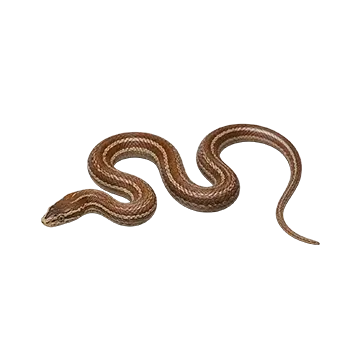
Body proportions shift noticeably during the juvenile period. Hatchlings appear somewhat head-heavy with proportionally large eyes and a slender, almost fragile-looking body. As the juvenile grows, the body fills out, the head becomes more proportional to the neck and trunk, and the smooth, glossy scales that define the genus Boaedon develop their full luster. Coloration may also change subtly during this period. Juvenile Cape House Snakes often exhibit more contrast in their dorsal patterning than adults, and some individuals darken significantly as they mature, particularly those from populations with melanistic tendencies.

Muscle development is another hallmark of the juvenile stage. A well-fed juvenile will develop firm, defined musculature along the dorsal surface and flanks, visible as a gently rounded cross-sectional profile when the snake is viewed from the front. An underweight juvenile, by contrast, will have a distinctly triangular cross-section with the spine visible as a ridge along the dorsal midline and the flanks appearing concave. Regular weight tracking with a digital scale continues to be valuable during this stage, though monthly rather than weekly weigh-ins are generally sufficient once consistent growth has been established.

Skeletal growth is largely complete by the time the snake reaches approximately eighteen months of age, after which any further increase in size comes primarily from soft tissue filling and muscular development rather than lengthening of the vertebral column. This transition from active skeletal growth to the maintenance phase marks the beginning of the snake's approach to adulthood, and it is accompanied by a gradual slowing of appetite and shed frequency that keepers should recognize as a normal developmental shift rather than a cause for concern.

Feeding Progression & Dietary Transition

Feeding during the juvenile stage follows a natural progression from the small pinky mice of the hatchling period to proportionally larger prey as the snake grows. By the time a Cape House Snake reaches six months of age and approximately fifteen inches in length, it should be comfortably consuming fuzzy mice. By eight to ten months, most individuals transition to small adult mice, which will remain the staple prey item for the remainder of the snake's life. The guiding principle for prey sizing is that each item should be approximately one to one and a half times the diameter of the snake at its widest point, producing a modest but visible lump after swallowing that disappears within twenty-four to thirty-six hours.

Feeding frequency should be adjusted downward as the juvenile approaches subadult size. A juvenile under six months of age benefits from feedings every five to seven days, which supports the rapid growth occurring during this period. Between six and twelve months, extending the interval to every seven to ten days is appropriate, as the growth rate begins to decelerate. By the time the snake is approaching eighteen months and nearing adult proportions, feeding every ten to fourteen days is sufficient to maintain healthy body condition without promoting obesity. These intervals are guidelines rather than rigid rules, and individual variation in metabolism, activity level, and body condition should inform adjustments.

Food refusals during the juvenile period are occasionally encountered and are usually linked to pre-shed cycles, seasonal shifts in photoperiod, or minor environmental disturbances such as enclosure moves or changes in the household routine. A healthy juvenile that refuses a single meal is not a cause for alarm, and the missed feeding should simply be reattempted five to seven days later. Prolonged refusals lasting more than three consecutive feeding attempts, however, warrant a review of environmental parameters — temperature, humidity, hide availability, and light cycle — followed by a veterinary consultation if no husbandry issue is identified.

Hydration remains critical throughout the juvenile stage. As the snake grows, the water dish should be upgraded to a larger, heavier vessel that the animal cannot easily tip over. Many juvenile Cape House Snakes enjoy soaking, particularly in the days leading up to a shed, and providing a dish large enough for the snake to coil inside comfortably encourages this beneficial behavior. Water should be changed daily or immediately upon fouling, and the dish itself should be scrubbed and disinfected weekly to prevent biofilm accumulation and bacterial proliferation.

Enclosure Upgrades & Environmental Enrichment

As a juvenile Cape House Snake grows, the initial hatchling tub will become inadequate in terms of both space and environmental complexity. The first enclosure upgrade typically occurs around the four to five month mark, when the snake has reached approximately fourteen to sixteen inches. A plastic tub or glass terrarium measuring approximately 24 by 12 by 12 inches provides adequate space for a juvenile through its first year, and a final upgrade to an enclosure of roughly 36 by 18 by 12 inches will serve the animal into adulthood. Each upgrade should be accompanied by a settling-in period of several days during which handling is suspended and the snake is left undisturbed to explore and acclimate to its new surroundings.

The thermal gradient established during the hatchling stage should be maintained through the juvenile period with minimal modification. The warm end should remain between 85 and 88 degrees Fahrenheit, the cool end between 72 and 76 degrees, and nighttime temperatures can drop a few degrees across the entire enclosure without issue. Thermostat-controlled heating is non-negotiable — unregulated heat sources are the leading cause of thermal burns in captive snakes, and a juvenile that suffers a burn on its ventral surface may develop chronic scarring that interferes with locomotion and shedding for the remainder of its life.

Environmental enrichment becomes increasingly important during the juvenile stage as the snake develops more complex exploratory behaviors. In addition to the mandatory warm-side and cool-side hides, consider adding cork bark tubes, artificial foliage, and low climbing branches. Cape House Snakes are primarily terrestrial and semi-fossorial, but juveniles in particular will explore vertical elements within their enclosure, and providing opportunities for low-level climbing promotes natural muscle development and behavioral diversity. Any branches or decorations must be securely anchored to prevent collapse, which could injure or trap the snake.

Substrate can be transitioned from the paper-based options used during the hatchling stage to a more naturalistic option once the juvenile is reliably accepting prey without substrate ingestion. Aspen shavings, cypress mulch, or coconut coir are all suitable choices that provide burrowing opportunities, help maintain moderate humidity, and create a more visually appealing enclosure. The substrate layer should be deep enough to allow the snake to burrow partially or completely — typically two to three inches — as burrowing is a core behavioral need for this semi-fossorial species. Spot-clean after every defecation, and perform a full substrate change every three to four weeks.

Behavioral Development & Temperament

Juvenile Cape House Snakes undergo significant behavioral maturation as they grow, transitioning from the somewhat erratic and defensive reactions of a neonate to the calm, predictable temperament for which the species is known. By six months of age, most individuals that have been handled consistently will tolerate brief handling sessions with minimal stress responses. By twelve months, many will rest calmly in the keeper's hands or draped around the wrist, showing little inclination to flee or musk. This progression is not automatic — it requires regular, gentle interaction — but the species' inherent docility makes it one of the most rewarding small colubrids to work with in this regard.

Activity patterns become more defined during the juvenile stage. Cape House Snakes are crepuscular to nocturnal, and juveniles will establish predictable daily rhythms of retreat during daylight hours and active exploration during the evening and early morning. Keepers who observe their enclosures during the evening hours will typically see the juvenile emerging from its hide, tongue-flicking actively to investigate its environment, and patrolling the perimeter of the enclosure. This exploratory behavior is healthy and normal, and the absence of any evening activity over an extended period can be an early indicator of illness or environmental stress.

Feeding behavior matures noticeably through the juvenile stage. Hatchlings often strike with imprecise aim and may need several attempts to secure a prey item, while older juveniles develop the precise strike accuracy and efficient constriction technique characteristic of adults. By the time a Cape House Snake reaches twelve to fifteen months of age, feeding typically becomes a quick, efficient process: the snake detects the prey item via chemical and thermal cues, delivers a rapid strike, wraps one or two coils, and begins swallowing within seconds. This transition from clumsy hatchling feeding to streamlined adult predation is one of the most interesting developmental changes to observe.

Defensive behaviors, already relatively mild in this species, diminish further through the juvenile period in animals that receive consistent handling. The occasional musking and vigorous wriggling of a young hatchling give way to calm acceptance of handling in most well-socialized juveniles. However, individual variation exists, and some Cape House Snakes retain a higher baseline level of wariness throughout their lives. Keepers should respect these individual differences rather than attempting to force socialization through excessive or prolonged handling, which is counterproductive and causes chronic stress.

Common Juvenile Health Concerns

The most frequently encountered health issue in juvenile Cape House Snakes is dysecdysis, or problematic shedding. While hatchlings also experience shedding difficulties, the issue can become more pronounced in juveniles housed in enclosures with insufficient humidity or those experiencing chronic low-grade dehydration. A healthy shed should come off in a single, unbroken piece and include both eye caps. Sheds that come off in multiple fragments, leave retained eye caps, or leave patches of unshed skin adhering to the body indicate that environmental humidity needs to be increased. Providing a humid hide — a small enclosed shelter lined with damp sphagnum moss — offers a targeted microclimate solution that can prevent shedding problems without raising the overall enclosure humidity to levels that promote other issues.

Internal parasites, particularly flagellate protozoans such as Cryptosporidium and various nematode species, represent a significant health risk for juvenile Cape House Snakes obtained from multi-animal collections or pet shops where hygiene protocols may be inconsistent. Symptoms of parasitic infection include regurgitation of meals, progressive weight loss despite regular feeding, abnormal or foul-smelling feces, and lethargy. A fecal examination by a reptile-experienced veterinarian is the definitive diagnostic tool and should be performed at least once during the juvenile period, ideally within the first few months of acquisition. Treatment protocols vary depending on the specific parasite identified and should always be administered under veterinary guidance.

Snake mites (Ophionyssus natricis) are another common concern, particularly in collections that house multiple reptiles. These tiny, dark-colored ectoparasites are visible to the naked eye and are most easily spotted around the eyes, under the chin, and in the gular fold region. Mite infestations cause irritation, excessive soaking, anorexia, and in severe cases anemia. Treatment involves thorough enclosure decontamination — discarding all substrate and porous furnishings, cleaning and disinfecting the enclosure with a reptile-safe product, and treating the snake itself with a veterinarian-approved anti-parasitic agent. Mite infestations are far easier to prevent through quarantine protocols and regular inspection than they are to eradicate once established.

Regurgitation is a serious symptom in juvenile snakes that demands prompt attention. While an isolated regurgitation event can result from handling too soon after feeding, enclosure temperatures that are too low for proper digestion, or a prey item that was too large, repeated regurgitation is a red flag for more serious conditions including parasitic infection, inclusion body disease, or gastrointestinal obstruction. After a regurgitation event, the juvenile should not be offered food for at least ten to fourteen days to allow the esophageal and gastric mucosa to recover. If regurgitation recurs on the next feeding attempt, a veterinary examination is essential.

Preparing for Adulthood

As a juvenile Cape House Snake approaches the eighteen to twenty-four month mark, several changes signal the transition toward adulthood. Growth rate slows noticeably, shed frequency decreases from every three to five weeks to every six to eight weeks, and appetite may become less voracious as the metabolic demands of rapid growth diminish. These changes are entirely normal and should not be mistaken for illness or environmental problems. Keepers who have been tracking weight and feeding records will see a clear plateau in the growth curve that confirms the snake is approaching its adult dimensions.

The final enclosure upgrade, if not already completed, should be made during this transitional period. An adult Cape House Snake is comfortable in an enclosure measuring approximately 36 by 18 by 12 inches, and setting up this permanent habitat before the snake reaches full adult size allows it to acclimate gradually. The adult enclosure should include all the essential elements — warm-side and cool-side hides, a water dish large enough for soaking, a substrate that supports burrowing, and optional enrichment items such as cork bark and low branches — arranged to provide a clear thermal gradient and multiple areas of visual and physical security.

Feeding should transition to an adult schedule during this period. Where a rapidly growing juvenile may have been fed every seven days, a subadult approaching full size should be shifted to feedings every ten to fourteen days. Prey size should stabilize at an appropriately sized adult mouse, and keepers should begin evaluating body condition more carefully to prevent the gradual weight creep that can develop when feeding schedules designed for growing juveniles are maintained after growth has slowed. An adult Cape House Snake in ideal condition has a gently rounded body profile, no visible spine ridge, and a smooth transition from body to tail without excessive fat deposits.

Sexual maturity in Cape House Snakes is typically reached between eighteen and thirty months of age, depending on the individual's growth rate and body condition. Males generally mature earlier than females, sometimes as young as fourteen to sixteen months, while females usually require at least eighteen to twenty-four months and must reach a minimum body weight and length before they can safely reproduce. Keepers who intend to breed their animals should begin researching breeding protocols and genetic considerations well in advance of maturity, while those who do not plan to breed should be aware that mature animals may exhibit seasonal behavioral changes — such as reduced appetite, increased restlessness, and in males, active searching behavior — even when housed individually.

Always consult a qualified professional before making any health-related decisions. This content is provided for informational reference only and should not replace professional guidance specific to your animal.