
Long-Term Enclosure Management

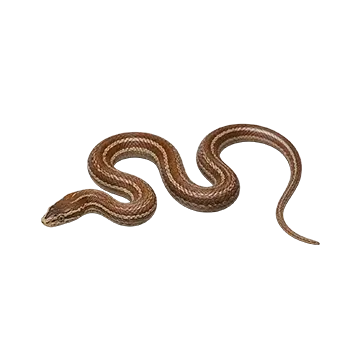
An adult Cape House Snake (Boaedon capensis) that has reached its full size of two to three and a half feet thrives in a well-designed enclosure measuring approximately 36 by 18 by 12 inches, which provides adequate floor space for thermoregulation, exploration, and exercise without being so large that the animal feels exposed or insecure. Glass terrariums with sliding front-opening doors are a popular choice for display purposes, while opaque plastic tubs offer superior security and humidity retention for keepers who prioritize function over aesthetics. Whichever enclosure type is chosen, escape-proof closures are essential — adult Cape House Snakes are persistent escape artists and will exploit any gap or weakness in the enclosure's perimeter.

The thermal gradient that sustained the animal through the juvenile stage should be maintained throughout adulthood with consistent parameters. The warm end of the enclosure should sit between 85 and 88 degrees Fahrenheit during the day, the cool end between 72 and 76 degrees, and a modest nighttime drop of three to five degrees across the entire enclosure is appropriate and mimics natural conditions. All heating elements must be connected to a quality pulse-proportional or dimming thermostat. On-off thermostats are acceptable but produce wider temperature swings that are less ideal for long-term health. The thermostat probe should be positioned at substrate level on the warm end to ensure the actual conditions the snake experiences match the target parameters.

Substrate maintenance is one of the most important and frequently underestimated aspects of long-term enclosure management. An adult Cape House Snake will defecate roughly five to ten days after each meal, and prompt spot-cleaning of feces and urates is essential to prevent ammonia buildup and bacterial proliferation. A full substrate change and enclosure disinfection should be performed every three to four weeks, during which all furnishings are removed, scrubbed, and sanitized with a reptile-safe disinfectant. The enclosure itself should be wiped down with the same product, rinsed thoroughly, and allowed to dry completely before reassembly. This routine may seem labor-intensive, but it is the single most effective preventive health measure available to a snake keeper.

Lighting is often overlooked in snake husbandry, but adult Cape House Snakes benefit from a consistent photoperiod that approximates their natural light cycle. A twelve-hour light and twelve-hour dark cycle maintained year-round is sufficient for non-breeding animals, while keepers who breed their animals may adjust the photoperiod seasonally to simulate the shorter days of winter and stimulate reproductive cycling. Direct overhead lighting is unnecessary and can cause stress if too bright; ambient room lighting or a low-wattage LED fixture on a timer provides adequate illumination without overwhelming the snake's light-sensitive eyes.

Adult Nutrition & Body Condition

Feeding an adult Cape House Snake is straightforward compared to many other reptile species, but the simplicity of the diet does not diminish the importance of getting it right. The staple diet for an adult consists of appropriately sized mice offered every ten to fourteen days. An appropriate mouse is one whose diameter roughly matches the widest part of the snake's body, which for most adult Cape House Snakes translates to small or medium adult mice. Larger individuals, particularly well-built females, may take large adult mice comfortably, but the prey item should never exceed one and a half times the snake's girth at its widest point.

Body condition assessment is a skill that every Cape House Snake keeper should develop and practice regularly. An adult in optimal condition has a smoothly rounded cross-sectional profile, no visible spine ridge along the dorsal midline, a clean transition from the body to the tail base without excessive fat pads, and firm musculature along the flanks. An underweight snake will display a visible spine ridge, concave flanks, and a generally angular appearance, while an overweight individual will have a visibly distended midsection, a prominent fat pad at the tail base, and may develop folds of skin between the scales. Both extremes carry health consequences and should be corrected through feeding adjustments.

Obesity is far more common than underfeeding in captive Cape House Snakes and represents a serious long-term health risk. Obese snakes are predisposed to hepatic lipidosis (fatty liver disease), reproductive complications, cardiovascular strain, and reduced lifespan. The condition develops insidiously, often over years of slightly too-frequent feeding or slightly too-large prey items, and many keepers do not recognize the problem until it is well advanced. Weighing the snake every two to three months and plotting the data on a graph provides an objective measure that can reveal gradual weight creep long before it becomes visually obvious. If weight gain trends upward without a corresponding increase in length, feeding frequency or prey size should be reduced.

Dietary variety is not strictly necessary for Cape House Snakes, which thrive on a rodent-only diet in captivity. However, occasional supplementation with appropriately sized day-old chicks, multimammate mice (Mastomys natalensis), or African soft-furred rats can provide minor nutritional variation and stimulate feeding interest in individuals that become habituated to standard laboratory mice. All prey items should be offered pre-killed or thawed from frozen, as live prey poses an unacceptable risk of injury to the snake and raises ethical concerns that are easily avoided.

Behavioral Patterns & Enrichment

Adult Cape House Snakes settle into predictable behavioral routines that reflect the species' crepuscular to nocturnal natural history. During the day, a healthy adult will be found concealed in one of its hides, typically the one offering the preferred thermal zone at that moment. As evening approaches and light levels drop, the snake emerges to patrol its enclosure, tongue-flicking frequently to sample its chemical environment. This exploratory behavior may last from thirty minutes to several hours and often includes visits to the water dish, investigation of enclosure boundaries, and burrowing activity in the substrate. Understanding and expecting this daily rhythm allows keepers to assess their snake's well-being at a glance — a consistently inactive animal that fails to emerge during its normal active period may be ill, stressed, or maintained in suboptimal conditions.

Enrichment for adult Cape House Snakes centers on providing opportunities for natural behaviors: burrowing, hiding, and low-level climbing. A substrate depth of two to three inches allows the snake to burrow beneath the surface, which satisfies a core behavioral need for this semi-fossorial species and also helps the animal thermoregulate with precision by selecting the exact depth and location that offers the preferred temperature. Multiple hides of different sizes and configurations — tight-fitting half-logs, cork bark rounds, and ceramic caves — give the snake choices and allow it to select the hide that best meets its immediate needs, whether that is maximum concealment or a slightly more open vantage point.

Environmental complexity can be increased beyond the essentials without creating clutter that impedes the snake's movement or complicates cleaning. Pieces of grapevine, manzanita branches, or cork bark flats arranged to create low shelves and tunnels add vertical and horizontal diversity to the enclosure. While Cape House Snakes are not arboreal, they will explore elevated surfaces and may rest on low platforms during the evening, particularly if the platform happens to sit within the preferred thermal zone. Any furnishings must be stable and securely positioned to prevent collapse.

Seasonal behavioral shifts are common in adult Cape House Snakes, even in animals maintained under constant captive conditions. During the autumn and winter months, many adults exhibit reduced appetite, increased time spent in hides, and generally lower activity levels. This seasonal slowdown reflects the species' natural cycle in its southern African range, where cooler, shorter days trigger a period of reduced metabolic activity. These changes are not a cause for concern unless they are accompanied by other symptoms such as weight loss, abnormal shedding, or respiratory distress. Keepers who do not breed their animals can simply maintain stable conditions and allow the snake to resume normal activity when its internal clock dictates.

Routine Health Maintenance

Preventive health care for adult Cape House Snakes is built on three pillars: impeccable husbandry, regular observation, and periodic veterinary assessment. The first pillar — maintaining clean, thermally appropriate, and properly humidified enclosure conditions — prevents the vast majority of health problems that afflict captive snakes. The second pillar — consistent, attentive observation of the animal's behavior, body condition, feeding response, and shedding quality — enables early detection of problems before they become serious. The third pillar — annual or biennial veterinary examinations by a reptile-experienced practitioner — provides professional evaluation that may catch conditions invisible to even the most diligent keeper.

Shed quality is one of the most reliable ongoing indicators of overall health in an adult Cape House Snake. A healthy adult sheds every six to ten weeks under normal conditions, and each shed should come off cleanly in a single piece with both eye caps intact. The shed skin should be examined each time for completeness: missing eye caps, retained patches of skin, or sheds that come off in multiple fragments all indicate issues with humidity, hydration, or underlying health. A consistent pattern of clean, complete sheds is reassuring, while any deterioration in shed quality should prompt a review of enclosure conditions and, if the issue persists, a veterinary consultation.

Parasite screening is advisable at least once every twelve to eighteen months for adult Cape House Snakes, even in long-established animals with no apparent clinical signs. Internal parasites, particularly flagellate protozoans, can persist at low levels for extended periods without causing overt symptoms, gradually undermining the animal's condition over time. A fecal examination performed by a reptile-experienced veterinarian using flotation and direct smear techniques is the standard screening method. External parasites, chiefly snake mites, should be monitored through regular visual inspection of the snake and its enclosure, paying particular attention to the periocular region, gular fold, and the spaces between scales along the ventral surface.

Dental and oral health is an easily overlooked aspect of adult snake care. While snakes do not develop caries or periodontal disease in the manner of mammals, stomatitis (commonly called mouth rot) is a significant concern. This bacterial infection of the oral mucosa presents as reddened, swollen gums, caseous (cheesy) plaques along the gum line, and in advanced cases, swelling of the head and reluctance to feed. Stomatitis is strongly associated with poor husbandry — particularly inadequate temperatures that suppress immune function and unsanitary enclosure conditions — and early treatment with appropriate antibiotics under veterinary supervision is essential to prevent progression to systemic infection.

Handling & Social Interaction

Adult Cape House Snakes that have been regularly handled since the juvenile stage are among the most tractable small colubrids available in the reptile hobby. Most well-socialized adults tolerate extended handling sessions of fifteen to thirty minutes with no visible stress, resting calmly in the keeper's hands or exploring at a leisurely pace. This calm temperament, combined with the species' manageable adult size and robust constitution, makes the Cape House Snake an excellent choice for educational programs, classroom environments, and keepers who value hands-on interaction with their animals.

Handling frequency for adult Cape House Snakes can be more flexible than during the juvenile socialization period. Most adults maintain their calm disposition with handling sessions two to three times per week, though some individuals remain perfectly tractable even with less frequent interaction. The primary rules remain the same regardless of handling frequency: avoid handling for forty-eight hours before and after feeding to prevent regurgitation, wash hands before and after each session to minimize pathogen transmission and eliminate prey scent, and support the snake's body fully rather than gripping or restraining it.

Adult Cape House Snakes occasionally exhibit an unexpected feeding strike during handling, typically when the keeper has recently handled prey items without washing hands or when the snake is in a heightened feeding-response state due to hunger. While a bite from an adult Cape House Snake is startling, it is not medically significant — the small teeth may barely break the skin, and the constricting response that follows is easily managed by gently unwinding the snake from the bitten hand or arm. The appropriate response is to remain calm, gently disengage the snake, return it to its enclosure, and wash the bite site with soap and water. Punishing or roughly handling a snake that has delivered a feeding strike only reinforces defensive behavior and damages the trust built through months of positive interaction.

Social interaction with other household pets should be carefully managed. While an adult Cape House Snake is too large to be prey for a typical house cat, cats and dogs may injure or stress a snake through rough play or predatory investigation. Snakes should never be left unsupervised with other pets, and handling sessions should take place in a secure area where dogs and cats cannot access the snake. Similarly, children should always be supervised during handling and taught to support the snake's body gently rather than gripping or squeezing, which causes stress and may provoke a defensive bite.

Long-Term Planning & Commitment

A Cape House Snake acquired as a hatchling or juvenile is a long-term commitment that can span fifteen to twenty years or more under optimal captive conditions. Keepers who are new to the species should consider this timeframe carefully, as the responsibilities of snake ownership remain constant throughout the animal's life. Food must be sourced and stored, enclosures must be maintained, veterinary care must be budgeted for, and arrangements must be in place for the animal's care during the keeper's vacations, illnesses, or other absences. These obligations do not diminish as the novelty of snake keeping fades, and a responsible keeper plans for them from the outset.

Financial planning for long-term Cape House Snake ownership should account for both routine and unexpected expenses. Routine costs include prey items, substrate, replacement heating elements and thermostats, and periodic veterinary examinations. Unexpected costs may include emergency veterinary care for illness or injury, replacement enclosure equipment, and diagnostic testing. While Cape House Snakes are generally hardy and inexpensive to maintain compared to many reptile species, budgeting for an annual veterinary examination and maintaining an emergency fund for unexpected health events is a responsible practice that prevents financial hardship from becoming a barrier to proper care.

Succession planning is a topic that few keepers consider but one that is relevant for any animal with a multi-decade lifespan. Changes in life circumstances — moves to housing that does not permit pets, changes in household composition, declining health of the keeper, or simply evolving interests — can make continued snake ownership impractical. Identifying a trusted individual or organization willing and able to assume care of the animal in the event that the current keeper can no longer do so ensures that the snake receives consistent, quality care regardless of what happens in its owner's life. Local herpetological societies, reptile rescue organizations, and experienced fellow keepers are all potential resources for succession planning.

Record-keeping during the adult years provides continuity of care that benefits the animal throughout its life and simplifies transitions if the snake changes hands. A complete record should include feeding dates and prey sizes, shed dates and quality, weight measurements, veterinary visit summaries, and any notable behavioral observations. Digital spreadsheets or dedicated reptile-keeping software applications make this task straightforward and produce records that are easy to share with veterinarians or future keepers. The discipline of maintaining these records also keeps the keeper engaged and attentive to the animal's condition, which is the foundation of excellent long-term husbandry.

Always consult a qualified professional before making any health-related decisions. This content is provided for informational reference only and should not replace professional guidance specific to your animal.