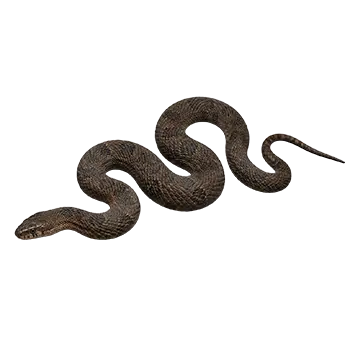

Growth Rate & Physical Development

The juvenile phase for Brown Water Snakes (Nerodia taxispilota) spans roughly from three months of age through the attainment of sexual maturity, which typically occurs between eighteen and thirty months depending on sex, feeding regimen, and environmental conditions. During this period, the snake undergoes substantial physical transformation, growing from a slender neonate of ten to twelve inches into a robust sub-adult measuring twenty to thirty-five inches or more. Males generally mature earlier and at a smaller size than females, a pattern of sexual size dimorphism that becomes increasingly apparent during the latter half of the juvenile stage.

Growth rate during the juvenile period is driven primarily by feeding consistency and thermal management. Under optimal captive conditions with regular meals and proper temperatures, juveniles may gain two to four inches per month during peak growth phases. This rate is not constant throughout the juvenile period; growth tends to be most rapid between three and twelve months of age, then gradually decelerates as the animal approaches sub-adult dimensions. Periodic weight and length measurements taken at consistent intervals provide the most reliable means of assessing whether an individual is progressing normally or falling behind its expected growth trajectory.

Physical changes during adolescence extend beyond simple increases in length and mass. The body becomes proportionally heavier and more muscular as the snake matures, transitioning from the slender, almost delicate build of a neonate into the thick, powerful physique characteristic of adult Nerodia. The head broadens noticeably as the jaw musculature develops, and the keeled dorsal scales become more pronounced in texture. Coloration may shift subtly as well, with juvenile patterns of distinct dark dorsal blotches on a lighter brown background gradually darkening and becoming less defined as the animal approaches adulthood.

Shed frequency during the juvenile phase typically settles into a cycle of every four to six weeks under stable conditions, though growth spurts may temporarily shorten this interval. Each shed event should be monitored for completeness, and the shed skin itself provides useful information about the animal's health and growth. A shed skin that is noticeably longer than the previous one confirms active growth, while repeated sheds of similar length may indicate that growth has plateaued, potentially signaling nutritional deficiency, suboptimal temperatures, or the onset of sexual maturity.

Feeding & Dietary Progression

Juvenile Brown Water Snakes remain primarily piscivorous throughout their adolescent development, but the size and variety of fish prey should increase proportionally as the snake grows. A juvenile that has outgrown the small minnows and mosquitofish of its neonatal diet can transition to larger feeder fish such as medium-sized shiners, small bluegills, or appropriately sized farm-raised tilapia strips. The general prey-sizing guideline for Nerodia species is that individual prey items should be no wider than one and a half times the width of the snake's head at its widest point, which allows for comfortable ingestion without risk of regurgitation.

Feeding frequency for juveniles should be adjusted downward slightly from the neonatal schedule as the snake grows. Juveniles between three and six months of age typically thrive on meals offered every five to six days, while those between six and twelve months can transition to feeding every seven days. Older juveniles approaching sub-adult size may be fed every seven to ten days without any adverse effect on growth or body condition. These intervals assume appropriately sized meals; if the keeper is offering smaller individual prey items, more frequent feedings or multiple items per session may be warranted to meet the animal's caloric needs.

The transition from exclusively live fish to pre-killed or thawed frozen fish is an important husbandry goal during the juvenile period. While neonates often require live prey to trigger a feeding response, juveniles can usually be trained to accept pre-killed fish through a gradual process of prey presentation. Begin by offering freshly killed fish that still retain residual movement, then progress to fish that have been dead for increasing periods. Forceps feeding, in which the keeper holds the prey item with long tongs and moves it gently through the water to simulate a swimming motion, is an effective technique for encouraging acceptance of non-living prey. The benefits of converting to pre-killed or frozen-thawed prey include reduced risk of disease transmission from feeder fish, elimination of the logistical challenges of maintaining live feeder colonies, and the ability to ensure nutritional quality through sourcing from reputable suppliers.

Thiaminase awareness remains critical during the juvenile stage. Continued reliance on thiaminase-containing fish species such as goldfish, fathead minnows, or rosy reds will eventually produce clinical thiamine deficiency, which manifests as neurological symptoms including tremors, loss of coordination, inability to strike accurately at prey, and in advanced cases, star-gazing posture and seizures. These symptoms can appear suddenly after months of apparently normal health, as the body's thiamine reserves become progressively depleted. Keepers should maintain a diverse rotation of thiaminase-free feeder fish and supplement periodically with a reptile multivitamin to provide a nutritional safety margin.

Fresh, clean water should be available continuously and serves both as a hydration source and a feeding medium. Many juvenile Brown Water Snakes prefer to consume prey underwater, and the water dish or aquatic area within the enclosure should be deep enough to allow this natural feeding behavior. Water used for feeding should be changed immediately after each meal to prevent decomposition of fish remnants, which generates ammonia and harbors pathogenic bacteria.

Enclosure Upgrades & Habitat Design

As juvenile Brown Water Snakes grow, their enclosure requirements expand significantly in both size and complexity. The small neonatal tubs that served during the first months of life become inadequate by the time the snake reaches approximately fifteen to eighteen inches, and the keeper should plan for at least one enclosure upgrade during the juvenile period. A juvenile between four and twelve months of age generally requires an enclosure with floor dimensions of at least 24 by 18 inches, while older juveniles approaching sub-adult size need a minimum of 36 by 18 inches. The emphasis should always be on floor space rather than height, as Brown Water Snakes are not arboreal and rarely utilize vertical climbing opportunities.

The aquatic component of the enclosure becomes increasingly important during the juvenile stage. While a simple water dish sufficed for neonates, juvenile enclosures benefit from a more substantial water feature that allows the snake to fully submerge and swim. A removable plastic container occupying roughly one-third of the enclosure floor, filled to a depth of two to three inches for smaller juveniles and three to five inches for larger ones, provides adequate aquatic habitat without overcomplicating maintenance. The water container should have a smooth, gradual entry ramp or a low enough lip for the snake to enter and exit freely. Drainage and water changes must remain straightforward, as water quality in a semi-aquatic snake enclosure can deteriorate rapidly.

Substrate choices can be expanded during the juvenile period as the snake becomes a more confident and precise feeder, reducing the risk of accidental substrate ingestion. Cypress mulch is an excellent option for the terrestrial portion of the enclosure because it retains moisture effectively, resists mold growth, and provides a naturalistic appearance and texture. Coconut coir is another suitable choice, though it tends to become waterlogged more quickly than cypress mulch when used near the water feature. Regardless of substrate type, the area immediately surrounding the water container should be monitored for excessive moisture accumulation, as perpetually saturated substrate creates conditions favorable to blister disease and dermal infections.

Hide availability remains essential throughout the juvenile period. At minimum, two hides should be provided: one positioned on the warm end and one on the cool end of the thermal gradient. Hides should be sized so that the snake can coil inside with its body touching the walls, creating the sense of security that reduces stress and promotes normal feeding behavior. As the snake grows, hides will need to be replaced with larger versions to maintain this snug fit. Cork bark flats, inverted ceramic dishes, and commercially available reptile hides all serve this purpose well. Some keepers also provide a third hide positioned near or partially over the water feature, which many Brown Water Snakes utilize heavily.

Behavioral Development & Activity Patterns

Juvenile Brown Water Snakes undergo significant behavioral maturation during their adolescent phase, developing from the largely reactive, instinct-driven neonates into more behaviorally complex sub-adults. One of the most notable changes is the refinement of hunting behavior. While neonates strike at virtually anything that moves in or near the water, juveniles develop increasingly selective and efficient predatory strategies. By six to eight months of age, most juveniles will demonstrate a recognizable hunting posture, positioning their anterior body in or along the water's edge with the head angled downward, waiting motionlessly for prey to come within striking range before executing a rapid, directed strike.

Activity patterns typically consolidate during the juvenile phase. Brown Water Snakes are primarily crepuscular and nocturnal, and juveniles gradually settle into a consistent routine of peak activity during the hours around dawn and dusk. During daylight hours, juveniles spend most of their time concealed in hides or submerged in water with only the head exposed above the surface. Keepers who observe their animals only during the middle of the day may mistakenly conclude that the snake is inactive or lethargic, when in reality the animal is simply following its natural behavioral rhythm. Providing a consistent photoperiod of twelve hours of light and twelve hours of darkness supports the establishment of these natural activity cycles.

Defensive behavior typically moderates during the juvenile period, though the degree of improvement varies widely between individuals. Juveniles that are handled regularly and consistently tend to reduce the frequency and intensity of striking and musking over time, though they rarely become truly calm or relaxed during handling. Some individuals show marked improvement within a few months of consistent socialization, while others retain a strong defensive disposition regardless of handling frequency. This individual variation reflects genuine temperament differences within the species and is not a reflection of husbandry quality or handling technique.

Exploratory behavior increases notably during adolescence, particularly in the hours following lights-out. Juvenile Brown Water Snakes will investigate every corner, seam, and potential exit point in their enclosure, and any weakness in the enclosure's security will eventually be discovered and exploited. Screen tops that are not clipped or weighted down, ventilation holes that have been enlarged by wear, and gaps around water feature plumbing are all common escape routes. Ensuring absolute enclosure security during the juvenile phase is not merely advisable but essential, as an escaped semi-aquatic snake in a household can cause significant disruption and may be difficult to locate.

Health Monitoring & Common Juvenile Issues

Routine health monitoring during the juvenile phase should build upon the observation practices established during the neonatal period while expanding to address the health challenges specific to growing semi-aquatic snakes. Regular weighing sessions, conducted on the same day each week using a digital gram scale, remain the single most valuable health assessment tool available to the keeper. A juvenile that is feeding consistently should show steady, incremental weight gain between shed cycles. Any unexplained weight loss, prolonged weight plateau, or pattern of feeding refusal lasting more than three consecutive offered meals warrants further investigation and potentially a veterinary consultation.

Parasitic infections are the most prevalent health concern in juvenile Brown Water Snakes, particularly in animals that are wild-caught or that have been fed live fish from uncontrolled sources. Internal parasites commonly encountered in Nerodia species include various nematode species, trematodes (flukes), and pentastomids (tongue worms). External parasites such as snake mites can also become established in collections that house multiple reptile species. A fecal examination conducted by a reptile-experienced veterinarian every six to twelve months during the juvenile period is a reasonable screening schedule. Treatment protocols for confirmed parasitic infections should always be administered under veterinary guidance, as dosing errors in juvenile snakes can be as dangerous as the parasites themselves.

Dermatological conditions are the second most common category of health issues in juvenile water snakes. Blister disease remains a risk whenever enclosure hygiene is compromised or the substrate remains excessively wet. Scale rot, a bacterial infection of the ventral scales that presents as discolored, softened, or necrotic scales along the belly, is closely related to blister disease and shares the same predisposing factors. Both conditions respond well to early intervention consisting of enclosure sanitization, temporary housing on dry, clean paper towel substrate, and topical antiseptic treatment. Advanced cases with deep tissue involvement or systemic signs such as lethargy and anorexia require veterinary treatment including systemic antibiotics.

Respiratory health should be monitored through daily observation of the snake's breathing pattern and behavior. A healthy juvenile breathes silently with its mouth closed and spends the majority of its time either hidden or in the water. Any audible respiratory sounds, visible mucus around the nares, persistent open-mouth breathing, or a tendency to rest with the head elevated at an unusual angle are potential indicators of respiratory infection. The warm, humid conditions that Brown Water Snakes require can promote respiratory pathogen growth if ventilation is inadequate, making proper airflow within the enclosure a non-negotiable aspect of husbandry during the juvenile stage.

Handling Progression & Keeper Safety

The juvenile period represents the most important window for establishing a handling routine that will carry through to adulthood. As the snake grows in size and strength, the consequences of defensive behavior escalate proportionally. A neonate's bite is a minor pinprick, but a juvenile measuring twenty-four inches or more can deliver a bite that draws blood and leaves noticeable marks. This escalation in bite severity, combined with the increased volume and potency of musk that larger animals produce, makes it essential to develop effective handling techniques while the animal is still manageable in size.

Handling sessions during the juvenile period can be gradually extended from the three- to five-minute sessions used for neonates to ten to fifteen minutes for well-acclimated individuals. The use of a snake hook to initiate each handling event remains advisable throughout the juvenile period and into adulthood. The hook serves two purposes: it alerts the snake that a handling event rather than a feeding event is beginning, and it allows the keeper to gently lift the snake from its enclosure without placing hands directly into the animal's defensive strike zone. Once the snake is lifted from the enclosure and supported in the hands, it typically calms somewhat, though keepers should remain prepared for sudden bursts of activity.

Juvenile Brown Water Snakes are strong swimmers and vigorous crawlers, and their behavior during handling sessions tends to be highly active rather than the calm, relaxed draping seen in more docile species. Keepers should expect the snake to move continuously through their hands, and the handling technique should focus on guiding and redirecting rather than restraining. Attempting to hold a juvenile Nerodia still against its will invariably triggers defensive behavior and accomplishes nothing productive in terms of socialization. Instead, allow the snake to flow through your hands while maintaining gentle control, redirecting the head away from your body when the snake moves in an undesired direction.

Keepers who maintain multiple reptile species must practice strict hygiene protocols when handling Brown Water Snakes. The musk produced by Nerodia species is particularly persistent and can transfer scent to hands, clothing, and other surfaces that subsequently contact other animals. Handling Brown Water Snakes after handling prey species or other snakes that carry prey scent can result in misdirected feeding strikes. A routine of washing hands with unscented soap both before and after handling, wearing designated handling clothing, and keeping Brown Water Snake enclosures in a separate area from rodent-fed species eliminates most scent cross-contamination issues.

As the juvenile approaches sub-adult size, keepers should begin assessing whether their long-term housing plan and handling capabilities are adequate for a fully grown Brown Water Snake. Adult females of this species can exceed four feet in length and are powerful, active animals that require confident, experienced handling. The juvenile period is the appropriate time to develop the skills and confidence needed for adult-level handling, and keepers who find themselves unable to manage a growing juvenile comfortably should seek mentorship from experienced Nerodia keepers or herpetological societies before the animal reaches full adult size.

Always consult a qualified professional before making any health-related decisions. This content is provided for informational reference only and should not replace professional guidance specific to your animal.