
Recognizing Terminal Decline

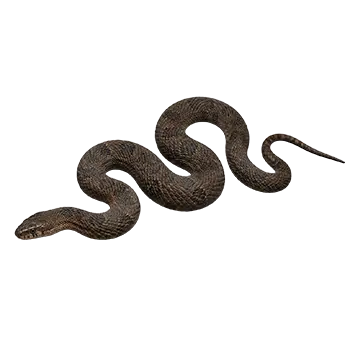
Terminal decline in Brown Water Snakes (Nerodia taxispilota) may result from advanced age-related organ failure, progressive disease that has not responded to treatment, severe traumatic injury, or the cumulative effects of chronic health conditions that gradually overwhelm the animal's compensatory capacity. Recognizing when a snake has entered a terminal phase is one of the most difficult assessments a keeper must make, because reptiles are physiologically adapted to mask signs of vulnerability until their condition is far advanced. The gradual nature of many terminal processes means that the transition from treatable illness to irreversible decline is often apparent only in retrospect.

The most significant indicator of terminal decline is sustained, progressive weight loss that continues despite appropriate husbandry, veterinary treatment, and feeding opportunities. An animal that has lost more than twenty to twenty-five percent of its peak healthy body weight and shows no response to nutritional intervention or medical treatment is likely experiencing organ failure or systemic disease that has progressed beyond the body's ability to recover. This weight loss is typically accompanied by visible muscle wasting along the dorsal surface, prominent vertebral outlines, and a general loss of body turgor that gives the animal a deflated, shrunken appearance.

Persistent anorexia lasting more than two to three months in an animal that has previously been a reliable feeder, and that cannot be attributed to seasonal cycling, brumation, or environmental stress, is another hallmark of terminal decline. While occasional feeding refusal is normal for many snake species, prolonged and complete cessation of food intake in a Brown Water Snake that is maintained at appropriate temperatures and offered suitable prey strongly suggests an underlying condition that is preventing the animal from feeding. Potential causes include advanced hepatic or renal failure, gastrointestinal obstruction or neoplasia, severe respiratory disease, and systemic infection.

Behavioral changes associated with terminal decline include profound lethargy with the animal remaining in a single position for days at a time, loss of normal defensive responses that would typically be elicited by handling or enclosure disturbance, disorientation manifested as aimless wandering or inability to locate water and hides, and abnormal postures such as persistent head elevation or inability to coil normally. In semi-aquatic species like the Brown Water Snake, a terminal animal may either avoid the water entirely or become unable to exit the water feature independently, both of which represent departures from normal behavioral patterns that signal serious decline.

Palliative Care & Comfort Measures

When curative treatment is no longer effective or available, the focus of care shifts to palliative management aimed at maintaining the animal's comfort and minimizing distress during its remaining time. Palliative care for a terminally declining Brown Water Snake involves simplifying the environment, optimizing physical comfort, and reducing all sources of unnecessary stress while continuing to offer food and water on the chance that the animal may still accept nourishment.

The palliative enclosure should be smaller than the animal's standard adult housing, reducing the distance the snake must travel to access water, warmth, and shelter. A simple setup consisting of a single appropriately sized hide, a shallow water dish positioned adjacent to the hide, and paper towel substrate provides everything the animal needs without requiring significant physical effort. The thermal gradient should be maintained within normal parameters, but the overall enclosure temperature can be raised slightly on the cool end to ensure that the animal is never subjected to temperatures that tax its declining thermoregulatory capacity. Ambient temperatures of 78 to 84 degrees across the enclosure, with a warm spot of 86 to 88 degrees, provide a comfortable range for a debilitated animal.

Hydration management becomes critically important during palliative care, as dehydration is a common complication of terminal illness and significantly worsens the animal's comfort. The water dish should be positioned so that the snake can reach it without leaving its primary resting area, and the dish should be shallow enough to eliminate any risk of drowning in a weakened animal. For animals that have stopped drinking voluntarily, gentle soaking in lukewarm water for fifteen to twenty minutes every two to three days can support hydration through transdermal absorption. In severe cases, a reptile-experienced veterinarian can administer subcutaneous fluid therapy to maintain hydration.

Feeding attempts should continue as long as the animal shows any interest in food, as voluntarily accepted nutrition supports body condition and may contribute to comfort. However, force-feeding or assist-feeding a terminally ill snake is generally not recommended during the palliative phase, as the stress and physical manipulation involved often outweigh any nutritional benefit. If the animal accepts food voluntarily, offer small, easily digestible prey items at reduced frequency. If the animal consistently refuses food, the keeper should accept this refusal as part of the terminal process and focus on other aspects of comfort care.

Pain Assessment & Management

Pain assessment in reptiles remains one of the most challenging aspects of herpetological medicine, as snakes lack the facial expressions, vocalizations, and postural cues that facilitate pain recognition in mammals. Despite the historical misconception that reptiles do not experience pain, current scientific understanding confirms that snakes possess nociceptive pathways functionally analogous to those of mammals and are capable of experiencing pain and suffering. Recognizing and addressing pain in a terminally ill Brown Water Snake is an ethical obligation and a fundamental component of responsible end-of-life care.

Behavioral indicators that may suggest pain in a Brown Water Snake include sustained immobility with the body held in a rigid, tense posture rather than the relaxed coiling of a resting animal; flinching or withdrawal responses when specific body regions are gently touched or palpated; increased respiratory rate without environmental cause; persistent head pressing against enclosure walls or furnishings; and marked deviation from the animal's established baseline temperament, such as a normally defensive animal becoming completely unresponsive or a normally calm animal becoming inexplicably agitated. None of these signs are definitive in isolation, but a pattern of multiple behavioral changes in the context of known terminal illness strongly suggests the presence of pain or significant discomfort.

Pharmacological pain management for reptiles has advanced considerably in recent years, though the evidence base remains smaller than for mammalian species. Meloxicam, a nonsteroidal anti-inflammatory drug, is one of the most commonly used analgesics in reptile medicine and can be administered orally or by injection at species-appropriate dosages determined by the attending veterinarian. Tramadol, an opioid analgesic, has also been used in reptile patients and may be appropriate for moderate to severe pain. Dosing intervals for both medications are longer in reptiles than in mammals due to the slower metabolic rate, and all analgesic therapy should be administered under direct veterinary guidance with regular reassessment of the animal's response.

Non-pharmacological comfort measures complement medical pain management and include maintaining optimal environmental temperatures, minimizing handling and disturbance, reducing light levels in the enclosure, and eliminating any enclosure features that require the animal to climb, navigate obstacles, or exert physical effort. A terminally ill snake's world should be quiet, warm, dark, and simple, providing the maximum possible physical comfort with the minimum possible demand on the animal's diminishing resources.

Making the Decision for Euthanasia

The decision to euthanize a companion animal is among the most difficult choices a keeper faces, and it is no less emotionally challenging when the animal in question is a snake rather than a mammalian pet. The fundamental ethical principle guiding this decision is straightforward: euthanasia should be considered when the animal's suffering cannot be adequately managed through available medical and husbandry interventions, and when the animal's quality of life has declined below a level consistent with its welfare and dignity. Applying this principle to a specific individual at a specific point in time, however, requires careful assessment, honest self-reflection, and ideally the guidance of a trusted veterinary professional.

Objective quality of life assessment tools can help structure what is inherently an emotional decision. A simple scoring system that evaluates key parameters including pain level, hydration, nutrition and appetite, mobility, interest in environment, and frequency of distress behaviors provides a framework for tracking the animal's condition over time. When scores consistently decline across multiple parameters despite appropriate intervention, and particularly when the animal's daily experience appears to be dominated by suffering rather than comfort, the balance has shifted in favor of euthanasia as the most compassionate course of action.

Delaying euthanasia beyond the point where it is clearly indicated is a common and understandable tendency that arises from the keeper's emotional bond with the animal, hope that the condition may improve, or uncertainty about whether the decision is premature. While these feelings are natural and should be honored, it is important to recognize that prolonging suffering in a terminally ill animal out of the keeper's reluctance to let go does not serve the animal's interests. Experienced reptile veterinarians can provide valuable perspective in these situations, offering an objective clinical assessment of the animal's condition and prognosis that can help the keeper move past uncertainty toward a decision made in the animal's best interest.

The timing of euthanasia should be determined by the animal's condition rather than by external scheduling pressures. However, it is worth noting that choosing to euthanize on a day when the animal appears to be having a relatively better period, rather than waiting until the animal is in visible crisis, often results in a more peaceful and dignified end. This approach also spares the animal the additional suffering that may occur during a terminal crisis event and allows the keeper and veterinarian to proceed in a calm, unhurried manner.

The Euthanasia Process

Euthanasia of reptiles should always be performed by a licensed veterinarian using methods approved by the American Veterinary Medical Association (AVMA) guidelines for humane euthanasia. The standard method for snake euthanasia involves the intravenous or intracardiac injection of an overdose of a barbiturate anesthetic, most commonly pentobarbital sodium. This agent produces rapid loss of consciousness followed by cardiac arrest, resulting in death that is as painless and stress-free as current medical science can achieve. The keeper should never attempt to euthanize a snake using non-veterinary methods, many of which cause significant suffering and are neither humane nor reliable.

Prior to the euthanasia procedure, many veterinarians administer a sedative or anesthetic agent to render the snake unconscious before the lethal injection is given. This two-step approach ensures that the animal experiences no awareness of the final injection and eliminates any possibility of pain or distress associated with the procedure itself. Common pre-euthanasia sedation agents for reptiles include alfaxalone and propofol, both of which produce smooth, rapid loss of consciousness when administered by injection.

Keepers should be aware that reptilian physiology may produce post-mortem muscular movements, including slow coiling, tail twitching, and mouth opening, that can persist for minutes to hours after clinical death has occurred. These movements are spinal reflexes mediated by residual electrical activity in the peripheral nervous system and do not indicate consciousness, pain, or incomplete euthanasia. The veterinarian will confirm death through the absence of heartbeat, loss of corneal reflex, and absence of response to deep pain stimuli before the animal is released to the keeper.

The keeper should consider in advance whether they wish to be present during the procedure, what they would like done with the body afterward, and whether other household members need to be involved in or informed about the decision. Options for remains typically include private cremation with return of ashes, communal cremation, burial in accordance with local regulations, or retention for veterinary necropsy if the cause of death is uncertain and the keeper desires confirmation. Making these decisions before the day of the procedure reduces the emotional burden during an already difficult experience.

Grief, Reflection & Moving Forward

The death of a long-term companion animal, regardless of species, represents a genuine loss that deserves acknowledgment and space for grief. Keepers who have maintained a Brown Water Snake for ten or more years have invested thousands of hours in daily care, feeding, enclosure maintenance, health monitoring, and the gradual process of building whatever degree of human-animal relationship the species permits. The loss of this daily routine and the living presence it centered on can create a surprisingly profound emotional void, and keepers should not minimize or dismiss their feelings simply because the deceased animal was a reptile rather than a more conventionally sympathetic species.

Grief following the loss of a reptile companion is frequently complicated by social invalidation, the experience of having one's grief dismissed or trivialized by friends, family members, or colleagues who do not understand the bond that can develop between a keeper and a reptile. Comments such as asking why someone would mourn a snake, or suggesting that the keeper should simply acquire a replacement, reflect a fundamental misunderstanding of the relationship and can be deeply hurtful. Seeking support from fellow reptile keepers, online herpetological communities, or pet loss support resources can provide the understanding and validation that may not be available from the keeper's immediate social circle.

Reflection on the animal's life and the keeper's role in providing for its welfare can serve as a meaningful component of the grief process. Reviewing health logs, photographs, and the accumulated knowledge gained through years of caring for the animal helps to frame the experience as a complete narrative rather than focusing solely on the loss. Many keepers find value in documenting what they learned from the experience, including what husbandry practices worked well, what they would do differently, and what advice they would offer to others keeping the same species. This reflective process transforms personal experience into transferable knowledge that benefits the broader keeping community.

The decision of whether and when to acquire another snake after a loss is entirely personal and should be made without external pressure in either direction. Some keepers find that the immediate routine of caring for another animal helps to manage grief, while others need an extended period without the responsibility of animal care before they are ready to begin again. Those who do choose to keep additional Brown Water Snakes or other Nerodia species bring to the new relationship all of the experience, skill, and understanding developed through their years with the previous animal, making them better prepared and more capable keepers than they were at the outset. In this way, the legacy of each animal extends beyond its own lifetime through the improved care provided to those that follow.

Always consult a qualified professional before making any health-related decisions. This content is provided for informational reference only and should not replace professional guidance specific to your animal.