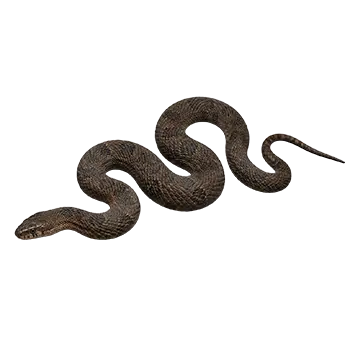

The Brown Water Snake (Nerodia taxispilota) derives its scientific name from the Greek words "neros" (flowing) and "dia" (through), referencing their aquatic nature, while "taxispilota" combines Latin roots meaning "arranged spots," describing their distinctive pattern of dark blotches arranged in rows. This species belongs to the genus Nerodia, a group of non-venomous North American water snakes comprising approximately ten species, all sharing semi-aquatic lifestyles and occupying freshwater habitats throughout eastern North America.
Within herpetological communities and among field observers, this species is known primarily as the Brown Water Snake, though regional variations include Banded Water Snake, Water Pilot, and occasionally Moccasin (a misleading name causing dangerous confusion with venomous cottonmouths). Some references list it as the Southern Water Snake, though this name more properly applies to Nerodia fasciata. The species lacks the geographic subspecies designation, being recognized as monotypic—a single species without formally recognized subspecies despite some regional pattern and size variations across its range.
The common confusion between Brown Water Snakes and venomous cottonmouths (Agkistrodon piscivorus) leads to unnecessary persecution of these harmless snakes throughout their range. Both species inhabit similar aquatic environments in the Southeast, and superficial resemblance causes many Brown Water Snakes to be killed by people mistaking them for dangerous cottonmouths. However, clear differences exist: Brown Water Snakes have round pupils (cottonmouths have vertical elliptical pupils), lack the facial pit organs characteristic of pit vipers, display distinct banding patterns (cottonmouths are more uniformly colored as adults), and behave differently when threatened (water snakes typically flee while cottonmouths often stand their ground). Education about proper identification could significantly reduce unwarranted killing of these ecologically valuable serpents.