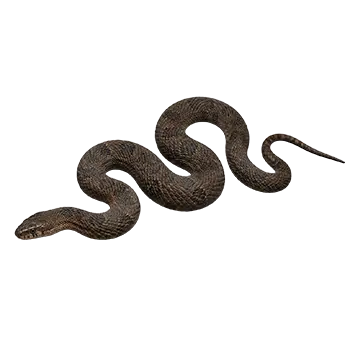

Brown Water Snakes (Nerodia taxispilota) reach full physical maturity between two and four years of age, with males typically maturing earlier at a smaller size than females. Adult males generally measure between thirty and forty-two inches in total length, while adult females commonly reach forty to fifty-five inches, with exceptional individuals exceeding sixty inches. This pronounced sexual size dimorphism is characteristic of the genus Nerodia and becomes unmistakable once the animals are fully grown. Adult body mass varies considerably with season and reproductive condition, but a healthy, non-gravid adult female typically weighs between one and two pounds, while males are proportionally lighter.
The adult body form is stout, muscular, and heavily keeled, giving the animal a distinctly rough-textured appearance when viewed up close. The dorsal coloration consists of a series of dark brown to nearly black squarish blotches arranged along a lighter brown or tan background, though in many adult specimens the overall appearance darkens to the point where the blotch pattern becomes difficult to discern without close inspection. The ventral surface is typically yellow to cream-colored with dark brown or black crescent-shaped markings that become denser and more irregular toward the tail. The head is broad and distinctly wider than the neck, a feature that frequently causes this harmless species to be confused with venomous cottonmouths (Agkistrodon piscivorus) by the general public.
Once an adult Brown Water Snake has reached its full size, growth effectively ceases, and the shed cycle slows accordingly. Adult specimens typically shed every six to ten weeks under stable conditions, compared to the more frequent shedding observed during the rapid growth phases of the juvenile period. The cessation of growth does not mean the animal's nutritional needs are eliminated; rather, caloric intake shifts from fueling growth to maintaining body condition, supporting immune function, and in reproductively active females, building the energy reserves needed for gestation.
Assessing body condition in adult Brown Water Snakes requires familiarity with the species' naturally heavy build. A healthy adult should have a rounded, full body cross-section without visible spine or rib outlines along the dorsal surface. The body should feel firm and muscular when handled, not soft or flaccid. Conversely, an overweight adult will appear unnaturally distended between the keeled scale rows and may have visible fat deposits along the lower jaw and around the cloaca. Maintaining proper body condition throughout adulthood is one of the most important factors in long-term health and longevity.