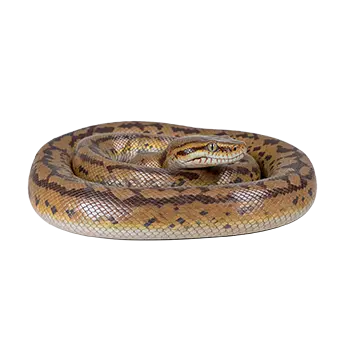

The juvenile stage of an Argentine Rainbow Boa begins at roughly three to four months of age, once the neonate has established a consistent feeding pattern, completed several successful shed cycles, and demonstrated steady weight gain. By this point the snake will have grown from its birth length of ten to fifteen inches to approximately eighteen to twenty-four inches, and its body will have filled out noticeably from the slender proportions of a newborn. The transition from neonatal care to juvenile husbandry is gradual rather than abrupt, but the increased size and activity level of the growing snake necessitates meaningful changes to enclosure design, prey size, and handling approach.
Juvenile Argentine Rainbow Boas are active, curious, and increasingly confident explorers of their environment. Where neonates tend to remain hidden for much of the day, juveniles begin to emerge more frequently during the crepuscular hours and may be observed cruising the perimeter of their enclosure, investigating new objects, and testing the security of lids and ventilation openings. This increased activity is a normal expression of the species' natural foraging behavior and should be encouraged through an enclosure that provides both security and enrichment.
The juvenile period is also when the Argentine Rainbow Boa's characteristic temperament begins to solidify. Individuals that received consistent, gentle handling during the neonatal stage will typically continue to be calm and manageable as juveniles. Those that were handled infrequently or roughly may display more defensive behaviors, including tail buzzing, musking, and striking, though these responses can still be reduced with patient, regular interaction. The juvenile stage represents a critical window for socialization, as behavioral patterns established during this period tend to persist into adulthood.
Keepers should begin planning for the eventual upgrade to an adult-sized enclosure during the juvenile stage, even if the snake has not yet outgrown its current housing. Argentine Rainbow Boas grow steadily throughout the juvenile period and can reach two to three feet in length by the end of their first year. Waiting until the snake is visibly cramped before upgrading creates unnecessary stress and can inhibit natural behavior. A proactive approach to enclosure scaling ensures that the snake always has adequate space to thermoregulate, exercise, and express its full behavioral repertoire.