
Argentine Rainbow Boas reach physical maturity between three and four years of age, though the exact timeline varies with genetics, feeding regimen, and overall husbandry quality. A fully mature adult typically measures between four and five and a half feet in total length, with females averaging slightly longer and heavier-bodied than males. The distinction between a late sub-adult and a fully mature adult is gradual rather than sharply defined, but once growth has slowed to less than an inch or two per year and the snake has reached a stable body weight that remains consistent between meals, the animal can be considered fully grown.
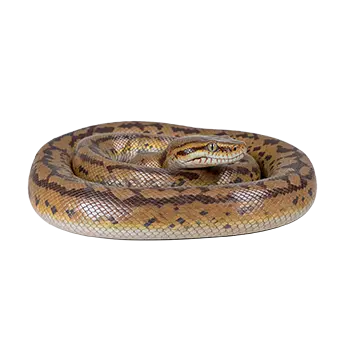
The adult Argentine Rainbow Boa displays the subspecies' characteristic muted coloration, which differs markedly from the bold reds and oranges seen in Brazilian Rainbow Boas. Typical adult coloration features a pale tan, silver, or light brown ground color overlaid with darker brown or charcoal dorsal saddles and lateral ocelli. The pattern tends to fade or become less defined with age in some individuals, while others retain crisp patterning throughout their lives. Regardless of pattern intensity, the hallmark iridescent sheen is present in healthy adults and is most visible under indirect natural light or LED illumination.
Adult body proportions in the Argentine Rainbow Boa reflect a robust, muscular build suited to a terrestrial lifestyle. The body is cylindrical and moderately heavy for its length, with a distinct head that is slightly wider than the neck. The prehensile tail retains its gripping function throughout life, and adults frequently anchor themselves with their tails when exploring elevated structures or during handling. The ventral surface is smooth and clean in healthy specimens, ranging from cream to pale yellow, and any discoloration of the belly scales warrants investigation.
Sexual maturity often coincides with or slightly precedes full physical maturity. Males may begin exhibiting breeding-related behaviors such as seasonal restlessness and appetite reduction as early as eighteen to twenty-four months of age, while females are generally not considered reproductively mature until they have reached at least three feet in length and a body weight of approximately 800 grams or more. Attempting to breed females that have not reached adequate size and weight can compromise their long-term health and result in reproductive complications.