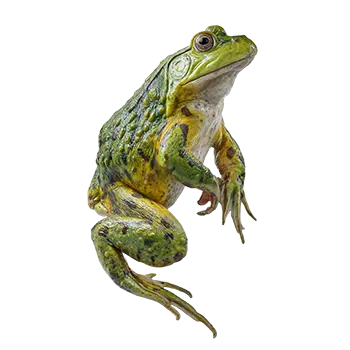

African Bullfrog eggs hatch rapidly compared to many other amphibians, with tadpoles typically emerging within 48 hours of fertilization under optimal conditions. The eggs are laid in shallow, warm water, and the tiny tadpoles that emerge are initially almost transparent, measuring only a few millimeters in length. In captive breeding scenarios, the hatching container should already be prepared and stable before eggs are deposited, with water temperatures held between 78 and 84 degrees Fahrenheit. Disturbing the egg mass during incubation can damage developing embryos, so observation should be conducted visually without agitation.
Newly hatched tadpoles will cling to remnants of the egg jelly or rest motionless at the bottom of the container for the first day or two. During this period, they are absorbing the last of their yolk reserves and their external gills are just beginning to function. It is critical not to introduce food during these initial hours, as uneaten organic matter will foul the water and create dangerous ammonia spikes in a small rearing vessel. The tadpoles require clean, dechlorinated water and gentle aeration, but strong currents must be avoided because the hatchlings are too small and weak to swim against any meaningful flow.
Within the first 48 to 72 hours post-hatching, the tadpoles will begin free-swimming and actively searching for food. This transition is unmistakable, as the previously sedentary larvae will suddenly be distributed throughout the water column rather than clustered together at the bottom. At this point, you will notice the external gills becoming more prominent and the tail fin developing its characteristic broad shape that provides propulsion. The tadpoles are extremely fragile during this window, and any sudden changes in water temperature, pH, or chemical composition can result in mass die-offs.
One critical aspect of early African Bullfrog tadpole care that sets this species apart from many others is the issue of cannibalism. Even at the earliest stages, African Bullfrog tadpoles are opportunistic predators, and larger individuals within a clutch will readily consume their smaller siblings. If you are rearing the entire clutch, separating tadpoles by size as early as possible is essential to minimize losses. Breeders who wish to maximize survival rates often divide clutches into multiple containers based on size from the very beginning.