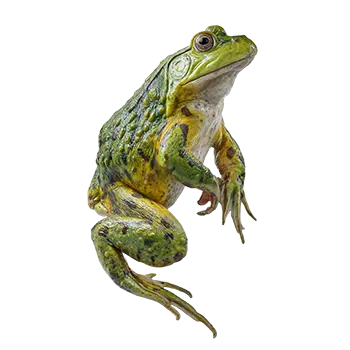

African Bullfrogs reach sexual maturity at different rates depending on sex, with males generally becoming reproductively capable between eighteen months and two years of age, while females may require two to three years. However, physiological capability alone does not determine breeding readiness. Responsible breeders ensure that both the male and the female have reached robust adult body condition before any breeding attempt is made. A male should be at least six inches in snout-to-vent length and display the characteristic broad head, prominent jaw musculature, and yellow throat coloration associated with full maturity. A female should be well-filled without being obese and should have been maintained on a calcium-rich diet for at least a full year before being conditioned for breeding.
Sexual dimorphism in Pyxicephalus adspersus is among the most pronounced of any frog species, and correctly identifying the sex of prospective breeders is the essential first step. Males are dramatically larger than females, often weighing two to three times as much, and possess the bright yellow or mustard-colored submandibular region that is absent in females. The odontoid projections on the lower jaw are more developed in males, and males vocalize readily during the warm season with a deep, booming call that females do not produce. Females are smaller, lack the bright throat coloring, and tend to have smoother, less muscular jaw profiles.
The health status of both prospective breeding animals must be verified before initiating any conditioning protocol. A pre-breeding veterinary examination should include a physical assessment, fecal parasite screening, and ideally blood work to confirm that organ function is normal. Breeding places significant physiological demands on both sexes, particularly females who must mobilize substantial calcium and energy reserves for egg production. Attempting to breed a female that is parasitized, calcium-deficient, or underweight can result in dystocia, metabolic collapse, or death.
Breeders should also confirm that the genetic backgrounds of the male and female are unrelated to the greatest extent possible. While comprehensive pedigree records are less common in amphibian keeping than in mammal breeding, obtaining animals from different sources or different bloodlines reduces the risk of inbreeding depression, which can manifest as reduced clutch viability, developmental abnormalities in offspring, and decreased overall fitness in subsequent generations.