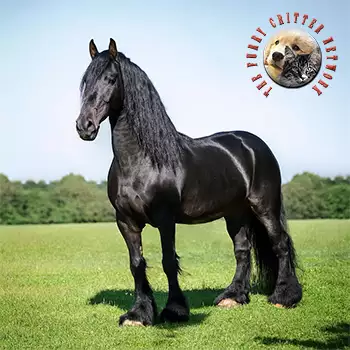

Growth & Physical Development

The Friesian is a late-maturing breed, and understanding its growth trajectory is essential for making sound management decisions during the juvenile and adolescent years. Most Friesians are weaned between four and six months of age, and the transition from nursing to independent feeding marks the beginning of a prolonged growth period that continues well into the horse's fourth or fifth year. While a Friesian may appear physically impressive at two or three years old, its skeletal system, particularly the growth plates in the long bones, is far from fully developed.

During the first year after weaning, the young Friesian will experience rapid growth spurts that can make it appear gangly and unbalanced. The hindquarters often grow faster than the front end, creating a temporarily downhill appearance that is entirely normal. These growth phases place significant demands on the developing skeleton, and overfeeding during this period can lead to developmental orthopedic diseases such as osteochondritis dissecans or physitis. Maintaining a steady, moderate growth rate is far healthier than pushing for maximum size.

Regular farrier care becomes critically important during the juvenile period. The hooves of a young Friesian grow quickly and can develop imbalances that affect the alignment of the entire limb if left untrimmed. A skilled farrier should evaluate the young horse every six to eight weeks, adjusting the trim to support correct limb development. Friesians are known for their dense, luxuriant feathering around the fetlocks, and this feathering must be monitored for moisture retention that can lead to skin irritation or dermatitis.

By the time a Friesian reaches two years of age, it will have achieved roughly 90 percent of its adult height but only about 75 percent of its adult weight. The remaining muscle development and bone density accumulation occur gradually over the following two to three years. Resist the temptation to begin serious riding or driving work too early, as the immature skeleton cannot safely bear the stresses of a rider or harness until the growth plates have closed.

Nutrition & Diet Transition

The weaning period is a nutritionally vulnerable time for any young horse, and the Friesian's substantial frame and dense bone structure make proper nutrition especially important. The transition from mare's milk to a diet of forage and concentrate should be gradual and carefully managed. A high-quality hay, ideally a mix of grass and a modest proportion of legume hay, should form the foundation of the weanling's diet. Free-choice access to good forage supports healthy gut function and provides the fiber necessary for proper digestive development.

Concentrate feeds designed specifically for growing horses provide the balanced vitamins, minerals, and protein that forage alone may not supply in adequate quantities. Calcium-to-phosphorus ratios are particularly important during skeletal development, and a well-formulated growth feed ensures these minerals are present in the correct proportions. Avoid feeding adult horse feeds to young Friesians, as these products are not formulated to support the unique demands of a growing skeleton and can create dangerous mineral imbalances.

Friesians have a reputation for being easy keepers, meaning they tend to maintain or gain weight readily on relatively modest rations. This trait, while convenient in adulthood, can be problematic during the juvenile period if it leads to overfeeding. An overly fat young horse is not a healthy young horse. Excess weight places unnecessary stress on developing joints and growth plates and increases the risk of metabolic and orthopedic problems. Body condition scoring should be performed regularly, aiming for a score that reflects healthy growth without excessive fat deposits over the ribs, crest, or hindquarters.

Fresh, clean water must be available at all times. Young horses that are active and growing have higher water requirements than many owners realize, particularly during warm weather or when fed primarily dry hay. A trace mineral salt block or loose salt should also be accessible to encourage adequate water intake and replenish electrolytes lost through normal activity.

Behavioral Changes

The juvenile and adolescent period brings significant behavioral shifts as the young Friesian begins to develop independence, test boundaries, and establish its place in the social hierarchy. Weaning itself is often the first major behavioral challenge, as the foal must adjust to life without the constant security of its dam. Some weanlings adapt quickly, while others experience a period of anxiety and vocalization that can last several days. Pairing a newly weaned foal with a calm, experienced companion horse eases this transition considerably.

As the young Friesian matures, it will begin to exhibit more assertive and sometimes challenging behaviors. Colts, in particular, may start to display stallion-like tendencies including mounting, nipping, and posturing with other horses. These behaviors are hormonally driven and entirely natural, but they must be managed with consistent, firm, and fair handling to prevent them from becoming dangerous habits. Fillies may also become more opinionated and mare-ish as they approach sexual maturity, cycling for the first time as early as 12 to 18 months of age.

Friesians are inherently sensitive and intelligent horses, and their adolescent behavior often reflects a genuine desire to understand what is being asked of them rather than outright defiance. Handlers who respond to testing behavior with patience and clarity tend to produce far better results than those who resort to harsh correction. The young Friesian is building its understanding of human interaction during this period, and every encounter shapes its future attitude toward work and handling.

Play behavior remains an important part of adolescent development. Young Friesians are often exuberant and athletic in turnout, running, bucking, and engaging in mutual grooming and mock sparring with pasturemates. This play is not misbehavior. It serves essential functions in developing coordination, strength, social skills, and emotional resilience. Adequate turnout with compatible companions provides an outlet for this energy and significantly reduces behavioral problems under saddle or in hand.

Training Priorities

Groundwork is the foundation of all future training for the young Friesian, and the juvenile period is the ideal time to establish essential skills without the physical demands of ridden work. Halter training should be well established by the time of weaning, and the months that follow provide an excellent opportunity to refine leading manners, teach the horse to stand quietly for grooming and veterinary care, and introduce basic voice commands. Every training session should be brief, positive, and consistent.

As the Friesian enters its yearling and two-year-old years, more structured groundwork can be introduced. Lunging in a round pen or on a line, ground driving with long reins, and desensitization exercises all prepare the horse mentally and physically for the eventual introduction of saddle or harness. Friesians excel in both dressage and driving, and early ground driving is particularly valuable for this breed, as it teaches the horse to respond to rein aids and voice commands while building the topline muscles that will be essential for carrying a rider.

The timing of backing or starting a Friesian under saddle is a decision that should be based on the individual horse's physical and mental maturity rather than a fixed calendar date. Many Friesian breeders and trainers prefer to wait until the horse is at least three and a half to four years old before introducing ridden work, recognizing that the breed's late skeletal maturity means earlier backing risks long-term soundness. Light, short training sessions with a lightweight rider are appropriate in the initial stages, with gradual increases in duration and intensity as the horse demonstrates readiness.

Consistency and fairness are the cornerstones of effective Friesian training. These horses are remarkably perceptive and quickly learn to distinguish between handlers who are predictable and those who are not. Establishing clear expectations and rewarding effort builds a partnership built on mutual trust. Avoid drilling or repetitive exercises that bore the intelligent Friesian mind, and instead incorporate variety and mental challenges into every session.

Exercise & Activity

Turnout is the most important form of exercise for a juvenile Friesian. Daily access to a safe, appropriately sized paddock or pasture allows the young horse to move freely, develop natural balance and coordination, and build the cardiovascular fitness that will support future athletic endeavors. The self-directed movement that occurs during turnout, including walking, trotting, cantering, and the sudden bursts of speed that characterize playful young horses, provides precisely the type of low-impact, varied exercise that growing bones and joints need.

Forced exercise programs are inappropriate for young Friesians whose skeletal systems are still developing. Lunging on small circles places significant stress on immature joints, and prolonged trotting on hard surfaces can contribute to concussive injuries in the developing hoof and limb. When structured exercise is introduced, it should be brief, conducted on good footing, and varied in direction and gait. Hand walking on trails, ponying alongside a calm older horse, and free schooling in a large arena are all appropriate activities that build fitness without overtaxing the young horse's body.

Swimming and water therapy, where available, can be excellent low-impact conditioning tools for young Friesians. Water provides resistance that builds muscle without the concussive forces of ground-based exercise. If natural water features such as ponds or shallow streams are accessible, allowing the young horse to wade and play in water also serves as valuable desensitization and can become a positive part of the horse's routine.

As the Friesian approaches three years of age and structured training begins in earnest, exercise sessions should be designed with careful attention to duration and intensity. The young Friesian's enthusiasm and willingness can mask fatigue, so it falls to the handler to recognize when the horse has done enough. Short, focused sessions of 20 to 30 minutes are far more productive and physically appropriate than longer, unfocused work that risks overloading the still-developing musculoskeletal system.

Gelding Considerations

The decision of whether and when to geld a young Friesian colt is one of the most significant management choices an owner will face during the juvenile period. The vast majority of Friesian colts that are not destined for an approved breeding program should be gelded, as intact stallions require specialized handling, housing, and management that most private owners are not equipped to provide. Gelding produces a calmer, more manageable horse that is safer to handle and more suitable for a wide range of riding and driving disciplines.

The timing of gelding is a topic of ongoing discussion among Friesian owners and breeders. Some veterinarians and breeders advocate early gelding, as young as six months to a year, citing easier recovery and reduced risk of stallion-like behavioral patterns becoming entrenched. Others prefer to wait until the colt is 18 months to two years old, allowing additional testosterone-driven growth that may contribute to the characteristic crested neck and overall substance that Friesian enthusiasts value. Your veterinarian can help assess the individual colt's development and recommend an optimal timeline.

The gelding procedure itself is routine and generally straightforward when performed by an experienced equine veterinarian. Recovery is typically uneventful, with most young horses returning to normal activity within a few days to two weeks. Post-surgical management includes monitoring the incision site for swelling, discharge, or excessive heat, and ensuring the horse has adequate turnout or hand walking to promote drainage and prevent complications. Fly control during the healing period is particularly important.

For the small number of Friesian colts that will be retained as breeding stallions, the juvenile period requires a different management approach entirely. These colts must be handled with the understanding that they will develop stallion behaviors and physical characteristics that demand experienced, confident management. Early enrollment in breed inspection and approval programs should be considered, as these processes determine whether a young stallion meets the standards required for registered Friesian breeding.

Socialization & Exposure

The juvenile period represents a golden window for socialization that shapes the Friesian's temperament and confidence for the rest of its life. Young Friesians that are exposed to a wide variety of experiences, environments, and stimuli during this formative stage become more adaptable, resilient, and pleasant adult horses. Conversely, horses that are kept in restrictive, monotonous environments during their formative years often develop anxieties and reactivity that are difficult to address later.

Group turnout with compatible horses of similar age provides the richest social education available. In a herd setting, the young Friesian learns to navigate social hierarchies, interpret body language, share resources, and resolve minor conflicts without escalation. These skills translate directly to the horse's ability to cope with new situations, travel calmly, and integrate smoothly into different group dynamics throughout its life. If same-age companions are not available, turnout with a sensible, tolerant older horse serves a similar purpose.

Environmental exposure should be systematic but pressure-free. Introduce the young Friesian to experiences it will encounter as an adult: trailer loading, clipping, bathing, hosing, the sound of traffic, livestock, dogs, bicycles, and flags or banners that flutter in the wind. Each new experience should be presented at a distance and intensity that allows the horse to observe and process without feeling overwhelmed. Gradually decrease the distance or increase the intensity as the horse demonstrates comfort and curiosity rather than fear.

Travel and off-property experiences are particularly valuable for young Friesians. Loading on a trailer, traveling to a new location, and navigating an unfamiliar environment build the mental toughness and adaptability that are hallmarks of a well-prepared adult horse. Even short trips to a neighboring farm or a local arena can provide rich learning opportunities. The goal is not to overwhelm the young horse but to build a catalog of positive experiences that it can draw on when encountering novel situations in the future.

Always consult a qualified professional before making any health-related decisions. This content is provided for informational reference only and should not replace professional guidance specific to your animal.