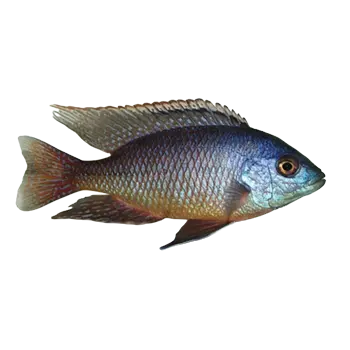

The juvenile stage in Haplochromis cichlids begins once the fry have reached roughly one inch in length, typically around six to eight weeks after release. This is a period of dramatic physical transformation as the fish transition from nondescript fry into recognizable young cichlids. Body proportions begin to shift, with the head broadening and the dorsal fin becoming more prominent. Growth during this phase can be remarkably fast when conditions are favorable, with some individuals gaining a quarter inch or more per week.
One of the most exciting aspects of the juvenile stage is the gradual emergence of adult coloration. Male Hap cichlids in particular begin to show flashes of their eventual vibrant blues, yellows, or reds, though full color expression will not occur until sexual maturity. Females tend to remain more subdued in color, and at this stage it is often still difficult to sex most individuals with certainty. Venting or observing egg spot development on the anal fin can sometimes provide early clues.
Skeletal and muscular development accelerates during the juvenile period, and you may notice that the fish become noticeably stronger swimmers. They begin to display the characteristic speed and agility that Hap cichlids are known for in the wild, where they are active open-water predators or foragers. Providing adequate swimming space is important to support proper muscular development.
Monitor growth rates across the group and watch for individuals that fall significantly behind. Stunted growth at this stage can indicate chronic stress, poor nutrition, or underlying health problems. Early intervention through improved diet or separation from overly dominant tankmates can often get a lagging juvenile back on track.