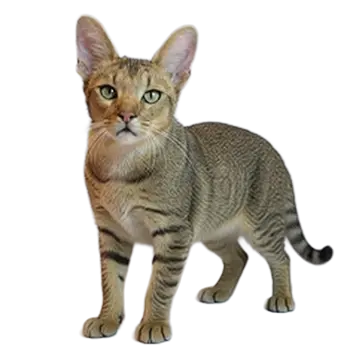

Growth & Physical Development

The juvenile period for a Chausie is a time of extraordinary physical transformation. Between three and twelve months of age, these kittens undergo a growth trajectory that reflects their jungle cat heritage, often gaining weight and length at a pace that surprises even experienced cat owners. A Chausie kitten that weighed barely a pound at weaning may reach eight to twelve pounds by six months and continue filling out well beyond the first year. Unlike many domestic breeds that reach adult size by twelve months, Chausies can continue to develop muscle mass and skeletal density until they are two to three years old.

During the juvenile stage, the Chausie's distinctive body proportions become increasingly apparent. The long legs, deep chest, and elongated torso that define the breed's athletic silhouette begin to emerge clearly. The ears grow proportionally larger and may appear oversized relative to the head before the skull catches up, giving adolescent Chausies a characteristically alert and wild appearance. The coat transitions from its kitten softness to the dense, short adult texture, and color patterns such as brown ticked tabby or solid black become more defined.

Bone and joint development deserve particular attention during this period. Rapid growth places significant stress on developing skeletal structures, and providing adequate nutrition without overfeeding is a delicate balance. Overweight juvenile cats face a higher risk of developmental orthopedic issues. Regular weigh-ins and body condition assessments help ensure the kitten is growing at a healthy rate without carrying excess body fat.

Monitor the kitten's gait and movement patterns as it grows. Any persistent limping, reluctance to jump, or stiffness after rest could indicate a developmental concern that should be evaluated by a veterinarian. Most Chausies are naturally graceful and agile movers, so any departure from this norm warrants attention.

Nutrition & Diet Transition

Feeding a juvenile Chausie correctly is one of the most consequential decisions an owner makes during this life stage. The transition from kitten food to a diet that supports sustained growth without excess requires careful planning. High-quality, protein-rich kitten food should remain the foundation of the diet until approximately twelve months of age, as the caloric density and nutrient profile of kitten formulations support the demands of rapid development.

Chausies have a well-documented tendency toward digestive sensitivity, a trait linked to their hybrid ancestry. Many Chausies have shorter intestinal tracts than fully domestic cats, which can affect how efficiently they process certain ingredients. Grain-heavy foods and those with excessive fillers may cause loose stools, gas, or poor nutrient absorption. A diet centered on high-quality animal proteins with minimal plant-based fillers typically produces the best results in this breed.

Feeding frequency should transition from four meals per day at weaning to three meals by four months and two meals by six to eight months. Free feeding is generally not recommended for Chausies, as their active nature and hearty appetite can lead to overconsumption. Measured portions at consistent times help regulate intake and make it easier to notice changes in appetite that might signal health issues.

Fresh water should be available at all times, and many Chausies show a preference for running water. A pet fountain can encourage adequate hydration, which supports kidney health and digestion. Treats should make up no more than ten percent of the daily caloric intake and should be chosen for their nutritional quality rather than convenience. Avoid giving dairy products, as most cats are lactose intolerant and Chausies may be especially sensitive.

Behavioral Changes

The adolescent Chausie is a study in controlled chaos. As these kittens mature, their behavior becomes an increasingly vivid expression of the breed's wild ancestry combined with their domestic socialization. Between four and ten months, owners can expect a surge in energy, curiosity, and independence that tests boundaries and demands patience. Chausies are among the most active and intelligent of all cat breeds, and their juvenile period amplifies these traits to their peak intensity.

Territory marking behavior may begin to emerge during adolescence, particularly in intact males. Scratching, urine spraying, and increased rubbing against furniture and doorframes are normal territorial behaviors, but they can become problematic if not managed. Providing ample scratching surfaces in vertical and horizontal orientations helps redirect the scratching instinct. If spraying becomes an issue, consult a veterinarian about the appropriate timing for neutering.

Chausies at this age also develop strong opinions about their environment and routine. They may vocalize more than they did as young kittens, using a distinctive range of chirps, trills, and meows to communicate demands. Some adolescent Chausies become counter surfers, door dashers, or cabinet openers, displaying problem-solving abilities that rival those of dogs. These behaviors are not defiance but rather expressions of intelligence and energy that need appropriate outlets.

Social dynamics within the household may shift during adolescence as well. A Chausie that was once content to follow other pets around may begin asserting dominance or testing social hierarchies. Supervise interactions between the adolescent Chausie and other animals in the home, and intervene calmly if play escalates into aggression. Consistent routines, enrichment, and interactive play sessions help channel adolescent energy in positive directions.

Training Priorities

Training a juvenile Chausie is both a necessity and a rewarding experience. This breed's intelligence and desire for engagement make them highly trainable compared to many cat breeds, but their independent streak means that training must be approached with patience, consistency, and creativity. The most effective training methods rely on positive reinforcement, using treats, play, and praise to reward desired behaviors rather than punishment to discourage unwanted ones.

Litter box habits should be well established by the juvenile stage, but reinforcement may be needed during the transition to a larger box or a new litter substrate. Chausies are generally fastidious about their elimination habits, and any regression in litter box use should be investigated as a potential sign of stress, territorial insecurity, or a medical issue rather than simple disobedience.

Teach recall and basic commands early. Many Chausies can learn to come when called, sit on command, and even walk on a leash with proper harness training. Leash training is particularly valuable for this breed, as it provides a safe outlet for their desire to explore the outdoors without the risks of unsupervised roaming. Begin with short indoor sessions wearing a well-fitted harness, and gradually transition to supervised outdoor excursions in low-traffic areas.

Clicker training is an excellent method for Chausies, as the precise timing of the click helps these quick-minded cats make connections between behavior and reward rapidly. Short, frequent training sessions of five to ten minutes produce better results than longer, less frequent ones. End each session on a positive note to maintain the cat's enthusiasm for learning. The goal is to build a cooperative relationship that satisfies the Chausie's need for mental stimulation while establishing household boundaries.

Exercise & Activity

A sedentary lifestyle is fundamentally incompatible with the Chausie breed. These cats are built for movement, and the juvenile period is when their need for physical activity reaches its highest intensity. An under-exercised adolescent Chausie will find its own entertainment, and that entertainment often comes at the expense of furniture, curtains, and household order. Proactive exercise planning is essential for preserving both the cat's wellbeing and the owner's sanity.

Interactive play sessions should be offered at least twice daily, each lasting fifteen to thirty minutes. Wand toys, feather teasers, and laser pointers engage the Chausie's predatory instincts and provide vigorous cardiovascular exercise. Rotate toys regularly to prevent boredom, as Chausies quickly lose interest in familiar objects. Puzzle feeders and treat-dispensing toys add a mental challenge to mealtime and can occupy an active kitten for extended periods.

Vertical space is critically important for this breed. Cat trees, wall-mounted shelves, and elevated walkways allow the Chausie to climb, perch, and survey its territory from above, satisfying deep-seated instincts inherited from its jungle cat ancestors. The taller and more complex the climbing structures, the better. A well-designed vertical environment can transform a restless, destructive adolescent into a contented, well-exercised cat.

Some Chausies enjoy water play, and providing a shallow basin or a dripping faucet can offer additional stimulation. Supervised outdoor time in a secure enclosure or on a leash and harness provides enrichment that no indoor activity can fully replicate. The key principle is variety. A Chausie that has access to diverse forms of physical and mental engagement is far less likely to develop behavioral problems rooted in boredom and frustration.

Spay/Neuter Considerations

The decision about when and whether to spay or neuter a juvenile Chausie should be made in consultation with a veterinarian who understands the breed's unique characteristics. For most pet Chausies that will not be part of a responsible breeding program, spaying or neutering is strongly recommended. The procedure eliminates the risk of certain reproductive cancers, reduces hormonally driven behaviors such as spraying and roaming, and prevents accidental litters that contribute to pet overpopulation.

Timing is a subject of ongoing discussion within the veterinary community. Traditional recommendations suggest spaying or neutering between four and six months of age, before the onset of sexual maturity. However, some veterinarians and breeders of large or slow-maturing breeds advocate for waiting until the cat is closer to physical maturity, arguing that reproductive hormones play a role in skeletal and muscular development. For Chausies, which continue to grow for two to three years, this consideration may be particularly relevant.

Discuss the pros and cons of early versus delayed sterilization with the veterinarian, taking into account the individual kitten's health, growth trajectory, and living situation. If the decision is made to delay the procedure, owners must be prepared to manage the behavioral and logistical challenges of living with an intact adolescent cat. Intact males may spray, vocalize loudly, and attempt to escape, while intact females will cycle into heat repeatedly, attracting attention from neighborhood males and displaying restless, vocal behavior.

Regardless of timing, the surgical procedure itself is routine and carries a low risk of complications in healthy cats. Post-operative care includes restricting activity for seven to ten days, monitoring the incision site for signs of infection or dehiscence, and ensuring the cat does not lick or chew at the surgical area. An recovery collar or surgical suit can help protect the incision during healing.

Socialization & Exposure

Continued socialization during the juvenile stage builds on the foundation laid during the neonatal period and is essential for producing a well-adjusted adult Chausie. While the most sensitive socialization window closes around seven to nine weeks, juvenile cats remain impressionable and responsive to new experiences well into their first year. An adolescent Chausie that is exposed to a wide range of people, environments, and stimuli in a positive context will grow into a more confident and adaptable adult.

Introduce the juvenile Chausie to visitors of varying ages and appearances in a controlled manner. Allow the cat to approach new people at its own pace, and encourage visitors to offer treats or engage in gentle play. Avoid forcing interactions, as overwhelming an adolescent cat can create lasting aversions. The goal is to teach the Chausie that unfamiliar people are a source of positive experiences rather than threats.

Exposure to different environments can include car rides, visits to cat-friendly stores, or supervised time in a secure outdoor enclosure. Each new experience should be introduced gradually, with the cat having the option to retreat to a familiar carrier or safe space if it becomes overwhelmed. Pairing novel experiences with treats and calm praise reinforces positive associations.

If other pets are present in the household, the juvenile period is an important time to solidify interspecies relationships. Supervised play sessions between the Chausie and compatible dogs or cats help establish social bonds and communication patterns. Monitor body language carefully and separate animals at the first sign of genuine stress or aggression. A Chausie that learns to coexist peacefully with other animals during adolescence is far more likely to maintain those relationships throughout adulthood.

Always consult a qualified professional before making any health-related decisions. This content is provided for informational reference only and should not replace professional guidance specific to your animal.