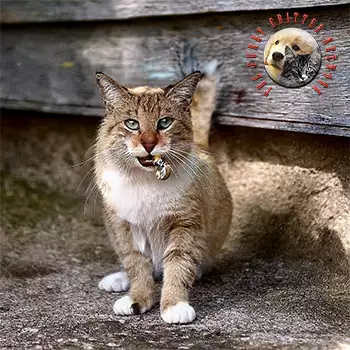

The First 24 Hours

Ceylon kittens enter the world small, blind, and entirely dependent on their mother. This breed originated from the free-roaming cats of Sri Lanka and retains a hardy constitution, but newborns are as vulnerable as any domestic kitten during the critical first day. A typical Ceylon litter ranges from three to five kittens, each weighing between 75 and 110 grams at birth. The queen will sever the umbilical cords and clean each kitten herself in most cases, but you should observe quietly to confirm every kitten is breathing clearly and that no birth membranes remain over the face.

The single most important event in the first hours is the intake of colostrum. This first milk delivers maternal antibodies that protect the kittens against infection during the weeks before their own immune systems become functional. Ceylon queens are typically attentive mothers with strong nursing instincts, a trait likely reinforced through generations of natural selection in their native environment. Watch to confirm each kitten finds a nipple and begins suckling within the first two hours. A kitten that cannot latch or that is pushed aside by stronger littermates may need gentle repositioning or supplemental feeding.

Keep the whelping area warm, dim, and undisturbed. Newborn Ceylon kittens cannot regulate their own body temperature and depend on the mother and their littermates for warmth. The ambient temperature in the nesting box should be maintained between 85 and 90 degrees Fahrenheit for the first week. Drafts, direct sunlight, and household noise should all be minimized. The queen needs a calm environment to bond with her litter and establish reliable nursing rhythms without interruption.

Record each kitten's birth weight using a digital kitchen scale accurate to one gram. Daily weighing over the first two weeks is the most dependable method for confirming adequate milk intake. A healthy Ceylon newborn should gain roughly seven to ten grams per day. Any kitten that fails to gain weight or drops more than ten percent of its birth weight within the first 24 hours warrants an immediate veterinary consultation. Early intervention at this stage can be the difference between a kitten that thrives and one that fades.

Nursing and Nutrition

Mother's milk is the exclusive food source for Ceylon kittens during the first three to four weeks of life. Healthy newborns nurse every one to two hours during the initial week, with intervals gradually stretching to every three or four hours as stomach capacity increases. The queen's nutritional needs are substantial during this period. Feed her a high-quality kitten-formula food that provides the elevated calories, protein, and fat she requires to sustain milk production while recovering from delivery.

In situations where the queen cannot nurse — whether due to mastitis, inadequate milk supply, illness, or rejection of the litter — you must step in with bottle feeding immediately. Use a commercially prepared kitten milk replacer and a small nursing bottle or oral syringe designed for neonatal kittens. Never substitute cow's milk, goat's milk, or human infant formula, as the lactose content and nutritional profile are wrong for cats and will cause diarrhea that can rapidly dehydrate a tiny kitten. Feed the kitten on its belly, never on its back, to prevent aspiration into the lungs.

The weaning process typically begins around three to four weeks of age. Introduce a shallow dish containing a gruel made from high-quality wet kitten food mixed with kitten milk replacer until it reaches a soupy consistency. Ceylon kittens tend to be curious and investigative by nature, and most will begin exploring the food dish with minimal encouragement. Allow them to set the pace. Gradually reduce the liquid content of the gruel over the next two to three weeks until kittens are eating moistened solid food. The mother will naturally reduce nursing frequency as the kittens begin consuming supplemental food.

Monitor stool consistency throughout the nursing and weaning transition. Normal kitten stools are soft, formed, and yellowish-brown. Watery diarrhea, mucus, blood, or persistent constipation are all signals that something is wrong. Dehydration develops with alarming speed in kittens this small — a single day of diarrhea can become a veterinary emergency. Keep your veterinarian's contact information posted where you can reach it without delay.

Developmental Milestones

Ceylon kittens follow the general feline developmental timeline with some variation between individuals. During the first week, life consists almost entirely of sleeping and nursing. Their eyes are sealed, their ear canals are closed, and their only locomotion is a slow, paddle-like crawl toward warmth and the scent of milk. By the end of the first week, you should notice a modest but consistent weight gain and slightly more vigorous nursing behavior.

The eyes begin to open between seven and fourteen days of age. All kittens are born with blue eyes, and the Ceylon's characteristic eye color — typically ranging from green to gold — develops gradually over the following months. The ear canals open around the same time, and kittens start reacting to sounds in their environment. Motor coordination improves rapidly during the second and third weeks. Kittens progress from unsteady wobbling to deliberate, if clumsy, walking. The Ceylon's compact, muscular build becomes apparent even at this early stage, with proportionally strong hindquarters visible as they begin to push themselves upright.

Between three and four weeks, Ceylon kittens begin exploring beyond the nesting box in earnest. Deciduous teeth start to emerge, which aligns with the introduction of semi-solid food. Play behavior appears — kittens will bat at each other, pounce on bedding, and stalk imaginary prey. The breed's natural agility and athleticism are evident early. Their movements are quicker and more coordinated than many breeds at the same age, reflecting the active, resourceful temperament that defines the Ceylon.

By five to six weeks, kittens are fully mobile, eating a combination of mother's milk and solid food, and learning to use the litter box. Ceylon kittens are quick learners and typically take to the litter tray with minimal guidance when provided with a shallow, easily accessible box. Social play becomes increasingly complex as kittens practice hunting sequences, establish play hierarchies, and develop the social intelligence that makes this breed such an engaging companion.

Temperature and Environment

Thermoregulation is one of the most critical factors in neonatal kitten survival, and the Ceylon is no exception despite its tropical ancestry. Newborn kittens cannot shiver effectively or generate sufficient body heat on their own until approximately three weeks of age. Hypothermia remains the leading cause of neonatal kitten death, and it can develop within minutes if a kitten becomes separated from the mother and littermates in a cool environment.

Maintain the whelping box temperature at 85 to 90 degrees Fahrenheit during the first week. A heating pad set on low placed beneath one half of the box provides consistent warmth while allowing the queen and kittens to move to the unheated side if they become too warm. Never place kittens directly on an uncovered heating pad — their thin, delicate skin burns easily. Cover the pad with several layers of soft toweling. Alternatively, a ceramic heat emitter mounted safely above the box can provide ambient warmth without the light disturbance of a heat lamp. Reduce the target temperature gradually: approximately 80 degrees during the second week, 75 degrees by the fourth week, and normal room temperature by the fifth or sixth week as the kittens develop the ability to regulate their own body temperature.

The nesting area should be placed in a quiet room away from household traffic, other pets, and sudden noises. Ceylon queens are generally confident mothers, but unnecessary stress can disrupt nursing routines and, in extreme cases, lead to rejection of the litter. Provide clean, soft bedding — fleece pads or cotton towels work well — and change it daily. Avoid loose-weave fabrics or materials with dangling threads that could wrap around tiny limbs or toes.

Ambient humidity matters more than many caregivers realize. Excessively dry air, particularly common in homes with forced-air heating, can irritate delicate respiratory passages and contribute to dehydration. If the environment is notably dry, a small humidifier positioned near but not directly over the nesting area helps maintain comfortable moisture levels. Conversely, avoid dampness in the bedding, which promotes bacterial growth and chilling.

Early Socialization

The primary socialization window for kittens opens at approximately two weeks of age and begins to close around seven weeks, making this period one of the most consequential in a Ceylon kitten's life. Experiences during this window shape the cat's temperament, confidence, and social behavior for years to come. The Ceylon is naturally a sociable and people-oriented breed, but genetics alone do not guarantee a well-adjusted adult. Early, positive exposure to human handling and environmental stimuli is essential.

Begin gentle handling around the end of the second week, once the queen is comfortable with your presence at the nest. Hold each kitten for a minute or two, supporting its body securely, speaking softly, and stroking it with a light touch. Gradually increase handling duration as the kittens grow and become more alert. By the fourth week, kittens should be accustomed to being picked up, turned gently, and touched on their paws, ears, and belly — contact that will make future veterinary examinations and grooming far less stressful for both the cat and the handler.

As kittens become mobile between three and five weeks, expand their sensory world incrementally. Let them hear normal household sounds — conversation, kitchen activity, the television at moderate volume, the distant sound of a vacuum cleaner. Introduce trusted visitors who handle the kittens gently so that unfamiliar humans become a normal part of the environment rather than a source of alarm. Ceylon kittens that receive varied, positive social exposure during this period tend to develop into confident, outgoing adults who adapt readily to new situations.

Interaction with littermates is equally vital. Kittens learn bite inhibition, body language interpretation, and the boundaries of acceptable play through wrestling and chasing with their siblings. A kitten removed from its litter too early — before eight weeks at an absolute minimum, though twelve weeks is strongly recommended — misses critical social lessons that are difficult to teach later. The result is often a cat that bites too hard during play, struggles to read other cats' signals, or displays anxiety in social situations.

Health Screening and Veterinary Care

Schedule a veterinary examination for the queen and her litter within the first 48 hours after birth, particularly if this is a first litter or if the delivery involved any complications. The veterinarian will assess each kitten for congenital abnormalities including cleft palate, heart murmurs, umbilical hernias, and limb deformities. The queen's mammary glands should be checked for signs of mastitis, and her overall recovery from delivery should be evaluated.

The Ceylon is a naturally robust breed with fewer documented hereditary conditions than many pedigreed cats, a consequence of its relatively broad genetic base rooted in the free-roaming cat population of Sri Lanka. However, no breed is entirely free of health risks. Responsible breeders screen for common feline genetic conditions, and knowing the parents' health history helps calibrate the monitoring plan for the litter. Discuss any breed-specific or familial health concerns with your veterinarian at the initial visit.

Deworming typically begins at two to three weeks of age, as intestinal parasites can be transmitted from the queen to her kittens through nursing. The first round of core vaccinations — including feline panleukopenia, calicivirus, and herpesvirus — is generally administered between six and eight weeks of age. Until vaccination begins, kittens depend entirely on maternal antibodies acquired through colostrum for immune protection. Keep the nesting environment clean and limit exposure to other animals and outdoor contaminants during this vulnerable period.

Maintain a daily health log for each kitten that records weight, feeding observations, stool quality, activity level, and any behavioral changes. This log provides your veterinarian with detailed, objective data at each visit and helps you spot subtle trends — a kitten that has been gaining seven grams a day and suddenly plateaus, for example, or one whose stools have gradually loosened over several days. Early detection of problems in neonatal kittens frequently determines outcome.

When to Seek Emergency Care

Despite attentive care, neonatal kittens remain fragile, and conditions can deteriorate with startling speed. Knowing the warning signs that demand immediate veterinary attention is not optional knowledge for anyone caring for a newborn litter. The most urgent red flags in Ceylon newborns include persistent crying that does not resolve with warming and repositioning at the nipple, refusal to nurse for more than two consecutive feeding intervals, measurable weight loss over any 24-hour period, and a body that feels cold or limp when handled.

Continuous, high-pitched crying is a distress signal. While brief vocalization when a kitten is moved or temporarily separated from the mother is normal, prolonged or frantic crying typically indicates hunger, cold, pain, or illness. Check the kitten's temperature by feeling its abdomen and paw pads. A cold kitten must be warmed gradually before attempting to feed it — a chilled kitten cannot digest milk effectively, and feeding a hypothermic kitten can cause aspiration or digestive failure. If warming and re-latching do not resolve the distress, contact your veterinarian immediately.

Diarrhea in a neonatal kitten is always a serious concern. These animals have virtually no fluid reserves, and dehydration from even a single episode of severe diarrhea can become life-threatening within hours. Constipation lasting more than 24 hours is equally concerning, particularly in very young kittens whose elimination depends on the mother's stimulation of the anogenital area. If the queen is not performing this function, you can simulate it by gently stroking the area with a warm, damp cotton ball after each feeding.

Respiratory distress — open-mouth breathing, visible effort to inhale, audible crackling or wheezing, or a blue or pale tint to the gums and tongue — constitutes an emergency. Neonatal pneumonia, whether from aspiration during feeding or from infection, progresses rapidly and requires immediate veterinary intervention. Keep your veterinarian's emergency contact number accessible at all times during the first weeks of life. With newborn kittens, the margin between a minor concern and a crisis is measured in hours, not days.

Always consult a qualified professional before making any health-related decisions. This content is provided for informational reference only and should not replace professional guidance specific to your animal.