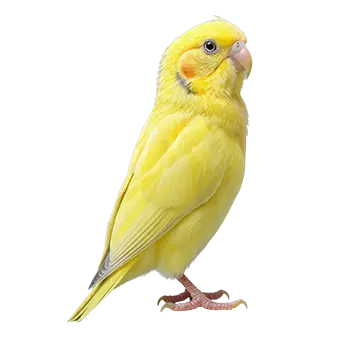

Successful Yorkshire Canary breeding begins months before the first egg is laid, with the careful selection of breeding pairs that have the greatest potential to produce offspring meeting or exceeding the breed standard. The Yorkshire Canary is one of the most prestigious type breeds in the canary fancy, and thoughtful pair selection is what distinguishes a purposeful breeding program from haphazard reproduction. Every pairing decision should be guided by a clear understanding of the breed standard and an honest assessment of each bird's strengths and weaknesses.
The breed standard calls for a large, long-bodied canary standing between six and a half and seven inches in length, held in a bold, upright posture with the legs slightly bent and the body forming a slender, columnar silhouette. The feathers should lie tight and smooth against the body, and the overall impression should be one of elegance, length, and self-assured confidence on the perch. When evaluating potential breeding stock, examine each bird against these criteria and note specific areas where improvement is needed. A hen with excellent length but slightly loose feathering, for example, might be paired with a cock whose feather quality is exceptional even if his length is average.
The principle of compensatory pairing, matching a bird's weaknesses with a partner's strengths, is the most reliable approach to gradual improvement across generations. Avoid pairing two birds that share the same fault, as this entrenches the deficiency in the offspring. Equally, resist the temptation to pair two birds that are both outstanding in the same trait but deficient in different areas, as this often produces youngsters that inherit neither parent's best quality. Experienced Yorkshire Canary breeders maintain detailed records of each bird's show evaluations, parentage, and the outcomes of previous pairings to inform their decisions.
Age and health are critical considerations. Both the cock and the hen should be at least ten to twelve months old before their first breeding season, ensuring they are physically mature and capable of sustaining the demands of reproduction. Birds older than five or six years may still breed successfully, but fertility tends to decline with age, and older hens face increased risk of egg-related complications. Both birds must be in robust health, free of disease, well-feathered, and carrying appropriate body weight before being placed in the breeding cage.
Linebreeding, the practice of mating birds that are related but not immediate siblings, is commonly employed in Yorkshire Canary programs to fix desirable traits within a line. This technique can be highly effective when managed with knowledge and restraint, but it requires careful monitoring for signs of inbreeding depression, including reduced fertility, smaller clutch sizes, lower hatch rates, and weakened immune function in offspring. Introducing unrelated stock of equivalent quality every few generations helps maintain genetic vigor without sacrificing the traits you have worked to establish.