
The Weaning Transition

Weaning represents one of the most consequential developmental passages in a young Yellow-Crowned Amazon's life. This is the period during which the chick transitions from complete dependence on hand-feeding formula or parental feedings to self-sufficient consumption of solid foods. The process typically begins around eight to ten weeks of age and can extend through sixteen weeks or longer, depending on the individual bird's pace. Rushing weaning to meet an arbitrary timeline is one of the most damaging mistakes a caregiver can make, as it can lead to malnutrition, behavioral trauma, and lifelong feeding anxieties.

The weaning process should be abundance-based rather than deprivation-driven. This means that solid foods are introduced and made constantly available while formula feedings continue on a gradually reducing schedule. Begin by offering a diverse array of soft, easily manipulated foods in a shallow dish placed at the chick's level. Chopped fruits such as apple, grape, banana, and papaya are often readily accepted. Warm, softened pellets formulated for Amazon parrots should also be included from the start, as pellets will form the nutritional backbone of the adult diet. Cooked whole grains, small pieces of steamed vegetables, and sprouted seeds round out the weaning plate.

As the chick begins sampling and consuming solid foods in meaningful quantities, formula feedings can be gradually reduced. Most caregivers find that the morning feeding is the last to be dropped, as chicks often wake hungry and appreciate the comfort and caloric density of formula to start the day. Monitor the chick's weight throughout the weaning period with the same rigor applied during the neonatal stage. A modest, temporary weight dip of five to ten percent is common during active weaning and is generally not alarming, but sustained weight loss or a drop exceeding ten percent demands immediate reassessment. The chick may need additional formula support or veterinary evaluation.

Behavioral cues are as important as weight data during this transition. A chick that is weaning successfully will show active interest in the food dish, spend time manipulating and tasting items, and gradually shift from playing with food to purposeful eating. A chick that ignores solid foods entirely, begs persistently for formula well beyond expected timelines, or appears lethargic may be struggling with the transition and should not have formula withdrawn further until the underlying issue is addressed.

Diet & Nutritional Needs

Once a juvenile Yellow-Crowned Amazon has completed the weaning process, establishing a balanced and varied diet becomes the caregiver's primary nutritional responsibility. Amazon parrots as a group are prone to obesity and related metabolic disorders, and dietary habits formed during the juvenile period tend to persist throughout the bird's long life. Building a broad palate now is far easier than correcting a seed-addicted adult bird decades later.

A high-quality pelleted diet formulated for Amazon parrots should constitute approximately 60 to 70 percent of the juvenile bird's daily intake. Pellets provide balanced nutrition that loose seed mixes cannot match, delivering consistent levels of vitamins, minerals, amino acids, and essential fatty acids in every bite. Avoid pellets with added artificial colors or sugars, as these offer no nutritional benefit and can encourage selective feeding. Introduce pellets during weaning so the bird accepts them as a normal food item rather than an unwelcome substitution.

Fresh vegetables and fruits should make up roughly 25 to 30 percent of the diet. Dark leafy greens such as kale, Swiss chard, dandelion greens, and collard greens are nutritional powerhouses. Orange and red vegetables including sweet potato, carrot, bell pepper, and butternut squash provide beta-carotene and other important micronutrients. Fruits should be offered in moderation due to their sugar content, treated more as daily supplements than dietary staples. Offer a rotating variety so the bird experiences different textures, flavors, and nutrient profiles. Consistency in offering vegetables even when the bird initially rejects them is essential. Juvenile Amazons often require repeated exposure to a new food before they accept it.

Seeds and nuts should be limited to no more than five to ten percent of the total diet and used primarily as training rewards or enrichment. Sunflower seeds and peanuts, while eagerly consumed by Amazon parrots, are high in fat and can contribute to obesity and fatty liver disease if fed in excess. Healthier options such as a few almonds, walnuts, or pine nuts offer beneficial fats without the same risk of overconsumption. Always provide fresh, clean water in a heavy dish or bottle that cannot be easily tipped or contaminated with food debris.

Avoid all toxic foods without exception. Avocado, chocolate, caffeine, alcohol, onion, garlic, and fruit pits or seeds containing cyanogenic compounds are dangerous or potentially lethal to parrots. Dairy products are poorly tolerated due to the absence of lactase in avian digestive systems. Salt-heavy, processed, and fried human foods have no place in a parrot's diet regardless of how enthusiastically the bird may beg for them.

Fledging & Physical Development

Fledging is a defining event in a juvenile Yellow-Crowned Amazon's physical and psychological development. The first flight, typically attempted between ten and fourteen weeks of age, represents far more than a physical milestone. It is a formative experience that builds spatial awareness, coordination, confidence, and the neural connections that support motor planning for the rest of the bird's life. Caregivers who allow supervised fledging produce birds that are measurably more confident and better coordinated than those whose flight is prevented from the outset.

Before the first flight attempts begin, prepare the environment carefully. The fledging space should be a room with soft flooring or carpet, no ceiling fans, no open water sources, no mirrors or large windows without coverings, and no gaps behind furniture where a crash-landing bird could become trapped. The chick's initial flights will be clumsy, short, and often end in ungraceful landings. This is entirely normal. Each attempt strengthens the pectoral muscles, refines wing coordination, and improves the bird's ability to control speed, altitude, and direction.

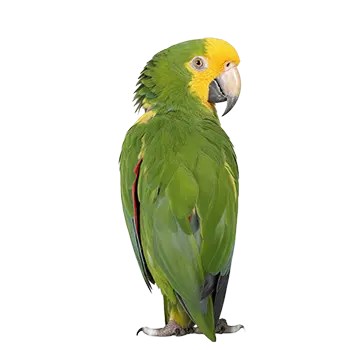
During this period, the juvenile's plumage undergoes significant maturation. The green body feathers deepen in color and density, and the yellow crown patch becomes more defined, though it will continue to expand and intensify for several years. The tail feathers, critical for steering and braking during flight, grow to their full juvenile length. Flight feathers on the wings reach functional size, and the bird's overall body proportions shift from the round, chick-like silhouette toward the leaner, more streamlined profile of an adolescent Amazon.

The decision regarding wing clipping is significant and should be approached with full awareness of its consequences. Many avian behaviorists and veterinarians now recommend allowing the juvenile bird to fledge fully before any clip is considered, as the developmental benefits of early flight are substantial. If clipping is ultimately chosen for safety reasons, it should be performed by an experienced avian veterinarian using a conservative clip that allows the bird to glide safely to the ground rather than dropping like a stone. A severe clip can result in injury from hard crashes, chest bruising, and psychological damage from the repeated experience of falling.

Behavioral Development & Training

The juvenile period is the single most important window for behavioral training and shaping in a Yellow-Crowned Amazon's life. The neural plasticity present during these months allows the bird to absorb new skills, develop communication patterns, and establish behavioral norms that will persist for decades. Amazon parrots that receive consistent, positive training during the juvenile stage grow into confident, well-mannered companions. Those that are neglected or inconsistently handled during this period often develop the behavioral problems, including biting, screaming, and fearfulness, that lead to rehoming.

Begin with foundational commands that establish cooperative behavior. The step-up command, in which the bird steps onto the caregiver's hand or a perch on cue, is the most important single behavior to teach. Use positive reinforcement exclusively. When the bird performs the desired behavior, immediately reward it with a small, high-value treat and verbal praise. Never use punishment, physical force, or intimidation. Amazon parrots have excellent memories, and a single frightening experience can permanently damage the trust relationship.

Yellow-Crowned Amazons are vocal learners with strong mimicry capabilities, and the juvenile period is when speech acquisition is most active. Talk to the bird frequently using clear, enthusiastic repetition of the words or phrases you would like it to learn. Many juveniles begin producing recognizable words or approximations between four and eight months of age, though individual timelines vary widely. Context-based learning is particularly effective with Amazons. Use specific words consistently in association with specific actions or objects, such as saying a greeting when entering the room or naming a favorite food when offering it.

Nipping and exploratory biting are normal juvenile behaviors that must be addressed calmly and consistently. A juvenile Amazon explores its world with its beak, and some degree of mouthing is developmental, not aggressive. When the bird bites too hard, respond with a calm, neutral reaction. Withdraw attention briefly, then re-engage. Dramatic reactions, including yelling, pulling away sharply, or putting the bird down abruptly, are often interpreted by the bird as exciting responses that reinforce the biting behavior. Teach the bird the concept of gentle pressure by praising and rewarding soft beak contact while consistently withdrawing when pressure exceeds acceptable limits.

Establish a structured daily routine that includes designated times for interaction, training, independent play, foraging, and rest. Yellow-Crowned Amazons thrive on predictability and can become anxious or behaviorally reactive in chaotic environments. A consistent schedule teaches the bird when to expect attention and when to self-entertain, reducing the demand calling and attention-seeking behaviors that Amazon parrots are famous for developing.

Socialization & Enrichment

Broad socialization during the juvenile period equips a Yellow-Crowned Amazon to navigate the full range of experiences it will encounter throughout its remarkably long life. A parrot that may live sixty years or more will inevitably experience changes in household composition, living environments, daily routines, and caregivers. Building resilience and social flexibility during the juvenile stage is the most effective way to prepare the bird for these inevitable transitions.

Expose the juvenile to a variety of people in a controlled, positive manner. Different ages, genders, appearances, and voices should all be part of the bird's social experience. Allow visitors to offer treats or speak kindly to the bird, but never force the bird to interact with someone it shows discomfort toward. Observe the bird's body language closely. Pinning eyes, raised nape feathers, a fanned tail, and a lunging posture are all signs that the bird feels threatened or overstimulated and the interaction should be paused.

Environmental enrichment is equally critical during this stage. Provide a rotating selection of foraging toys that require the bird to work for its food, mimicking the effort wild Yellow-Crowned Amazons expend finding food in their native Central and South American habitats. Puzzle feeders, shreddable toys made from bird-safe materials, and foraging trays with food hidden under paper or wood chips encourage problem-solving and physical activity. Novelty matters. Even the best toy loses its enrichment value if it remains unchanged in the cage for weeks.

Introduce the bird to the concept of travel and novel environments early. Short car rides in a secure travel carrier, visits to a screened porch, or supervised time in a different room of the house all broaden the bird's comfort zone. Each new experience, handled positively, adds to the bird's bank of confidence. Conversely, a bird that spends its entire juvenile period in one cage in one room may develop severe anxiety when change is eventually forced upon it.

Independent play skills are often neglected but deserve deliberate cultivation. A Yellow-Crowned Amazon that cannot entertain itself will become excessively dependent on human interaction, leading to the screaming and destructive behaviors that arise when the caregiver is unavailable. Teach the bird to engage with foot toys, chewable items, and activity centers by demonstrating interest in these objects yourself, then stepping back and allowing the bird to explore independently. Praise calm, self-directed play to reinforce the behavior. Building this capacity during the juvenile period pays dividends for decades.

Common Health Concerns

Juvenile Yellow-Crowned Amazons face a specific set of health risks that differ from both the neonatal vulnerabilities they have left behind and the chronic conditions that may emerge in adulthood. Awareness of these juvenile-stage health concerns allows caregivers to intervene early and maintain the trajectory of healthy development established during the newborn period.

Avian Polyomavirus remains a threat during the juvenile stage, particularly for birds housed in multi-bird environments or those that have not been tested. The virus can cause acute illness with symptoms including lethargy, appetite loss, delayed crop emptying, and subcutaneous hemorrhaging. Vaccination protocols exist and should be discussed with your avian veterinarian, especially if the bird will be exposed to other parrots at any point. Testing the juvenile bird and any avian housemates provides an additional layer of security.

Psittacine Beak and Feather Disease is another serious viral concern. While it can affect parrots of any age, juveniles are particularly vulnerable. The disease attacks feather follicles and the immune system, leading to progressive feather loss, beak deformities, and immunosuppression that leaves the bird susceptible to secondary infections. There is no cure, making testing and prevention through biosecurity practices the primary defense. Any new bird entering a household should be tested and quarantined before introduction.

Respiratory infections, both bacterial and fungal, are relatively common in juvenile Amazons. Aspergillosis, caused by the fungus Aspergillus, can establish itself when the bird is exposed to poor air quality, damp conditions, or contaminated food. Symptoms include labored breathing, voice changes, tail bobbing, and lethargy. Bacterial respiratory infections may present similarly and are often secondary to viral immunosuppression or environmental stress. Prompt veterinary diagnosis through imaging, blood work, and culture is essential for effective treatment.

Nutritional disorders deserve mention in the juvenile context as well. A bird that was weaned onto an inadequate diet may develop calcium deficiency, leading to tremors, seizures, and skeletal abnormalities. Vitamin A deficiency is common in birds fed predominantly seed-based diets and manifests as changes in the mucous membranes, increased susceptibility to infection, and poor feather quality. Correcting these deficiencies is more effective the earlier they are identified, underscoring the importance of routine veterinary checkups during the juvenile period, ideally every six months.

Preparing for Adulthood

The transition from juvenile to adult is gradual rather than sudden in Yellow-Crowned Amazons, but the groundwork laid during the final months of the juvenile stage profoundly shapes the adult bird that emerges. As the bird approaches its first birthday and beyond, caregivers should begin thinking about the long-term housing, social, and health management structures that will sustain this companion for decades to come.

Cage selection and setup deserve careful evaluation as the juvenile bird reaches its full physical size. An adult Yellow-Crowned Amazon requires a cage that is, at minimum, large enough for the bird to fully extend and flap its wings without touching the sides. Bar spacing should be appropriate for a medium to large Amazon, typically three-quarter inch to one inch, to prevent the bird from wedging its head between bars. The cage should include multiple perches of varying diameters and materials to promote foot health, food and water stations positioned to avoid contamination from droppings, and ample room for toys and foraging devices.

The bird's social structure within the household should be clarified during this transitional period. Yellow-Crowned Amazons can form intense bonds with a single individual, which, if not managed, can lead to mate-guarding aggression toward other household members. Encourage the juvenile bird to interact positively with multiple family members by having different people participate in feeding, training, and play sessions. This distributed socialization reduces the risk of excessive single-person bonding and produces a bird that is comfortable and well-behaved with everyone in the household.

Establish the health maintenance routine that will carry into adulthood. Annual veterinary examinations with a qualified avian practitioner should be the minimum standard. Baseline blood work performed during the late juvenile period provides reference values that become invaluable for interpreting future test results. Discuss long-term dietary management, weight monitoring, and preventive care protocols with your veterinarian. Amazon parrots are predisposed to obesity, atherosclerosis, and hepatic lipidosis, and proactive management beginning in the late juvenile period can significantly reduce these risks.

Finally, address the emotional and logistical reality of committing to a parrot that may live sixty years or more. Ensure that a long-term care plan exists in case the bird outlives its primary caregiver or circumstances change. Identify a trusted secondary caregiver, document the bird's dietary preferences, behavioral quirks, veterinary history, and social needs, and consider establishing a provision in estate planning for the bird's continued care. This level of planning may seem premature for a juvenile bird, but the commitment begins now and the preparation should begin with it.

Always consult a qualified professional before making any health-related decisions. This content is provided for informational reference only and should not replace professional guidance specific to your animal.