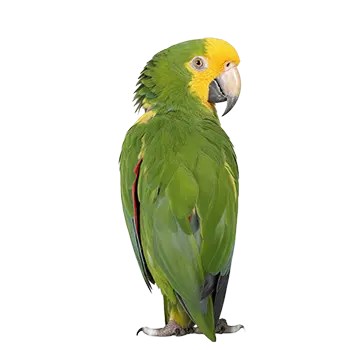

The Yellow-Crowned Amazon reaches full physical maturity between three and five years of age, though the species continues to develop subtle plumage refinements well into the first decade of life. An adult bird measures approximately 14 to 15 inches from the crown of the head to the tip of the tail and weighs between 380 and 500 grams, with healthy weight varying by individual skeletal frame. Understanding the bird's mature physical characteristics helps caregivers assess body condition, recognize molt patterns, and identify health-related changes in appearance.
The adult plumage is predominantly a vivid, deep green across the body, with slightly darker coloring on the upper surfaces and a somewhat lighter, more yellow-green tone on the underside. The defining feature of the species is the yellow patch on the crown of the head, which expands and intensifies in color as the bird matures. The extent of yellow varies among individuals and among the recognized subspecies within the Amazona ochrocephala complex. Red and yellow accents appear on the bend of the wing, and the outer tail feathers display red and yellow patches visible during flight or when the tail is fanned. The beak is a dark gray to horn color, and the eyes are framed by a bare, white periorbital ring with orange irises in adults.
Feather condition is one of the most visible indicators of overall health in an adult Yellow-Crowned Amazon. A healthy bird maintains tight, smooth plumage with a natural sheen. Feathers that appear dull, frayed, stress-barred, or discolored may signal nutritional deficiencies, liver dysfunction, or systemic illness. Molting occurs annually, typically triggered by changes in photoperiod, and involves the gradual replacement of old feathers with new growth. The molt should proceed symmetrically and without bare patches. A bird that develops bald spots, excessively picks or chews its feathers, or exhibits abnormal feather growth patterns requires veterinary evaluation.
Body condition scoring in parrots relies on palpation of the keel bone, the bony ridge running along the center of the chest. In a bird at ideal weight, the keel is palpable but covered by a moderate layer of muscle and subcutaneous tissue. A keel that protrudes sharply indicates underweight, while a keel that is difficult to locate beneath a thick layer of tissue suggests obesity. Amazon parrots, including the Yellow-Crowned Amazon, are genetically predisposed to weight gain and must be maintained at a healthy body condition throughout their adult lives to avoid the cascade of metabolic diseases associated with excess weight.