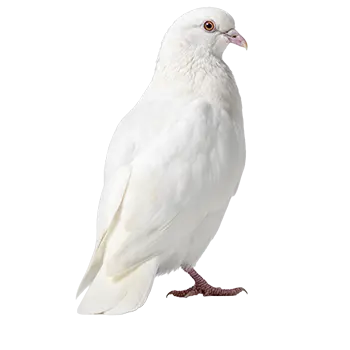

Successful White Dove breeding begins long before the first egg is laid, with the careful selection of a healthy, compatible breeding pair. Unlike some bird species where pair formation can be forced by simply placing two individuals together, doves are pair-bonding birds with genuine preferences, and a compatible pair produces healthier offspring, parents more effectively, and experiences less stress throughout the breeding cycle. Taking the time to select and introduce potential mates thoughtfully is an investment that pays dividends in every subsequent clutch.
Both the cock and the hen should be in excellent health before being considered for breeding. A pre-breeding veterinary examination is strongly recommended and should include a physical assessment, fecal parasite screening, and ideally blood work to confirm that both birds are free from active disease. Chronic carriers of Trichomonas gallinae, Chlamydia psittaci, or other vertically transmissible pathogens should not be bred unless the infection is fully resolved, as these organisms can be passed to squabs during feeding and cause devastating illness in hatchlings with immature immune systems.
Age and condition matter significantly. White Doves reach sexual maturity as early as four to six months, but breeding birds this young is inadvisable. The hen's skeletal system may not be fully mineralized, increasing the risk of egg binding and calcium depletion, and neither bird has reached the physical maturity needed to sustain the demands of parenthood. A minimum breeding age of nine to twelve months is recommended, and the birds should be in robust body condition with strong, well-feathered plumage, clear eyes, and clean, healthy feet. Obesity and underweight are both contraindications for breeding.
Introducing a potential pair should be done gradually. House the two birds in adjacent cages where they can see, hear, and interact through the bars without physical contact. Over a period of one to two weeks, observe their behavior toward each other. Signs of mutual interest include cooing directed at each other, side-by-side perching along the shared cage wall, and attempts to preen through the bars. Signs of incompatibility include persistent aggression, avoidance, or indifference after a reasonable introduction period. If the birds show positive interest, they can be moved into a shared breeding enclosure and monitored closely for the first several days to ensure the pairing is harmonious.