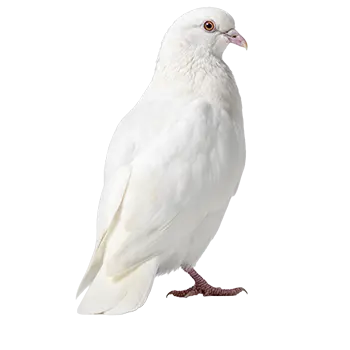

Recognizing the End-of-Life Stage

The end-of-life stage in a White Dove may arrive as the culmination of a long, gradual decline or may present itself more suddenly following a serious illness or injury. Regardless of the path that leads to this point, recognizing that a dove has entered the final phase of its life is essential for providing appropriate care, making informed decisions, and preparing emotionally for the loss. Doves are quiet, stoic animals that mask suffering instinctively, and the caregiver who has built a relationship with the bird over years of daily observation is often the first and most important judge of when the balance between comfort and suffering has begun to shift.

Several signs suggest that a White Dove is approaching the end of its life. A progressive, irreversible decline in body weight despite continued food availability is one of the most consistent indicators. The keel bone, which runs along the center of the chest, becomes increasingly prominent as muscle mass wastes away, eventually feeling sharp and blade-like to the touch. The bird's activity level drops to minimal or absent, with the dove spending most or all of its time sitting still on the cage floor or on a low perch, often with eyes partially or fully closed.

Appetite loss in a dove that previously ate with consistent interest is another significant marker. The bird may sit near its food dish without eating, pick up and drop seeds without swallowing them, or stop approaching the dish altogether. Water consumption may also decline, leading to dehydration that further compounds the bird's deterioration. Changes in droppings accompany these declines, with fecal volume decreasing and urate color potentially shifting from white to green or yellow, indicating liver or kidney dysfunction.

Behavioral withdrawal is perhaps the most poignant sign. A dove that once cooed when its caregiver entered the room, flew to a favorite shoulder, or preened contentedly on a hand may become unresponsive to these familiar interactions. The bird may sit with fluffed feathers and a hunched posture, its head tucked and its eyes dull. This withdrawal is not a rejection of the bond that exists between bird and owner but rather a reflection of the dove's diminishing physical resources and its instinctive response to profound illness.

Quality-of-Life Assessment

Assessing quality of life in a terminally ill or declining White Dove is one of the most difficult responsibilities a caregiver will face. Unlike the relatively objective metrics of physical health, quality of life is a holistic concept that encompasses comfort, dignity, the ability to engage in natural behaviors, and the balance between suffering and enjoyment in the bird's daily experience. Structured assessment frameworks can help bring clarity to a decision that is inherently emotional, and approaching the question with both compassion and honesty serves the bird's best interests.

Several quality-of-life scales have been developed for companion animals, and while most are designed for dogs and cats, their core principles apply equally to birds. The essential questions to ask on a regular basis include whether the bird is experiencing pain or distress, whether it is eating and drinking enough to sustain basic comfort, whether it can maintain hygiene and cleanliness, whether it shows any positive engagement with its environment or its caregiver, and whether it has more moments of comfort than moments of suffering in a typical day.

Pain assessment in birds is challenging because doves do not vocalize when in pain the way mammals often do. Instead, look for behavioral indicators: a bird that sits with its feathers fluffed and its body drawn tight, that resists handling it previously accepted, that grinds its beak rhythmically, or that shows a fixed, glazed stare may be experiencing pain. Changes in breathing pattern, particularly labored or open-mouth breathing at rest, can also indicate discomfort. If pain is suspected, consult your avian veterinarian about appropriate analgesic options. Pain management in birds has advanced considerably, and no bird should suffer unmanaged pain because its caregiver assumes that nothing can be done.

Keep a simple daily log during the end-of-life period, noting the bird's appetite, activity level, responsiveness, and any observed signs of pain or distress. Over the course of days and weeks, this log reveals trends that may not be apparent from any single observation. A gradual but consistent downward trajectory across multiple quality-of-life indicators is a clearer signal than any individual bad day. Share this log with your avian veterinarian to inform the ongoing conversation about the bird's prognosis and the appropriate timing of end-of-life decisions.

Comfort & Palliative Care

When curative treatment is no longer possible or appropriate, the focus of care shifts entirely to the dove's comfort. Palliative care for a White Dove is about removing sources of discomfort, providing warmth and security, maintaining hydration and nutrition to the extent the bird will accept them, and ensuring that the dove's remaining time is spent in an environment that feels safe and familiar. The goal is not to extend life artificially but to make whatever time remains as peaceful as possible.

Warmth is one of the most important comfort measures for a dying dove. A bird in decline often loses the ability to thermoregulate effectively, and chilling accelerates the deterioration process. Provide a supplemental heat source such as a ceramic heat emitter positioned to warm one area of the cage, allowing the bird to move closer or farther away as its needs dictate. A heated pad placed beneath a towel on the cage floor can also provide gentle warmth for a bird that is spending most of its time on the floor. Monitor the heat source carefully to avoid overheating, and check the bird's comfort by observing whether it moves toward or away from the warmth.

Housing modifications should prioritize ease of access and safety. Remove high perches that the bird can no longer reach safely, and pad the cage floor with soft, clean towels or fleece to cushion a bird that may be unsteady on its feet. Place food and water dishes directly beside where the bird rests so that eating and drinking require minimal effort. If the dove is no longer eating seeds, try offering softened food such as soaked millet, small amounts of baby bird formula from a dish, or finely grated fresh foods that require no hulling. Some doves in their final days will accept hand-feeding from a beloved caregiver even when they refuse to eat independently.

Hydration management is critical in palliative care. A dove that has stopped drinking independently will become dehydrated within hours, and dehydration causes discomfort, disorientation, and accelerated decline. Offer water by holding the dish to the bird's beak or by using a small syringe to place a few drops of water along the side of the beak, allowing the bird to swallow at its own pace. Never force water into the beak, as aspiration into the airway is a serious risk in a weakened bird. Your avian veterinarian may recommend subcutaneous fluid administration, a simple technique that can be taught to caregivers and that provides effective hydration support without requiring oral intake.

Above all, provide the comfort of your presence. A dove that has been bonded to its caregiver for years takes solace in familiar voices, gentle touch, and the proximity of the person it trusts most. Sit quietly near the cage, speak softly, and if the bird is receptive, hold it gently against your chest where it can feel your warmth and hear your heartbeat. These final acts of closeness are not sentimentality but genuine palliative care, reducing the bird's stress and fear during its most vulnerable hours.

Understanding Euthanasia

Euthanasia is a word that carries enormous emotional weight, and for many dove owners, the decision to euthanize a beloved companion is the most painful they will face in the course of pet ownership. Understanding what euthanasia involves, when it is appropriate, and how the process works can help caregivers approach this decision with the clarity and calm that the situation demands. Euthanasia, when chosen at the right time and for the right reasons, is not a failure of care but the final act of compassion in a relationship built on love and responsibility.

The decision to euthanize should be grounded in an honest assessment of the dove's quality of life, guided by veterinary input and informed by the caregiver's intimate knowledge of the bird as an individual. Euthanasia is appropriate when the bird is experiencing suffering that cannot be adequately managed with available treatments, when the bird has lost the ability to engage in basic life functions such as eating and drinking, when a terminal diagnosis offers no prospect of meaningful recovery, or when the bird's daily experience is dominated by pain, distress, or disorientation. No one can tell you exactly when the right moment has arrived, but if you are asking the question with sincerity, it is likely that the answer is already near.

The euthanasia procedure for birds is performed by an avian veterinarian and is designed to be rapid, humane, and painless. The most common method involves the administration of an overdose of an injectable anesthetic agent, typically a barbiturate, which causes the bird to lose consciousness within seconds and stops cardiac function shortly thereafter. The bird may be sedated with a gas anesthetic before the injection to minimize any stress associated with handling and restraint. In most cases, the entire process takes less than a minute, and the bird passes from consciousness to death without experiencing pain.

Discuss the logistics of euthanasia with your veterinarian in advance, before a crisis forces the decision under pressure. Ask about the procedure, the options for being present during the process, and the arrangements for aftercare of the bird's body. Some veterinary practices offer home euthanasia services, which allow the bird to pass in its familiar environment surrounded by the people and scents it knows. Whether performed at home or in the clinic, your presence during the procedure can provide comfort to the bird in its final moments and provide closure for you as the caregiver.

Caring for Companion Birds After a Loss

When a White Dove dies, the impact is not limited to the human members of the household. If the deceased bird had a bonded companion, whether another dove or a bird of a different species housed nearby, the surviving bird may exhibit a grief response that requires sensitive management. Doves form deep, enduring pair bonds, and the loss of a mate is a profoundly disorienting experience for the surviving partner. Acknowledging and addressing this avian grief is an important part of responsible care.

A bereaved dove may display a range of behavioral changes in the days and weeks following its companion's death. Increased vocalization, particularly persistent calling, is one of the most common responses, as the surviving bird calls for its absent mate. Appetite loss, lethargy, restlessness, and changes in sleep patterns are also frequently observed. Some doves will search the cage or enclosure repeatedly, visiting the spots where the deceased bird used to perch or rest. These behaviors can persist for days to weeks and, in some cases, months.

Supporting a grieving dove involves providing extra attention, maintaining a stable routine, and monitoring the bird's physical health closely. Spend additional time near the bird, speaking softly and offering gentle handling if the dove is receptive. Ensure that the surviving bird continues to eat and drink adequately, as grief-related appetite suppression can lead to dangerous weight loss in a small bird. Weigh the bird daily during the acute bereavement period and contact your veterinarian if weight loss exceeds five percent of body weight or if the bird stops eating entirely for more than 24 hours.

The question of whether to introduce a new companion is deeply personal and depends on the individual bird, the caregiver's circumstances, and the timing. Some doves benefit from a new companion relatively quickly, while others need weeks or months before they are ready to accept a new cage mate. If you choose to introduce a new bird, follow the same gradual introduction protocol used for any new pairing: separate cages within sight of each other, followed by supervised shared time, and eventually shared housing if compatibility is confirmed. Not every dove will bond with a new partner, and some may prefer the companionship of their human caregiver over another bird. Respect the surviving dove's response and do not force a pairing that causes stress.

Aftercare & Memorial Options

After a White Dove has passed, whether through natural death or euthanasia, decisions must be made about the care of the bird's remains. While these decisions may feel difficult to think about in the immediate aftermath of loss, having a plan in place, ideally discussed in advance, reduces the burden of decision-making during a time of grief. Several aftercare options are available, and the right choice depends on personal preferences, local regulations, and the caregiver's wishes for memorializing the bird.

Home burial is a common choice for dove owners who have access to private land. Check local ordinances before proceeding, as some municipalities have regulations regarding the burial of animal remains. Choose a location that is at least two to three feet deep to prevent disturbance by other animals, and consider placing a stone, plant, or other marker at the site. Wrapping the bird in a natural fiber cloth or placing it in a small biodegradable box before burial provides a sense of reverence and aids in decomposition. Avoid burying a bird that was euthanized with barbiturates in a location where other animals might dig, as the euthanasia drugs can remain active in the tissues and pose a poisoning risk to scavengers.

Cremation is available through many veterinary practices and pet cremation services. Individual cremation, in which the bird is cremated alone and the ashes returned to the owner, allows for the keeping or scattering of remains in a meaningful location. Communal cremation, in which multiple animals are cremated together and the ashes are not returned, is a less expensive option for those who do not wish to retain the remains. Some cremation services offer decorative urns, keepsake jewelry containing a small amount of ash, or other memorial products.

Beyond the practical handling of remains, many dove owners find comfort in creating a more personal memorial. A framed photograph of the bird, a written tribute, a donation to an avian rescue organization in the bird's name, or the planting of a tree or garden in a favorite spot can all serve as meaningful ways to honor the relationship. Some owners keep a single feather from the bird as a tangible reminder. There is no correct or incorrect way to memorialize a companion animal, and the form the memorial takes matters far less than the intention behind it.

The grief that follows the loss of a White Dove is real and valid, regardless of the bird's size or the species' perceived status relative to dogs, cats, or other more commonly mourned companion animals. A dove that has shared your home for ten or fifteen years has been a daily presence through significant chapters of your life, and its absence leaves a genuine void. Allow yourself the time and space to grieve without judgment, seek support from friends, family, or online communities who understand the bond between people and birds, and know that the sadness you feel is a direct measure of the love you gave.

Coping with Grief

The death of a White Dove, particularly one that has been a companion for many years, triggers a grief response that can be surprisingly intense. People who have not experienced the loss of a bird may underestimate the depth of the bond that forms between a dove and its caregiver, but those who have lived with these gentle, affectionate creatures understand that the relationship is deeply meaningful. Giving yourself permission to grieve fully, without minimizing the loss or rushing toward recovery, is the healthiest path through this difficult period.

Grief after pet loss often follows a pattern similar to grief after human loss, though the timeline and intensity vary widely among individuals. Initial shock and denial may give way to sadness, guilt, anger, or a sense of emptiness. Some caregivers experience guilt about the timing of euthanasia, wondering whether they acted too soon or too late. Others may feel guilt about aspects of the bird's care that they wish they had handled differently. These feelings are nearly universal among devoted pet owners and do not reflect actual failures of care. Acknowledge them, examine them if it helps, and then release them with the understanding that a person who cared enough to question their decisions almost certainly made them with love and the bird's best interests at heart.

Practical triggers can intensify grief in unexpected ways. The silence where cooing used to fill the room, the empty cage in its familiar corner, the habitual glance toward the perch upon entering the room, and the unused bag of seed in the pantry are all reminders that the bird is gone. Some people find it helpful to put away cage equipment and supplies relatively quickly, while others prefer to leave things in place for a time as part of the processing. Neither approach is wrong. Follow your own instincts about what feels right, and do not let anyone else's timeline dictate your grieving process.

Support from others who understand the human-animal bond can be invaluable during this time. Online communities dedicated to pet loss, bird-specific forums, and pet bereavement hotlines staffed by trained counselors offer spaces where the depth of your grief will be understood and validated. If grief is interfering with daily functioning for an extended period, professional counseling from a therapist experienced in pet loss can provide structured support. There is no weakness in seeking help, just as there is no weakness in loving a small white bird deeply enough that its loss changes the shape of your days.

In time, most people find that the sharp edge of grief softens into a gentler remembrance. The dove that sat on your shoulder, cooed at the sound of your voice, and watched the world from its favorite window perch becomes a warm memory rather than an open wound. Some caregivers eventually welcome a new bird into their lives, not as a replacement for the one that was lost but as a continuation of the love and care they have to offer. Others do not, and that choice is equally valid. What matters is that the bird lived well, was loved thoroughly, and was cared for with devotion from the first day to the last.

Always consult a qualified professional before making any health-related decisions. This content is provided for informational reference only and should not replace professional guidance specific to your animal.